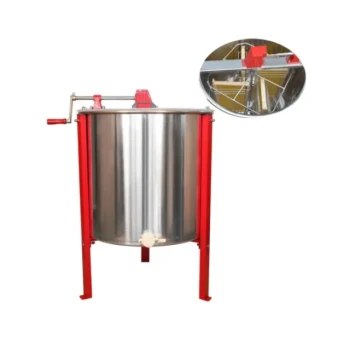
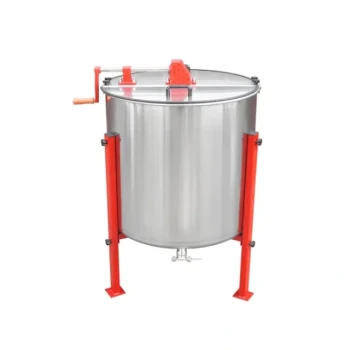
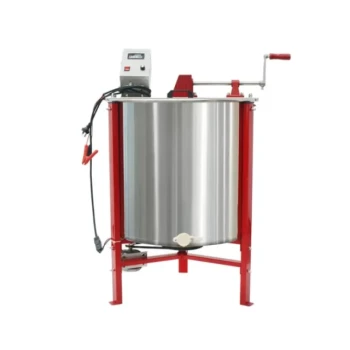
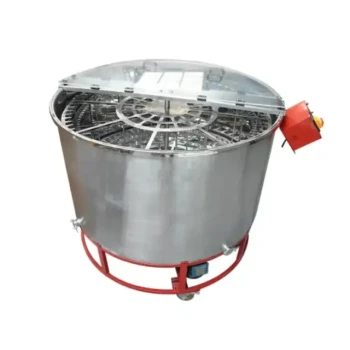
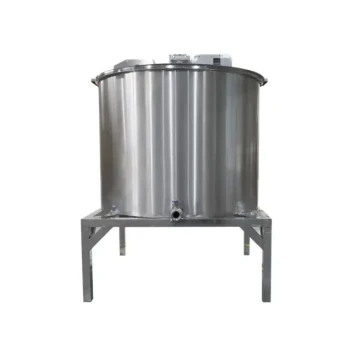
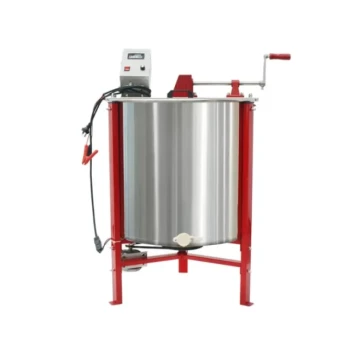
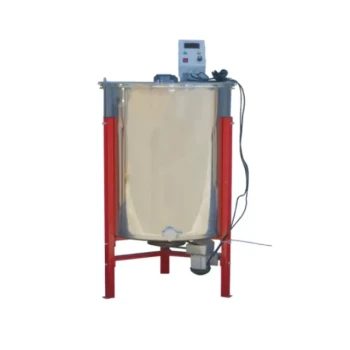
Manual honey extractors typically hold between 2 to 4 frames at a time. While some larger manual models can accommodate up to 8 frames, the 2-to-4 frame range is the standard standard configuration. This capacity is specifically designed to balance the mechanical load with the physical effort required to hand-crank the device.
The limited capacity of a manual extractor is a feature, not a bug; it prevents the physical work of hand-cranking from becoming unmanageable. For apiaries with fewer than 10 hives, this 2-to-4 frame limit offers the most practical balance between equipment cost and labor.
Understanding Capacity and Throughput
The Standard Configuration
Most manual extractors are engineered for small-scale operations, fitting 2 to 4 frames in the basket. This size is ideal for hobbyists because it keeps the drum diameter small and the unit lightweight.
The Upper Limit
While less common, manual extractors with an 8-frame capacity do exist. However, increasing the frame count significantly increases the weight and resistance within the drum.
Throughput Reality
It is important to remember that "capacity" does not equal speed in a manual system. A 4-frame manual extractor requires you to spin, stop, flip the frames (if tangential), and spin again, all powered by your own physical energy.
Matching Capacity to Apiary Size
The Hobbyist Sweet Spot
Manual extractors are best suited for beekeepers managing 8 to 10 hives or fewer. At this scale, the time required to extract 2 or 4 frames at a time is manageable over a weekend.
Cost vs. Efficiency
For small apiaries, the lower price point of manual equipment outweighs the slower processing speed. You are trading your time and physical labor to save significantly on upfront capital costs.
Hands-On Control
Manual extractors offer excellent speed control. Because you are the motor, you can start slowly to prevent blowing out delicate combs and increase speed only as the honey leaves the cells.
Understanding the Trade-offs
The "Human Motor" Limitation
The biggest bottleneck of a manual extractor is not the frame basket size, but the operator. Extracting honey manually is physically demanding work that engages your arm and shoulder for extended periods.
Time Investment
Using a 2-frame extractor means processing a single 10-frame super requires five separate load/unload cycles. If you have tangential baskets (common in manual models), you must also flip the frames mid-spin, doubling the effort.
Efficiency Ceilings
While electric models can scale up to 100 frames to match commercial needs, manual models hit a hard efficiency ceiling. Once you exceed 10 hives, the physical fatigue and time consumption of a 2-4 frame manual unit often justify moving to a motorized system.
Making the Right Choice for Your Goal
When deciding if a manual extractor’s capacity fits your needs, consider your future growth and current resources.
- If your primary focus is low entry cost: A 2-frame manual extractor is the most affordable way to harvest honey for 1-5 hives.
- If your primary focus is balancing time and effort: A 4-frame manual extractor cuts your loading cycles in half without becoming too heavy to crank comfortably.
- If your primary focus is expansion: If you plan to grow beyond 10 hives, bypass manual capacity limits and invest in an electric model to save significant labor.
Choose the capacity that respects both your budget and your physical energy, ensuring harvest day remains a joy rather than a chore.
Summary Table:
| Extractor Type | Typical Frame Capacity | Recommended Hive Count | Primary Benefit |
|---|---|---|---|
| Entry-Level Manual | 2 Frames | 1 - 5 Hives | Lowest cost and highly portable |
| Standard Manual | 3 - 4 Frames | 5 - 10 Hives | Best balance of speed and physical effort |
| Large Manual | 6 - 8 Frames | 10+ Hives | Maximum manual throughput (high physical labor) |
| Electric/Motorized | 4 - 100+ Frames | 10+ Hives | High efficiency; no manual cranking required |
Scale Your Honey Production with HONESTBEE
Whether you are a growing distributor or a commercial apiary, HONESTBEE provides the heavy-duty machinery and precision tools needed to streamline your harvest. From manual starters to high-capacity honey-filling machines and specialized hive-making equipment, our comprehensive wholesale portfolio is designed to maximize your efficiency and output.
Ready to upgrade your beekeeping operation? Contact us today to explore our full spectrum of professional equipment and essential industry consumables tailored for your business success!
Related Products
- Stainless Steel 3 Frame Manual Honey Extractor Spinner for Bee Honey Extraction
- HONESTBEE 3-Frame Manual Acrylic Honey Extractor
- HONESTBEE 4 Frame Manual Self Reversing Honey Extractor for Beekeeping
- Stainless Steel Manual 8 Frame Radial Honey Extractor Machine for Beehives
- 2 Frame Stainless Steel Manual Honey Spinner Extractor for Beekeeping
People Also Ask
- Which type of honey extractor is generally more durable? Focus on Material & Build Quality for Longevity
- What are the disadvantages of a manual honey extractor? Overcome Efficiency Bottlenecks in Your Apiary
- What is a manual honey extractor? The Essential Guide to Cost-Effective Beekeeping for Beginners
- Why are manual extractors popular among beginner beekeepers? A Guide to Starting Simple & Saving Money
- What are the primary advantages of utilizing a manual honey extractor? Cost-Effective & Gentle Harvesting