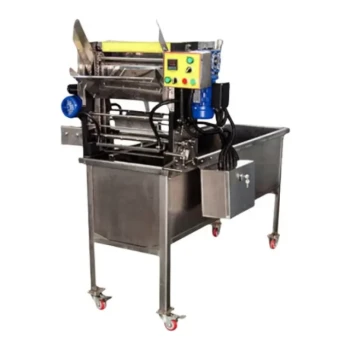
Automated honey filling machinery acts as the critical operational bridge between artisanal wild collection and a viable commercial enterprise. It transforms raw, variable harvests into standardized products by enforcing strict hygiene protocols, ensuring precise weight consistency, and enabling the high-volume throughput necessary for retail distribution.
Core Takeaway While manual filling creates bottlenecks and inconsistency, automation secures the commercial viability of wild honey. It guarantees that the final product remains chemically stable and safe while meeting the rigorous volume and packaging standards required by modern retail markets.
Elevating Hygiene and Product Stability
Eliminating Contamination Risks
In manual operations, human contact serves as a primary vector for bacteria and debris. Automated machinery utilizes closed filling processes and fully enclosed piping systems.
This physical barrier minimizes the risk of secondary microbial contamination. It ensures the honey remains pure from the extraction tank to the final sealed bottle.
Preserving Chemical Integrity
Wild honey is sensitive to environmental factors. Industrial-grade filling equipment significantly reduces exposure to open air during the bottling phase.
By limiting air contact, the machinery prevents oxidation and inhibits moisture absorption from the atmosphere. This preserves the honey's natural physicochemical stability, ensuring the flavor and nutritional value remain intact during storage and logistics.
Achieving Market-Ready Standardization
Precision Metering and Compliance
Commercial markets demand exactitude; a jar labeled 500g must contain exactly 500g. Automated machines employ high-precision volume sensors and pneumatic control systems to govern the flow of high-viscosity honey.
This technology eliminates the variance inherent in manual pouring. It ensures every unit meets legal weight regulations and labeling requirements, which is a prerequisite for entering formal trade channels.
Professional Packaging and Branding
Transitioning to commerce requires a shift from bulk containers to shelf-ready packaging. Specialized sealing processes ensure airtight closures that manual tightening often fails to achieve.
This consistency supports professional branding efforts. A standardized, well-sealed package signals quality to consumers and retailers alike, enhancing the product's overall market competitiveness.
Driving Efficiency and Scalability
Maximizing Throughput
Manual filling is labor-intensive and slow, making it impossible to meet large-scale supply demands. Automated machinery dramatically accelerates the turnover rate from harvest to market.
This speed allows operations to process massive volumes of wild honey during peak harvest seasons without bottlenecks. It converts a time-sensitive raw material into a stable commodity quickly.
Reducing Operational Waste
Manual handling frequently leads to spills, overfilling, and drip loss. Precision automation strictly controls the dispense cycles to minimize product loss.
By reducing waste, the operation retains more sellable inventory. This efficiency directly impacts the bottom line, helping to offset the initial capital investment of the machinery.
Understanding the Trade-offs
Complexity of Implementation
While automation solves volume issues, it introduces technical complexity. Operators must understand pneumatic systems and sensor calibration to handle the unique viscosity of wild honey effectively.
Maintenance Requirements
Moving from buckets to machines creates a new maintenance overhead. To maintain the hygiene benefits discussed above, the "enclosed piping systems" require rigorous, Clean-in-Place (CIP) procedures to prevent crystallization or residue buildup within the machine itself.
Making the Right Choice for Your Goal
To successfully transition your wild honey operation, assess your immediate hurdles:
- If your primary focus is Regulatory Compliance: Prioritize machinery with advanced metering sensors to guarantee the precise volume accuracy required by food safety laws.
- If your primary focus is Product Quality: Select equipment with a fully enclosed piping system to prevent oxidation and moisture absorption, preserving the wild honey's unique profile.
- If your primary focus is Market Expansion: Invest in high-speed automation to ensure you can meet the volume obligations of large-scale retail contracts without delays.
Investment in automation is not just about speed; it is the mechanism that turns a raw natural resource into a trustworthy, shelf-stable consumer brand.
Summary Table:
| Feature | Manual Filling | Automated Filling Machinery | Commercial Benefit |
|---|---|---|---|
| Hygiene Control | High risk of human contact & debris | Enclosed piping & closed processes | Meets food safety & export standards |
| Weight Precision | High variance & potential legal risk | High-precision pneumatic sensors | Consistent labeling & regulatory compliance |
| Processing Speed | Slow, labor-intensive bottlenecks | High-volume throughput | Ability to fulfill large retail contracts |
| Product Integrity | Risk of oxidation & moisture gain | Minimal air exposure | Preserves flavor & nutritional value |
| Waste Reduction | Frequent spills & overfilling | Drip-free precision dispensing | Higher yield and improved bottom line |
Scale Your Honey Production with HONESTBEE
Transitioning from wild honey collection to a professional commercial operation requires more than just high-quality honey—it requires industrial-grade reliability. HONESTBEE specializes in empowering commercial apiaries and distributors with the high-performance machinery needed to dominate the market.
From precision honey-filling machines that guarantee weight compliance to full-scale hive-making equipment, we provide the end-to-end tools necessary to maximize your throughput and protect your product's integrity. Whether you are expanding your wholesale offering or launching a retail brand, our comprehensive portfolio of beekeeping hardware and consumables is designed for your success.
Ready to professionalize your honey harvest? Contact HONESTBEE Today for Expert Solutions
References
- Denise Margaret Matias, Henrik von Wehrden. Ecological changes and local knowledge in a giant honey bee (Apis dorsata F.) hunting community in Palawan, Philippines. DOI: 10.1007/s13280-018-1038-7
This article is also based on technical information from HonestBee Knowledge Base .
Related Products
- Fully Automatic Honey Filling Packaging Machine for Processing Line
- Automatic Honey Filling and Filtering Machine for Beekeeping Bottle Filling
- Precision Durable Efficient HONESTBEE Rotary Honey Filling Machine
- Precision Automated Packaging Turntable Honey Spoon Filling Sealing Packing Machine
- Semi Automatic Small Honey Bottle Filling Machine Honey Filler
People Also Ask
- Why are fully automatic honey filling and packaging lines essential? Boost Your Honey's Market Value and Quality
- What is a fully-automatic honey filler? Streamline Your Production with High-Precision Automation
- How do automated honey filling and packaging machines affect profitability? Boost Margins with HONESTBEE Technology
- How do automated honey filling and packaging machines contribute to the market value of honey products? Maximize Your ROI
- How do industrial-grade automated honey filling and packaging machines mitigate the risk of physical contamination?