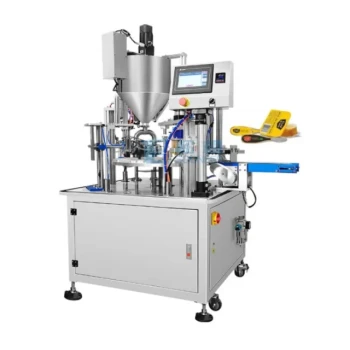
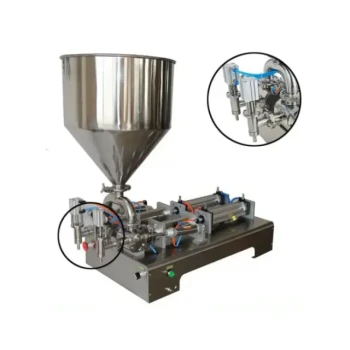
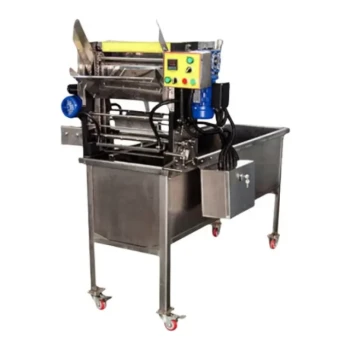
Automated honey filling machines provide the critical infrastructure necessary to elevate honey production from an agricultural process to a professional manufacturing standard. By implementing these systems, you ensure sterile operations during the transfer from storage to container, effectively preventing secondary contamination while utilizing precise quantitative control systems to guarantee absolute weight consistency across all units.
The core value of automation lies in stabilizing product quality: it eliminates the human variables that cause contamination and inconsistent measurements, turning a raw agricultural product into a standardized, safe, and commercial-grade commodity.
Elevating Hygiene Standards
The primary justification for automating the filling process is the preservation of product purity.
Eliminating Secondary Contamination
Manual filling inherently exposes honey to the environment and human contact. Automated machines operate within a closed-loop system, transferring honey directly from bulk storage tanks to retail containers. This physical barrier effectively minimizes the risk of microbial contamination or environmental bacteria entering the product during packaging.
Preserving Natural Quality
By reducing manual handling, producers can ensure the honey remains additive-free and maintains high purity. This strict hygiene control is essential for extending shelf life and adhering to the rigorous policies required for organic and high-end consumer markets.
Ensuring Precision and Standardization
Beyond safety, professional facilities require product consistency to meet industry regulations and consumer expectations.
Precise Quantitative Control
Industrial machines utilize advanced metering systems to control the volume of every bottle filled. This technology guarantees that every unit aligns perfectly with the labeled weight, eliminating the variance found in manual pouring.
Regulatory Compliance
Achieving high consistency is not just a preference; it is a requirement for international trade standards. Automated systems provide the rigorous weight standardization necessary to enter pharmaceutical and strict commercial markets, where even minor deviations can lead to regulatory issues.
Operational Efficiency and Market Value
Automation acts as a bridge, allowing apiaries to transition from bulk sales to high-value fractional packaging.
Reducing Waste and Labor Costs
High-speed sealing and precise metering significantly minimize material loss due to spills or overfilling. Simultaneously, these machines replace labor-intensive manual processes, allowing facilities to increase throughput and reduce the cost per unit produced.
Enhancing Brand Image
The ability to produce uniform, professionally packaged goods directly improves brand perception in international retail channels. Furthermore, modern machines often provide quantifiable output data, assisting managers in tracking production targets and ensuring traceability throughout the supply chain.
Understanding the Trade-offs
While the benefits are substantial, moving to automation introduces new operational considerations.
Maintenance and Calibration Dependencies
Unlike manual labor, automated systems require regular calibration to maintain their high precision. If the metering controls drift and are not checked, an entire batch could be non-compliant, necessitating a shift in workforce skills from filling to machine maintenance.
Complexity in Changeovers
While machines excel at high-speed repetition, switching between different container sizes or shapes can require downtime for re-tooling. Facilities with extremely high variety in bottle designs may find the setup times reduce the overall efficiency gains compared to manual flexibility.
Making the Right Choice for Your Goal
To determine if this investment aligns with your facility's current stage, consider your primary objectives:
- If your primary focus is Hygiene and Safety: Implement automation to create a closed-loop environment that drastically reduces microbial risks and secures organic certification.
- If your primary focus is Brand Standardization: Use automated metering to ensure every single jar meets exact weight specifications, building trust with consumers and retailers.
- If your primary focus is Scaling Production: Deploy automation to remove the bottleneck of manual labor, enabling you to meet the volume demands of large-scale commercial distribution.
Automation is the definitive step that transforms a beekeeping operation into a professional processing facility.
Summary Table:
| Feature | Manual Filling | Automated Filling |
|---|---|---|
| Hygiene Level | High risk of secondary contamination | Closed-loop system; sterile operation |
| Weight Precision | Variable (human error) | Precise quantitative control systems |
| Production Speed | Slow; labor-intensive | High-speed throughput |
| Regulatory Status | Difficult to standardize | Meets international trade & pharma standards |
| Cost Efficiency | High long-term labor & waste costs | Low unit cost; minimal material waste |
Transform Your Honey Production with HONESTBEE
Are you ready to elevate your apiary to a professional manufacturing standard? HONESTBEE specializes in empowering commercial apiaries and distributors with high-performance beekeeping tools and industrial machinery.
Our comprehensive wholesale offering includes:
- Advanced Honey-Filling Machines for precise quantitative control.
- Specialized Hive-Making Equipment and automated processing hardware.
- Full-Spectrum Consumables and unique honey-themed cultural merchandise.
Whether you need to eliminate contamination risks, ensure absolute weight consistency, or scale for international distribution, our expert team is here to provide the machinery and support your business deserves.
Contact HONESTBEE today to optimize your production facility!
References
- Мар’яна Сеньків, А. П. Шевчук. Geography and Current State of Apitourism in Ukraine and Slovenia. DOI: 10.31866/2616-7603.3.2.2020.221276
This article is also based on technical information from HonestBee Knowledge Base .
Related Products
- Fully Automatic Honey Filling Packaging Machine for Processing Line
- Automatic Honey Filling and Filtering Machine for Beekeeping Bottle Filling
- Precision Durable Efficient HONESTBEE Rotary Honey Filling Machine
- Semi Automatic Small Honey Bottle Filling Machine Honey Filler
- Precision Automated Packaging Turntable Honey Spoon Filling Sealing Packing Machine
People Also Ask
- Why are fully automatic honey filling and packaging lines essential? Boost Your Honey's Market Value and Quality
- What is a fully-automatic honey filler? Streamline Your Production with High-Precision Automation
- How do automated honey filling and packaging machines affect profitability? Boost Margins with HONESTBEE Technology
- How do automated honey filling and packaging machines contribute to the market value of honey products? Maximize Your ROI
- How do industrial-grade automated honey filling and packaging machines mitigate the risk of physical contamination?