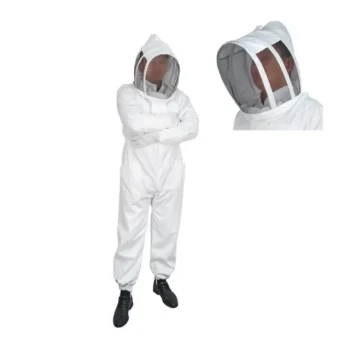
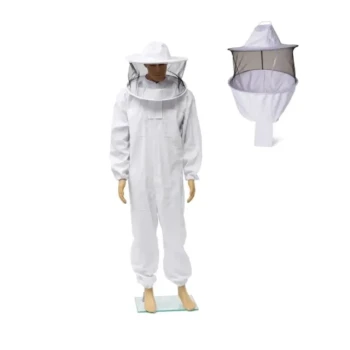
The primary limitations of a beekeeping jacket stem from its inability to provide continuous, full-body enclosure. By design, a jacket leaves your lower body exposed to potential stings, necessitating the use of thick trousers or independent leg protection. Furthermore, the break in fabric at the waist creates a structural vulnerability where the seal may fail, allowing bees to enter the garment more easily than they could in a sealed, one-piece suit.
While beekeeping jackets offer superior mobility and ease of use, they sacrifice the "passive safety" of a continuous barrier. The wearer must actively manage the risks associated with leg exposure and the integrity of the waist seal.
Analyzing Protective Coverage
The Lower Body Vulnerability
The most significant limitation of a jacket is that it stops at the waist. Unlike a full suit, which integrates protection from the veil down to the ankles, a jacket offers zero protection for your legs.
To compensate, you must pair the jacket with trousers made of thick, sting-resistant material. If you rely on standard clothing that is too thin, you remain vulnerable to stings in the thigh and leg areas.
The Waist Seal Risk
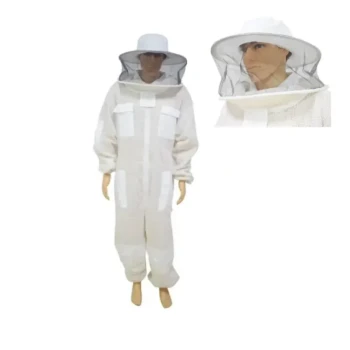
A full suit provides a continuous tunnel of fabric that bees cannot penetrate. A jacket relies on an elasticized waist or drawstring to create a seal against your body.
This seal is less effective than a continuous suit. If the waist hem is not secured tightly, or if it shifts during movement, it creates a gap that allows bees to crawl upward inside the protective gear.
Exposure During Movement
Beekeeping involves constant bending, lifting, and stretching. When you bend over a hive, the back of a jacket may ride up.
If the jacket is not sized correctly—specifically, if it is not loose enough—this movement can pull the waistband away from the body or expose the lower back. A full suit generally accommodates this range of motion without breaking the protective seal.
Understanding the Trade-offs
Comfort vs. Containment
The limitations of a jacket are the direct trade-off for its benefits. Full suits are often heavier, more expensive, and significantly hotter, leading to potential overheating in high summer.
By choosing a jacket, you gain ventilation and convenience, particularly for quick inspections or working in high heat. However, you lose the "set it and forget it" security of a full-body enclosure.
The "User Error" Factor
A full suit works largely regardless of what you wear underneath it. A jacket requires you to be vigilant about your secondary clothing choices.
If you forget to wear thick pants, or if you fail to check your waist drawstring before approaching a hive, the jacket’s protection is compromised. The limitation is not just in the gear, but in the increased responsibility placed on the beekeeper to ensure the rest of their body is secure.
Making the Right Choice for Your Goal
When deciding if the limitations of a jacket are acceptable for your apiary, consider the aggression of your bees and your local climate.
- If your primary focus is maximum safety or working with aggressive hives: Prioritize a full suit to eliminate the risk of waist gaps and leg stings.
- If your primary focus is heat management and quick inspections: Choose a jacket, but strictly ensure you pair it with heavy canvas trousers or specialized gaiters.
- If your primary focus is mobility: A jacket is superior, provided you size it generously to prevent the fabric from becoming tight or riding up when bending.
The jacket is an excellent tool for the attentive beekeeper who values comfort, while the full suit remains the definitive choice for total isolation from the colony.
Summary Table:
| Feature | Beekeeping Jacket | Full Protective Suit |
|---|---|---|
| Body Coverage | Upper body only; requires thick trousers | Total full-body enclosure |
| Seal Integrity | Elastic/drawstring waist (potential gap) | Continuous fabric (maximum security) |
| Heat Management | Excellent ventilation; cooler in summer | Retains more heat; potential for overheating |
| Mobility | High; easy to put on and take off | Moderate; can be bulky for some tasks |
| Best Use Case | Quick inspections & heat management | Aggressive hives & maximum protection |
Elevate Your Apiary Safety with HONESTBEE
Choosing the right protective gear is a critical decision for commercial apiaries and distributors. At HONESTBEE, we understand that balancing mobility with safety is key to productivity. We offer a comprehensive wholesale range of professional beekeeping jackets and full suits, alongside hive-making machinery, honey-filling equipment, and essential industry consumables.
Whether you are stocking for retail or equipping a large-scale operation, our high-quality gear ensures your team stays protected without compromising on comfort. Contact us today to discuss our wholesale offerings and discover how our specialized beekeeping tools and equipment can drive your business forward.
Related Products
- White Cotton Beekeeping Jacket and Veil for Bee Keepers
- Economy Polyester Beekeeping Jacket with Veil and Hat
- Beekeeping Jacket with Hood and Veil for Beekeepers
- Vented Beekeeping Jacket with Hood and Veil for Beekeepers
- Premium Cotton Beekeeper Suit with Reinforced Fencing Veil
People Also Ask
- What are the features of an economical beekeeping jacket? Essential Protection for Budget-Conscious Beekeepers
- What are the pros of using a beekeeping jacket? Unlock Superior Comfort and Mobility for Your Apiary
- What factors should a new beekeeper consider when choosing between a jacket and a full suit? Security vs. Comfort
- What are the advantages of a beekeeping jacket? Superior Mobility & Comfort for Routine Hive Inspections
- When is a beekeeping jacket considered a more suitable choice than a full suit? Optimize Your Apiary Mobility