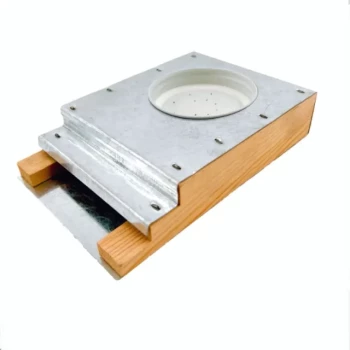
Routine clearance of dead bees is the single most important maintenance task for a hive entrance during winter. You must periodically ensure the entrance remains unobstructed to allow for ventilation and bee exit, using slender tools to sweep the opening clear without opening the hive.
While winter die-off is natural, a buildup of corpses can completely block a reduced entrance, trapping living bees inside. Your goal is to gently remove these obstructions to ensure the colony can perform essential cleansing flights on warmer days.
The Critical Necessity of a Clear Entrance
Facilitating Cleansing Flights
On warmer winter days—typically when temperatures rise above 45°F—bees break their cluster to leave the hive for "cleansing flights" (defecation).
If the entrance is clogged with dead bees, the living colony is trapped inside. This inability to exit can lead to dysentery within the hive, which creates unsanitary conditions and stresses the colony.
Managing Entrance Reducers
Most beekeepers use entrance reducers in winter to limit drafts and exclude pests. However, these smaller openings make the hive significantly more susceptible to blockage.
Because the exit is narrow, it takes fewer dead bees to create a complete seal. Therefore, hives with reducers require more frequent monitoring than those with full entrances.
The Technique: Non-Invasive Cleaning
Selecting the Right Tools
The objective is to clear the blockage without exposing the bees to the cold air. You need a tool that is thin and long enough to reach into the entrance slot.
An old bee brush handle or a simple plastic coat hanger are effective choices. These tools allow you to manipulate debris at the entrance while keeping the rest of the hive sealed.
The Cleaning Procedure
Insert your chosen tool into the entrance and gently sweep the accumulation of dead bees out onto the landing board or ground.
Do not disassemble the hive bodies to perform this task. Breaking the propolis seal or opening the boxes releases precious heat and disturbs the winter cluster, which can be fatal in freezing temperatures.
Common Pitfalls to Avoid
Avoiding Excessive Disturbance
While cleaning, be careful not to bang against the hive or create excessive vibration. The colony is in a tight cluster to conserve heat; shocking them can cause the cluster to break apart, leading to rapid heat loss.
Ignoring Temperature Thresholds
While you can clear the entrance quickly on colder days, ensure you strictly adhere to the rule of not opening the hive when the temperature is below 45°F. Entrance cleaning should be an external maintenance task only.
Making the Right Choice for Your Goal
- If your primary focus is Colony Health: Ensure the entrance is clear after every cold snap so bees can immediately fly when the weather warms.
- If your primary focus is Heat Conservation: Use a stiff wire or thin plastic tool to clean the entrance quickly without ever lifting the cover or moving boxes.
By keeping the "front door" clear, you allow your bees to manage their own hygiene effectively without compromising their thermal environment.
Summary Table:
| Maintenance Task | Frequency | Recommended Tool | Critical Benefit |
|---|---|---|---|
| Clearing Dead Bees | After every cold snap | Thin wire or coat hanger | Prevents entrapment & dysentery |
| Entrance Reduction | Once in late fall | Entrance reducer | Limits drafts and keeps out pests |
| External Monitoring | Weekly | Visual inspection | Ensures ventilation is unobstructed |
| Temperature Check | Daily (Remote) | External thermometer | Timing for possible cleansing flights |
Maximize Your Colony’s Winter Survival with HONESTBEE
Maintaining healthy hives through the winter requires the right tools and equipment. At HONESTBEE, we specialize in supporting commercial apiaries and distributors with high-quality, wholesale beekeeping solutions. From precision-engineered hive-making machinery to essential winterizing consumables and specialized hardware, our portfolio is designed to enhance your operational efficiency.
Whether you are scaling your honey production or stocking your distribution center, our team provides the expertise and full-spectrum equipment needed to succeed in the competitive beekeeping industry.
Ready to elevate your apiary? Contact us today to explore our wholesale machinery and equipment offerings!
Related Products
- Multi-Functional Sliding Hive Entrance for Beekeeping
- Multi-Functional Rotary Hive Entrance Disc for Beekeeping
- Professional Reversible Beehive Hive Entrance
- Beehive Entrance Reducer Guardian Metal Hive Entrance for Bees
- Steel Round Disc Entrance Reducer for Flexzion Bee Hive Nuc Box Gate
People Also Ask
- What roles does the hive entrance (piquera) play in beehive management and colony health? Essential Guide for Pro Apiaries
- Where is the hive entrance typically located? Optimize Your Hive's Health and Honey Production
- What role does the size of the entrance play in hive ventilation? Master Beehive Climate Control
- What is the best entrance for a bee hive? Maximize Colony Health & Honey Production
- What happens if you block the entrance to a bee hive? Avoid This Dangerous Mistake