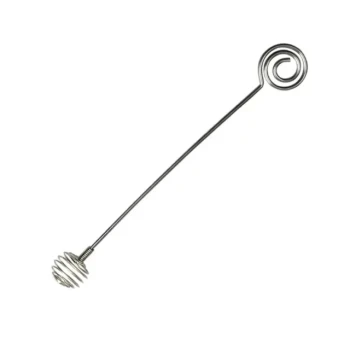
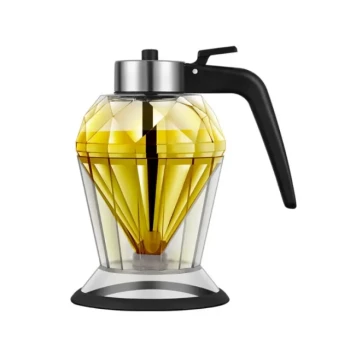
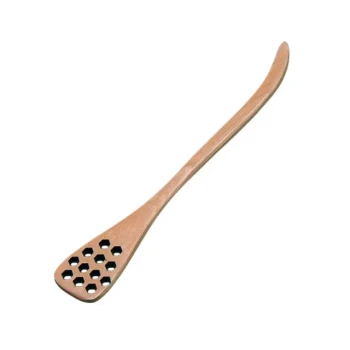
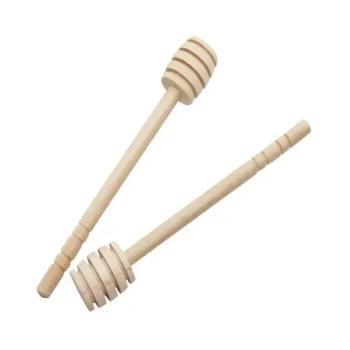
Active maintenance is critical when scaling up your honey infusion process. For large batches, such as those in five-gallon buckets, the primary maintenance requirement is periodic light stirring to ensure ingredients remain properly distributed throughout the container.
In large vessels, passive infusion leads to uneven results. You must mechanically redistribute flavoring agents to ensure the infusion process remains efficient and consistent from top to bottom.
The Mechanics of Large-Batch Infusion
Overcoming Separation
In large volumes, the high viscosity of honey prevents natural circulation. Flavoring ingredients will almost always separate, either floating to the surface or sinking to the bottom.
Periodic stirring is the only way to counteract this physics. It forces the ingredients back into suspension, ensuring they are not isolated in one layer of the bucket.
Ensuring Uniform Flavor Profile
If a batch is left stagnant, the infusion becomes localized. The honey near the ingredients becomes potentially over-flavored, while the rest remains plain.
Mechanical agitation ensures the infusion process remains even. This guarantees that the final product has a consistent flavor profile, regardless of whether it is poured from the top or the bottom of the container.
Operational Best Practices
The "Light Stirring" Technique
The goal is distribution, not emulsification. You should employ light stirring rather than vigorous mixing.
Vigorous agitation is unnecessary to achieve the goal. Gentle movement is sufficient to move the flavoring agents through the viscous liquid.
Maximizing Efficiency
Stirring does not just mix the flavors; it keeps the chemical process efficient.
By refreshing the honey in direct contact with the flavoring agents, you prevent saturation zones that slow down the extraction of flavors.
Common Pitfalls to Avoid
Neglecting Deep Layers
A common error in five-gallon buckets is only stirring the top half.
You must ensure your tool reaches the very bottom of the container. Failing to do so creates a "dead zone" of uninfused honey at the base.
Over-Agitation
While maintenance is required, there is a trade-off regarding air introduction.
Aggressive stirring introduces air bubbles. Stick to slow, deliberate movements to move ingredients without whipping air into the honey.
Making the Right Choice for Your Goal
To ensure a high-quality product, align your maintenance schedule with your specific objectives:
- If your primary focus is Consistency: Ensure you stir deep enough to integrate the bottom layer of honey with the floating ingredients at the top.
- If your primary focus is Efficiency: Perform light stirring regularly to maximize the surface area contact between the honey and the flavoring agents.
Periodic, gentle intervention is the key to turning a large bucket of ingredients into a uniformly infused product.
Summary Table:
| Maintenance Factor | Action Required | Benefit |
|---|---|---|
| Ingredient Separation | Periodic light stirring | Counteracts honey viscosity; prevents floating/sinking layers. |
| Flavor Distribution | Full-depth agitation | Eliminates 'dead zones' and ensures profile uniformity. |
| Process Efficiency | Refresh honey contact | Prevents saturation zones and accelerates flavor extraction. |
| Air Introduction | Slow, deliberate movement | Prevents aeration and bubbles for a clearer final product. |
Elevate Your Commercial Honey Production with HONESTBEE
Consistency is the hallmark of a professional honey brand. At HONESTBEE, we empower commercial apiaries and distributors with the specialized tools needed to scale production efficiently. Whether you require precision honey-filling machines for your infused batches or high-quality wholesale beekeeping equipment and consumables, we provide the industrial solutions your business demands.
Ready to optimize your operation? Contact us today to discover how our machinery and honey-themed cultural merchandise can add value to your portfolio and streamline your workflow.
Related Products
- Manual Honey Filling Machine Bottling Machine for Honey
- Small Honey Filling Machine Sachet Packing Equipment Single Nozzle
- Double Nozzle Small Honey Filling Machine Honey Sachet Packing Packaging Equipment
- Modern Stainless Steel Honey Dipper Stirrer
- Professional Plastic Honey Dipper for Easy Honey Drizzling
People Also Ask
- What is a manual honey filler and where is it used? The Essential Guide for Small-Scale Honey Bottling
- What is a manual filling machine? The Ultimate Guide for Small-Batch Producers
- What challenges can arise from packaging honey without a suitable filling machine? Optimize Your Production Today
- What are the benefits of utilizing professional honey filling machines? Scale Your Production with Precision
- What types of filling mechanisms are used in honey filling machines? Find the Best Tech for Your Viscosity