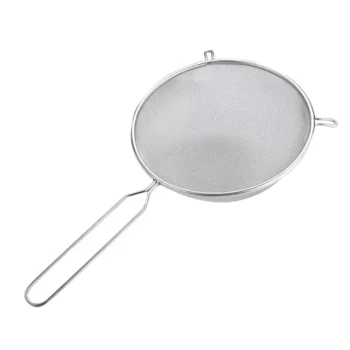
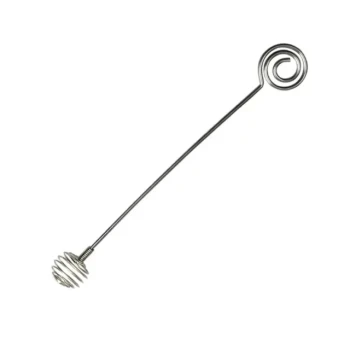
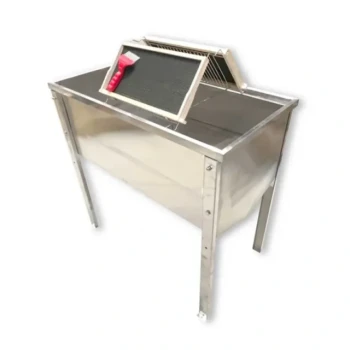
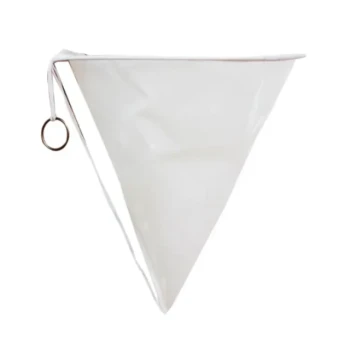
The standard material for high-quality honey strainers is food-grade stainless steel. Specifically, manufacturers rely on the 304 grade of stainless steel, particularly for double sieve models. This alloy is favored for its exceptional durability and its ability to resist corrosion, oxidation, and rust, while remaining easy to clean and sanitize.
The core value of using 304 food-grade stainless steel lies in its combination of longevity and hygiene; it withstands the sticky, viscous nature of honey without degrading or rusting over time.
The Properties of 304 Stainless Steel
Resistance to Degradation
The primary reason for selecting 304 stainless steel is its chemical stability. It is highly resistant to oxidation and rust.
This is critical in food processing, as equipment must not degrade when exposed to moisture or organic acids found in food products.
Ease of Maintenance
Stainless steel provides a smooth, non-porous surface. This makes the equipment easy to clean after use.
Proper cleaning is essential to prevent bacterial growth or cross-contamination between batches of honey.
Structural Durability
Honey is a dense, heavy substance. 304 stainless steel offers the tensile strength required to hold the weight of honey without warping.
This durability ensures the strainer remains effective over many seasons of use, unlike flimsier materials that might deform.
Practical Application in Beekeeping
Particle Separation
Strainers utilize a mesh screen to mechanically separate impurities from the honey. This includes removing wax cappings, propolis, and other fine particles.
The Double Sieve Design
The primary reference highlights that this material is particularly common in double sieve models.
These units typically employ two screens of different mesh sizes to progressively filter debris, resulting in a cleaner final product.
Suitability for Scale
These strainers are an ideal solution for hobbyists and small-scale beekeepers.
They offer a cost-effective and easy-to-use alternative to the expensive, automated machinery used in large industrial operations.
Understanding the Trade-offs
Capacity Limitations
While stainless steel strainers are durable, they are generally passive tools reliant on gravity.
For massive commercial operations, this manual straining process may be too slow compared to centrifugal filtration systems.
Initial Cost vs. Disposable Options
A stainless steel unit will cost more upfront than a simple disposable cheesecloth.
However, the "cost-effectiveness" mentioned in the references is realized over time through reusability, whereas cloths must be replaced frequently.
Making the Right Choice for Your Goal
When selecting equipment for your apiary, consider your volume and long-term needs.
- If your primary focus is hygiene and equipment longevity: Prioritize a 304 food-grade stainless steel double sieve model to ensure resistance to rust and oxidation.
- If your primary focus is low-barrier entry: Recognize that these strainers are designed as a cost-effective solution for hobbyists, avoiding the need for complex machinery.
Investing in the right material ensures your honey remains pure and your equipment lasts for years to come.
Summary Table:
| Property | 304 Stainless Steel Benefit | Impact on Honey Processing |
|---|---|---|
| Corrosion Resistance | Resists rust and oxidation | Prevents contamination from moisture/organic acids |
| Surface Texture | Smooth and non-porous | Easy to sanitize; prevents bacterial growth |
| Tensile Strength | High structural durability | Supports heavy honey weight without warping |
| Maintenance | Reusable and dishwasher safe | Cost-effective alternative to disposable filters |
| Filter Design | Double sieve compatibility | Progressive mesh sizes for ultra-clear honey |
Scale Your Apiary Operations with HONESTBEE
At HONESTBEE, we understand that high-quality filtration is the cornerstone of premium honey production. As a leading partner for commercial apiaries and distributors, we provide a comprehensive wholesale range of food-grade 304 stainless steel strainers, advanced honey-filling machines, and specialized hive-making equipment.
Whether you are looking to stock your distribution channel or upgrade your commercial processing line, our portfolio of robust beekeeping tools and industry consumables is designed to maximize your efficiency and product purity.
Ready to elevate your honey production? Contact us today to discuss our bulk pricing and explore how our industrial-grade solutions can benefit your business.
Related Products
- Heavy Duty 304 Stainless Steel Honey Dipper
- Professional Stainless Steel Honey Filter with Support Handle
- Stainless Steel Triangle Support Honey Strainer and Filters
- Stainless Steel Double Layer Honey Strainer Sieve Filters
- Modern Stainless Steel Honey Dipper Stirrer
People Also Ask
- How do you clean and store a honey dipper? Simple Steps for Long-Lasting Performance
- What is the proper method for cleaning a honey dipper? Maintain Pure Flavor with These Easy Pro Tips
- What is a honey dipper and what is it used for? A Guide to Mess-Free Drizzling
- What is a honey dipper? Master the Art of the Perfect Drizzle with This Essential Tool
- What is a honey taking spoon called? Discover the Tool for a Perfect, Mess-Free Drizzle