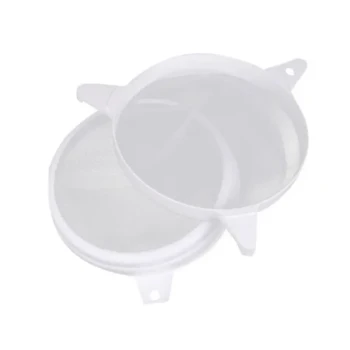
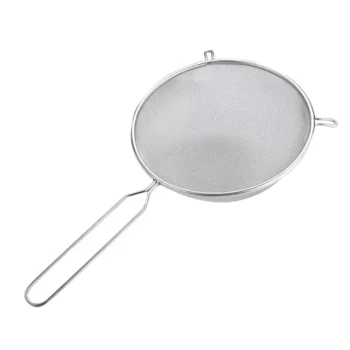
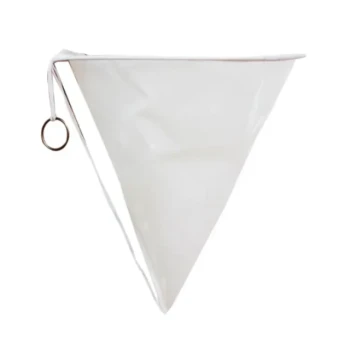
Double sieve honey strainers are designed with a graduated filtration system to maximize efficiency, typically pairing a coarser upper mesh with a finer lower mesh. Standard configurations found in the industry include a 1000-micron top mesh with a 500-micron bottom mesh, a 1000-micron top with a 710-micron bottom, or a wider 1875-micron upper mesh over a 650-micron bottom mesh. These specific pairings prevent the finer filter from clogging prematurely by allowing the upper sieve to catch larger wax cappings and debris first.
Effective honey filtration relies on a graduated process rather than a single barrier. By utilizing specific mesh combinations—such as 1000 microns for coarse debris and 500 to 700 microns for fine particulates—double sieves maximize flow rate while ensuring a clean, marketable final product.
The Strategy Behind Mesh Combinations
To understand which strainer fits your needs, you must look beyond the numbers and understand the "why" behind these specific pairings.
The Function of the Upper Mesh
The top sieve acts as the primary defense. Its goal is not to polish the honey, but to remove substantial debris like large wax cappings, bee parts, or wood splinters.
By using a mesh size between 1000 and 1875 microns, the upper tier allows honey to flow through rapidly. This prevents the backlog that would occur if you poured raw honey directly onto a fine screen.
The Role of the Lower Mesh
The bottom sieve is responsible for clarity. Once the large debris is removed, the honey passes through this finer screen to catch smaller particulates.
Sizes ranging from 500 to 710 microns are tight enough to result in clear honey but open enough to allow gravity to pull the honey through without requiring extreme pressure or heat.
Common Configuration Examples
Based on standard manufacturing specifications, there are three distinct combinations you will frequently encounter.
The Fine Filtration Setup (1000 / 500)
This combination features a 1000-micron top and a 500-micron bottom.
This is often considered a standard for hobbyists who want very clear honey. The 500-micron bottom mesh is fine enough to catch very small specks, resulting in a highly polished final product.
The High-Flow Setup (1000 / 710)
This pairing uses the same 1000-micron top but opens the bottom mesh to 710 microns.
The slightly larger holes in the bottom sieve allow for faster processing speeds. This is beneficial when dealing with thicker honey or larger volumes where speed is a priority over absolute microscopic clarity.
The Coarse Intake Setup (1875 / 650)
This configuration utilizes a very open 1875-micron top paired with a 650-micron bottom.
The 1875-micron upper mesh is extremely coarse, meaning it will only stop the largest chunks of wax. This places a heavier load on the 650-micron bottom screen, but it ensures the top screen rarely, if ever, clogs during a pour.
Understanding the Trade-offs
While double sieves are efficient, every mesh combination presents a compromise between speed and purity.
Filtration Speed vs. Clarity
The tighter the bottom mesh (e.g., 500 microns), the slower your honey will flow.
If you are straining cold or particularly viscous honey, a 500-micron mesh can create a significant bottleneck. In contrast, a 710-micron bottom mesh will process honey faster but may let through tiny specks of pollen or wax that a finer mesh would catch.
The Risk of Clogging
A mismatch in sizes can lead to frustration.
If the top mesh is too coarse (like the 1875-micron option) and the honey is full of medium-sized debris, the bottom mesh may clog quickly because the top layer isn't doing enough work. Conversely, if the top mesh is too fine, it becomes the bottleneck, holding up the entire harvest.
Making the Right Choice for Your Goal
Selecting the correct mesh combination depends entirely on your specific processing conditions and clarity standards.
- If your primary focus is maximum clarity: Choose the 1000-micron top / 500-micron bottom combination to remove the finest particulates for a professional, polished look.
- If your primary focus is processing speed: Opt for the 1000-micron top / 710-micron bottom combination to increase flow rate while still removing all visible debris.
- If your primary focus is preventing top-screen overflow: Use the 1875-micron top / 650-micron bottom setup to ensure rapid initial intake of honey containing large wax chunks.
Ultimately, the best strainer combination balances the viscosity of your honey with the level of filtration your customers expect.
Summary Table:
| Setup Type | Upper Mesh (Microns) | Lower Mesh (Microns) | Primary Benefit |
|---|---|---|---|
| Fine Filtration | 1000 | 500 | Maximum clarity and polished finish |
| High-Flow | 1000 | 710 | Faster processing for thick honey |
| Coarse Intake | 1875 | 650 | Prevents top-screen overflow from large debris |
Scale Your Honey Production with HONESTBEE
Are you looking to optimize your honey processing line? HONESTBEE specializes in supporting commercial apiaries and distributors with premium, wholesale beekeeping solutions. From high-efficiency double sieves to industrial honey-filling machines and specialized hive-making hardware, we provide the tools you need to maintain peak productivity.
Why Partner with Us?
- Comprehensive Wholesale Range: Access everything from essential consumables to heavy machinery.
- Industry Expertise: Tailored solutions for large-scale operations and distributors.
- Quality Guarantee: Equipment designed to withstand the demands of professional beekeeping.
Ready to enhance your efficiency and product quality? Contact us today to discuss your wholesale needs!
Related Products
- Stainless Steel Double Layer Honey Strainer Sieve Filters
- Stainless Steel Honey Storage and Settling Tank with Double Strainer
- Stainless Steel Triangle Support Honey Strainer and Filters
- Two-Stage Plastic Honey Filter for Buckets
- Electric Double Wall Honey Filtering Machine Purifier Equipment for Honey Processing Plant
People Also Ask
- How is a double-layer honey filter used for monitoring Varroa mite infestation? Achieve Precise Pest Control Data
- How do double-layer honey filters and white blotting paper function together in Varroa mite detection? Expert Guide
- What is the function of honey sieves, strainers, and filters in processing? Master the 3 Stages of Honey Purity
- What mesh sizes are commonly used in double sieve honey strainers? Achieve Clean, Raw Honey Efficiently
- How does a double sieve honey strainer work? Achieve Crystal Clear Honey with Professional Two-Stage Filtration