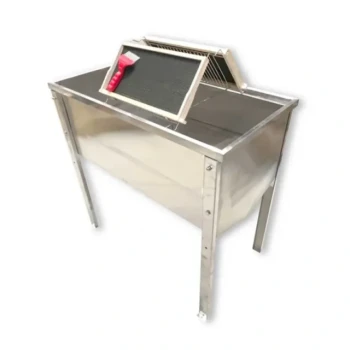
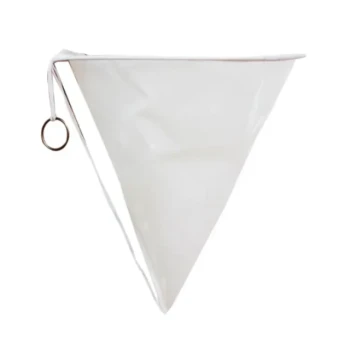
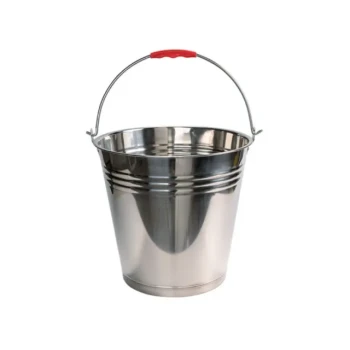
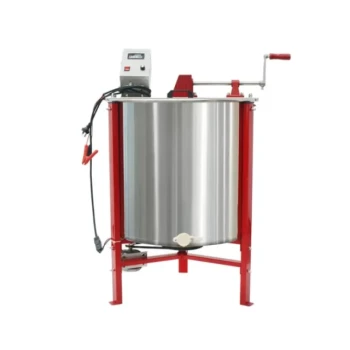
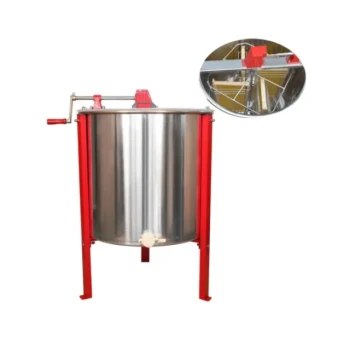
A multi-layer stainless steel honey strainer serves as the critical primary barrier for quality control, mechanically separating the liquid honey from physical contaminants immediately after extraction. By sequentially filtering out beeswax, bee parts, and other hive debris, this equipment transforms raw extraction output into a clean, transparent fluid that meets basic food safety requirements. It acts as the foundational step in processing, directly influencing the product's visual grade and shelf stability.
By effectively removing organic and physical impurities, multi-layer filtration does more than improve clarity; it chemically stabilizes the honey by removing the nucleation sites that accelerate crystallization and the organic residues that can lead to fermentation.
Enhancing Visual and Sensory Quality
Eliminating Physical Impurities
Raw honey exiting an extractor invariably contains beeswax fragments, bee legs, and wings. A multi-layer strainer uses progressively finer meshes to intercept these solids, ensuring the final product is free of unappetizing "foreign" objects.
Achieving Market-Ready Clarity
Consumers equate transparency with purity. Through multi-stage filtration, the strainer polishes the honey's appearance, delivering the high clarity and transparency required for premium commercial grading and consumer trust.
Improving Storage Stability and Shelf Life
Retarding Crystallization
Physical impurities often act as nucleation points, which are surfaces where sugar crystals begin to form. By removing fine wax particles and dust, the strainer significantly reduces the surface area available for crystal growth, keeping the honey liquid for longer.
Preventing Spoilage and Fermentation
Organic debris, such as larval fragments or pollen clumps, can harbor moisture and yeasts. High-density filtration removes these organic residues, thereby lowering the risk of fermentation and ensuring the honey remains stable and safe during storage.
Understanding the Process Limitations
Filtration vs. Settling
While strainers remove solids, they cannot remove microscopic air bubbles introduced during extraction. A separate "maturator" or settling tank is still required to allow air and ultra-fine dust to rise to the surface for skimming.
Flow Rate Management
A multi-layer system balances filtration speed with purity, but finer meshes can clog quickly with high wax content. This requires monitoring to prevent processing bottlenecks, as forcing honey through a clogged filter can damage the equipment or introduce air.
Making the Right Choice for Your Goal
To maximize the value of your honey processing setup, consider these specific objectives:
- If your primary focus is Commercial Export: Prioritize a multi-stage system with high-density nets to achieve the maximum transparency required for high-grade pricing.
- If your primary focus is Long-Term Storage: Ensure your filtration removes all organic larval residue to prevent fermentation and spoilage over time.
- If your primary focus is Efficiency: Use a coarse pre-filter layer to catch large wax caps, preventing the finer meshes from clogging and slowing down your workflow.
The strategic use of a multi-layer strainer is the defining factor between raw hive yield and a professional, shelf-stable food product.
Summary Table:
| Feature | Benefit to Honey Quality | Impact on Product |
|---|---|---|
| Progressive Mesh Layers | Progressively removes wax, bee parts, and debris | Enhances visual clarity and transparency |
| Nucleation Site Removal | Eliminates fine particles that trigger crystal growth | Retards crystallization for longer liquid state |
| Organic Residue Filter | Removes larval fragments and pollen clumps | Prevents fermentation and microbial spoilage |
| Stainless Steel Build | Food-grade, corrosion-resistant material | Ensures food safety and long-term durability |
Elevate Your Honey Production with HONESTBEE
At HONESTBEE, we specialize in empowering commercial apiaries and distributors with the professional tools needed to succeed in the global market. Our premium multi-layer stainless steel honey strainers are just one part of our comprehensive wholesale catalog, which includes everything from advanced hive-making and honey-filling machinery to essential industry consumables.
Why partner with HONESTBEE?
- Precision Engineering: Our filtration systems are designed to maximize clarity and shelf stability for premium commercial grading.
- Full-Spectrum Supply: From specialized hardware to honey-themed cultural merchandise, we provide a complete one-stop shop for your beekeeping enterprise.
- Industry Expertise: We understand the unique needs of large-scale operators and distributors seeking quality, efficiency, and scalability.
Ready to transform your raw harvest into a market-leading product? Contact us today to explore our wholesale equipment solutions!
References
- Soraya Oka Lôbo, Domingos Leite Lima Filho. A influência do curso profissionalizante da ead na atuação do técnico apicultor na microrregião de são raimundo nonato/pi para a construção de conhecimentos e tecnologias. DOI: 10.54019/sesv2n3-014
This article is also based on technical information from HonestBee Knowledge Base .
Related Products
- Stainless Steel Double Layer Honey Strainer Sieve Filters
- Stainless Steel Triangle Support Honey Strainer and Filters
- Professional Stainless Steel Honey Filtering Machine with Water Bath Heating for Beekeeping
- Professional Stainless Steel Honey Filter with Support Handle
- Commercial 48-Frame Stainless Steel Honey Extractor
People Also Ask
- What are some typical mesh size combinations found in double sieve honey strainers? Expert Guide to Honey Filtration
- How is a double-layer honey filter used for monitoring Varroa mite infestation? Achieve Precise Pest Control Data
- How do double-layer honey filters and white blotting paper function together in Varroa mite detection? Expert Guide
- What is the function of honey sieves, strainers, and filters in processing? Master the 3 Stages of Honey Purity
- What mesh sizes are commonly used in double sieve honey strainers? Achieve Clean, Raw Honey Efficiently