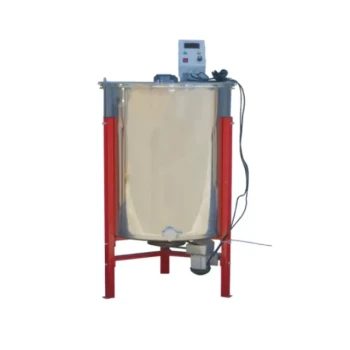
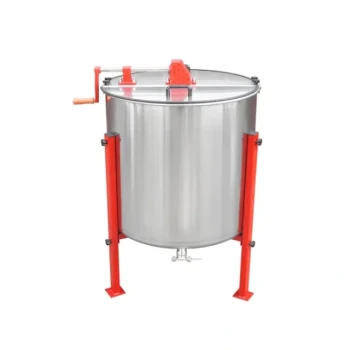
Commercial apiaries should select honey extractors built from certified food-grade, non-reactive materials—preferably stainless steel—and sized for motorized, high-volume operation. Tin-plate and non-food-grade metal extractors do not meet modern commercial food-safety expectations, and honey processed through them may be unsuitable for sale. The equipment should also support hygienic sanitation, efficient frame throughput, and compliance with the food-processing requirements applicable in the apiary’s market.
The safest commercial specification is a certified food-grade stainless steel extractor with an electric drive, adequate frame capacity, and a design that can be thoroughly cleaned and maintained. Material compliance is the foundation; capacity and automation determine whether the equipment can support profitable harvest operations.
Start With Food-Contact Material Compliance
Choose Non-Reactive Surfaces
Every surface that contacts honey should be made from a food-safe, non-reactive material. Stainless steel is generally the strongest choice for commercial extractors because it combines hygiene, durability, corrosion resistance, and long-term wear resistance.
Food-grade plastic can be acceptable where permitted by applicable regulations, but it generally offers less durability for repeated commercial harvest cycles. Glass, food-grade plastic, and stainless steel may also be appropriate for other honey-contact equipment, such as storage or filling components.
Avoid Tin-Plate and Non-Food-Grade Metals
Commercial apiaries should reject extractors made from tin-plate or unidentified metals unless the supplier can provide clear evidence that all honey-contact surfaces meet current food-safety requirements. Coatings can deteriorate, expose unsuitable base metals, or become difficult to inspect and sanitize.
An extractor that is inexpensive to purchase can create much greater costs if it compromises product eligibility, causes contamination concerns, or must be replaced after limited use.
Request Traceable Compliance Evidence
“Food grade” should not be treated as an unsupported marketing description. Distributors and apiaries should request product documentation identifying the materials used in the drum, basket, shaft, fittings, seals, and other honey-contact components.
The supplier should also identify which food-equipment requirements and certification systems the product satisfies in the intended sales market. Requirements vary by jurisdiction, so buyers should confirm the applicable authority’s expectations rather than relying on a generic certification claim.
Match the Extractor to Commercial Throughput
Select Motorized Operation for Repeated Harvests
Electric motorized extractors are generally the appropriate choice for commercial apiaries processing large volumes of frames. They reduce manual labor and processing time while supporting a more consistent harvest workflow.
Manual hand-crank models can suit small-scale or budget-conscious operations, but they place greater physical demands on workers and limit throughput during peak harvest periods.
Evaluate Frame Capacity
Frame capacity directly affects how many extraction cycles are needed. Small units may hold two frames, while common smaller operations use four- to-six-frame extractors; commercial models may hold 18 frames or more.
The correct capacity depends on the apiary’s harvest volume, available labor, facility space, and bottling speed. A larger basket is valuable only when the uncapping, filtering, storage, and packaging stages can keep pace.
Consider Radial and Tangential Designs
Radial and tangential extractors both use centrifugal force to remove honey while allowing the comb to remain available for reuse. Their suitability depends on the frame type, operating method, and desired throughput.
Motorized radial designs are often attractive for commercial workflows because they can process more frames efficiently, but the selected basket must still be compatible with the apiary’s frames and operating requirements.
Design for Sanitation and Product Protection
Inspect Cleanability
A compliant material is only useful if the extractor can be cleaned effectively. Buyers should examine welds, seams, corners, drain areas, basket supports, and fittings for locations where honey, wax, or debris could accumulate.
Smooth, accessible honey-contact surfaces simplify sanitation and reduce the risk of residue remaining between harvest cycles. The design should allow routine inspection without requiring difficult disassembly.
Check the Complete Processing Line
The extractor is one part of a larger food-contact system. Uncapping tanks, storage vats, filters, pumps, filling machinery, and containers should use compatible food-safe materials and be arranged in a logical sequence.
A practical layout moves product from uncapping to extraction, then to filtering, storage, and bottling. This reduces unnecessary handling and supports a cleaner, more efficient workflow.
Protect Raw Honey Quality
When the goal is to preserve raw honey characteristics, processing controls matter alongside material selection. Honey should not be heated above 109°F (42.8°C), and pressure micro-filtration should be avoided when preserving natural enzymes and characteristic pollen particles is part of the product specification.
The extractor should therefore fit the apiary’s intended product positioning, including any requirements for raw, minimally processed, or filtered honey.
Verify the Operating Environment
Use a Suitable Processing Room
Honey extraction should take place indoors in a strictly bee-tight room. Outdoor extraction is unsuitable because honey odors attract bees and increase contamination and operational-control risks.
The room should support effective cleaning, controlled product handling, and separation from pests and other contamination sources.
Plan Utilities and Maintenance
Motorized equipment requires appropriately located electrical outlets that are kept away from water sources. Floors and surrounding surfaces should be easy to clean or protected with suitable disposable coverings during processing.
Suppliers should provide maintenance guidance for motors, bearings, seals, baskets, and drains. Commercial buyers should also confirm the availability of replacement parts and service support before placing an order.
Understanding the Trade-offs
Stainless Steel Versus Food-Grade Plastic
Stainless steel typically costs more and may be heavier to transport or install. Its advantages are greater durability, long-term wear resistance, and a stronger fit for repeated commercial sanitation and harvest cycles.
Food-grade plastic can reduce initial cost and weight, but buyers should verify its food-contact suitability, structural durability, and resistance to repeated cleaning before selecting it for commercial use.
Manual Versus Electric Drive
Manual extractors have a lower purchase price and may work well for small apiaries with limited harvest volumes. They become inefficient when workers must process many frames in successive cycles.
Electric models improve labor efficiency and throughput, but they add motor, electrical, maintenance, and safety considerations. Their value depends on whether the apiary has sufficient volume to use the additional capacity.
Larger Capacity Versus Workflow Balance
A high-capacity extractor can reduce the number of cycles, but it may not improve total output if uncapping, settling, filtering, or bottling remains slower. The extractor should be sized as part of the complete line rather than selected as an isolated machine.
Overbuying also increases shipping, installation, storage, and service costs. Capacity should reflect realistic peak-season demand and the apiary’s available labor and infrastructure.
How to Apply This to Your Project
The following priorities help buyers, distributors, and resellers evaluate equipment consistently:
- If your primary focus is food-safety compliance: Choose a stainless steel extractor with documented food-contact materials and confirmation that it meets the requirements applicable in the destination market.
- If your primary focus is high-volume production: Select a motorized radial or tangential extractor with sufficient frame capacity to reduce harvest cycles and labor time.
- If your primary focus is long-term durability: Prioritize stainless steel construction, robust baskets, accessible components, and documented replacement-part support.
- If your primary focus is raw honey quality: Use non-reactive honey-contact surfaces, avoid heating above 109°F (42.8°C), and ensure the extraction line does not rely on pressure micro-filtration.
- If your primary focus is distribution and resale: Offer a complete specification package covering material certificates, frame capacity, drive type, sanitation features, power requirements, maintenance support, and delivery capability.
A properly documented food-grade stainless steel extractor gives commercial apiaries the clearest foundation for hygienic processing, regulatory confidence, and efficient growth.
Summary Table:
| Consideration | Key Standards/Options | Importance |
|---|---|---|
| Material | Food-grade stainless steel, food-safe plastic | Prevents contamination, ensures durability |
| Compliance | Certified to food-contact standards (e.g., FDA, EU) | Legal market access |
| Drive Type | Motorized, manual | Affects throughput and labor |
| Frame Capacity | 2-18+ frames | Determines cycles per harvest |
| Design | Radial vs tangential | Compatibility with frames and efficiency |
| Sanitation | Smooth, accessible surfaces | Prevents residue buildup |
| Workflow Integration | Matches uncapping, filtering, bottling | Optimizes total processing line |
Ensure your commercial apiary operates with reliable, compliant equipment. Contact HONESTBEE today for expert guidance and a full range of premium beekeeping tools and machinery. Our one-stop wholesale solutions include food-grade stainless steel extractors and complete processing lines, backed by rapid response, dedicated service, and fast delivery. Partner with us to boost efficiency and meet market standards—get in touch now! Contact us
Related Products
- HONESTBEE 72 Frame Industrial Electric Honey Extractor for Beekeeping
- Commercial Electric 12 Frame Honey Extractor Spinner Motorized Honey Extractor
- HONESTBEE 6 Frame Self Reversing Electric Honey Extractor for Beekeeping
- HONESTBEE 3-Frame Manual Acrylic Honey Extractor
- Stainless Steel Manual 8 Frame Radial Honey Extractor Machine for Beehives
People Also Ask
- What is the importance of balancing honeycomb frames within a honey extractor? Ensure Stability and Protect Machinery
- How is honey separated from the frames after they are uncapped? Efficient Extraction Methods for High Yields
- What are the main benefits of using a honey extractor? Maximize Yields and Protect Your Honeycomb
- What are the recommended methods for removing honey from the honeycomb? Top Extraction Techniques for Maximum Efficiency
- How do manual honey extractors compare to electric honey extractors? Choosing the Right Tool for Your Apiary Growth