To effectively insulate bee hives against extreme cold, beekeepers must utilize specific materials and hardware designed to stabilize the colony's internal microclimate. The primary methods involve applying external thermal barriers—such as foam boards, commercial hive wraps, or tar paper—and utilizing internal insulators like straw, hay, or woolen blankets, depending on the specific hive configuration.
Core Takeaway Insulation is not merely about retaining heat; it is a metabolic energy preservation strategy. By installing a robust thermal buffer, you reduce the energy bees must consume to maintain hive temperatures, thereby preventing colony starvation and mortality caused by the premature exhaustion of winter food stores.
External Protection Methods
Commercial Hardware Solutions
For standardized hive setups, specialized hardware provides the most consistent results. Foam boards are frequently used to create a rigid thermal barrier around the hive body.
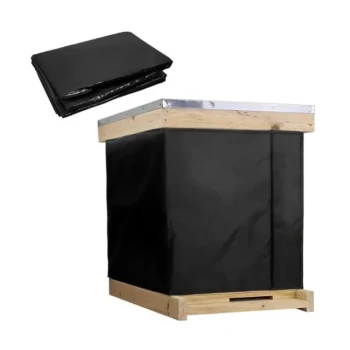
Similarly, specific hive wraps are manufactured to encase the hive. These materials are designed to buffer the colony against direct climatic impacts, such as severe cold snaps and strong winds.
Wrapping Vertical Hives
For vertical structures like Langstroth and Warre hives, wrapping is a standard insulation technique. Beekeepers often use tar paper or heavy construction paper to envelop the exterior.
This method creates a windbreak and a thermal layer. It helps maintain the internal temperature without requiring significant structural changes to the hive itself.
Internal Insulation Techniques
Cavity Filling for Horizontal Hives
Top bar hives present a different geometric challenge and often require internal insulation. In these configurations, the empty internal cavity space is the focus of thermal regulation.
Beekeepers should fill these void spaces with porous, insulating organic materials. Straw, hay, or woolen blankets are highly effective at trapping air and preventing heat loss within the large horizontal cavity.
Creating a Stable Microclimate
The ultimate goal of internal insulation is to create a controlled, stable micro-environment. This stability is critical for reducing larval mortality, which can spike during sharp fluctuations in temperature and humidity.
The Physiology of Winter Survival
Reducing Metabolic Energy Expenditure
The biological justification for insulation is rooted in energy conservation. High-quality insulation reduces the metabolic effort bees must exert to generate warmth.
Preventing Starvation and Freezing
When a hive is poorly insulated, bees must consume honey rapidly to produce metabolic heat. If they burn through their reserves too quickly, the colony faces starvation even if they successfully resisted the cold initially.
Superior insulation ensures food stores last longer. This prevents the dual threats of freezing deaths and starvation that occur when energy resources are depleted before spring.
Understanding the Trade-offs
Hardware Compatibility
Not all insulation methods are universal. Materials suited for the internal cavities of a top bar hive (straw/hay) are generally impractical for the dense frame structure of a Langstroth hive.
Context-Specific Application
The level of insulation required depends heavily on local environmental conditions. While robust insulation protects against cold, beekeepers must ensure the chosen method aligns with the specific severe weather risks of their region, such as wind chill versus static freezing temperatures.
Making the Right Choice for Your Goal
To select the correct insulation strategy, assess your hive type and local climate severity.
- If your primary focus is insulating Langstroth or Warre hives: Utilize external wraps consisting of tar paper, heavy construction paper, or foam boards to create a wind and thermal barrier.
- If your primary focus is insulating Top Bar hives: Focus on internal volume reduction by filling cavity spaces with straw, hay, or woolen blankets.
- If your primary focus is maximizing survival rates: Prioritize high-quality hardware that reduces thermal loss, as this directly lowers the colony's metabolic energy burn and preserves honey stores.
Effective insulation transforms the hive from a simple shelter into a life-sustaining infrastructure that preserves the colony’s energy reserves.
Summary Table:
| Hive Type | Insulation Method | Recommended Materials |
|---|---|---|
| Vertical (Langstroth/Warre) | External Wrapping | Foam boards, tar paper, commercial hive wraps |
| Horizontal (Top Bar) | Internal Cavity Filling | Straw, hay, woolen blankets |
| All Configurations | Thermal Buffering | Rigid foam boards, heavy construction paper |
Secure Your Apiary’s Success with HONESTBEE
Protecting your colonies from extreme winter conditions is a critical investment for any commercial operation. HONESTBEE caters specifically to commercial apiaries and distributors with a comprehensive wholesale offering designed for durability and efficiency.
We supply the full spectrum of beekeeping tools and machinery, including:
- Advanced hardware for hive construction and winterization.
- Precision machinery, such as hive-making and honey-filling systems.
- Essential industry consumables to maintain hive health year-round.
Our portfolio ensures you have the high-quality infrastructure needed to minimize metabolic loss and maximize honey yields. Contact us today to learn how our specialized equipment can support your business goals.
Related Products
- Professional Insulated Winter Hive Wrap for Beekeeping
- Inner Beehive Cover for Beekeeping Bee Hive Inner Cover
- Professional Insulated Plastic Bee Hives
- Telescopic Beehive Outer Cover Lid Roof with Galvanised Sheeting for Langstroth Hive and Beehive Outer Cover
- Premium Three Layer Ventilated Bee Suit with Round Veil
People Also Ask
- What are the steps to properly wrap a beehive for winter? Ensure Your Colony Survives the Cold
- When is the best time to wrap a beehive for winter? A Guide to Perfect Winterization Timing
- How do professional insulation wraps provide protection for bee colonies? Optimize Winter Survival & Energy Efficiency
- What are the technical benefits of using winter wraps for beehive insulation? Boost Colony Survival & Hive Health
- What are the benefits of using insulated covers for hives? Ensure Colony Survival and Health