During a heavy honey flow, modify honey supers by creating direct upper entrances and ensuring sufficient vertical storage capacity. A roughly 1 cm opening in the side of each super, or a small entry gap created by slightly staggering the boxes, lets returning foragers reach the storage area without traveling through the bottom entrance, brood chamber, and queen excluder. Pair this access improvement with clean comb, standardized frames, and timely super additions so bees can store and ripen nectar without congestion.
Core takeaway: Direct upper entrances reduce traffic through the brood nest, while additional, properly managed supers prevent storage space from becoming the colony’s bottleneck. The best results come from combining access modifications with disciplined super rotation.
How Super Modifications Improve Nectar Collection
Add a dedicated upper entrance
Drill an entrance of approximately 1 cm in diameter into the side of the honey super, positioned so bees can enter directly into the honey-storage area.
This shortens the route for returning foragers. They do not need to pass through the crowded lower entrance, brood chamber, or queen excluder before unloading nectar.
A 1 cm opening is approximately 3/8 inch; a true 1/2-inch opening is about 1.27 cm. Consistent sizing is important when standardizing equipment across multiple hives or product lines.
Create an entry gap by staggering supers
Instead of drilling the box, a beekeeper can slightly offset one super to create a narrow entrance gap.
This approach is simple and reversible, which can be useful for temporary flow management or when boxes must remain unmodified for later use.
The gap should be controlled and stable. An irregular opening can make equipment alignment, inspection, and transport less efficient.
Increase vertical storage capacity
Add additional honey supers as the flow strengthens. More volume gives bees room to deposit incoming nectar and allows them to ripen it without crowding the brood nest.
A super functions as a vertical extension of the hive. This preserves laying space for the queen and helps reduce congestion-related swarming pressure.
Use clean comb or foundation
Fit supers with clean drawn comb where available, or with suitable foundation when new comb must be built.
Ready-to-use comb generally allows bees to begin storing nectar more quickly, while foundation provides a clean and standardized starting point for new equipment.
For commercial operations, standardized frames and compatible super dimensions also simplify inspection, replacement, extraction, and fulfillment across multiple colonies.
How to Arrange Supers During the Flow
Keep the brood and honey areas separated
Place honey supers above the brood chamber, normally with a queen excluder when the management system requires one.
This keeps the queen concentrated in the brood area and helps maintain a distinct, harvestable honey-storage zone.
The upper entrance improves worker access without eliminating the functional separation between brood rearing and honey storage.
Stay one super ahead of the bees
When an active super is approximately three-quarters full, add another super rather than waiting until the available space is exhausted.
A common arrangement is to place the new super directly above the queen excluder and move the partially filled super above it. This maintains usable storage capacity while allowing the colony to continue expanding upward.
The exact arrangement should follow the beekeeper’s equipment system and local management practice, but the operating principle is consistent: add capacity before the bees run out of it.
Match the modification to the equipment system
For distributors and commercial beekeepers, upper-entry supers should be compatible with the existing box dimensions, frame spacing, covers, queen excluders, and extraction equipment.
A modification that improves bee access but prevents secure stacking or efficient transport creates an operational problem elsewhere in the system.
Understanding the Trade-offs
Upper entrances are not a substitute for more storage
A direct entry reduces travel and congestion, but it does not create additional comb or storage volume.
If the supers are already full, the colony still needs another properly prepared box. Access and capacity solve different constraints and should be managed together.
Openings require careful management
Any permanent hole or gap changes the hive’s normal traffic pattern and may complicate inspections, seasonal configuration, or equipment reuse.
The entrance should be incorporated into a consistent hive-management plan rather than added without considering how boxes will be stacked, moved, and stored.
Queen-excluder management still matters
An upper entrance does not replace correct queen-excluder placement or inspection.
The beekeeper must still confirm that the queen remains in the brood area when that is the intended management objective and that workers can access the supers efficiently.
Standardization affects commercial efficiency
Nonstandard holes, gaps, or box dimensions can increase handling time and reduce interchangeability between colonies.
For B2B supply and large apiaries, standardized super kits, frames, covers, and compatible accessories usually provide better order fulfillment, easier replacement, and more predictable field performance.
Making the Right Choice for Your Goal
Use the following approach when preparing supers for a heavy nectar flow:
- If your primary focus is faster forager access: Add a controlled upper entrance to the super, either by drilling an approximately 1 cm hole or creating a stable entry gap through slight staggering.
- If your primary focus is maximum honey storage: Add clean-comb or foundation-equipped supers before existing boxes become full, maintaining at least one super ahead of the colony.
- If your primary focus is commercial harvesting efficiency: Use standardized supers and frames that remain compatible with queen excluders, extractors, covers, transport systems, and replacement stock.
- If your primary focus is swarm-pressure management: Provide timely vertical expansion so nectar storage does not consume the brood nest’s available space.
- If your primary focus is operational consistency across apiaries: Choose a repeatable entrance design and standardized super configuration rather than using improvised openings on individual hives.
When direct access, adequate storage, and standardized equipment work together, honey supers become a more efficient pathway from field foraging to harvest.
Summary Table:
| Modification | Purpose | Key Considerations |
|---|---|---|
| Direct upper entrance | Reduces traffic through brood nest, speeds forager access | Drill ~1 cm hole or stagger supers; ensure stable and standardized |
| Increased vertical storage | Prevents storage congestion, supports ripening | Add supers before current ones are full; keep a super ahead |
| Clean comb or foundation | Allows immediate storage or standardized comb | Use drawn comb for speed, foundation for consistency |
| Standardized equipment | Ensures compatibility with excluders, extractors, and transport | Use consistent dimensions and frame spacing for efficiency |
Optimize your honey supers for peak flow efficiency. At HONESTBEE, we supply commercial apiaries and distributors with a full spectrum of beekeeping tools, machinery, and equipment, including standardized supers, frames, and entrance reducers. Our one-stop sourcing, rapid response, and ultra-fast delivery ensure you get high-quality supplies when you need them. For B2B partners, we offer OEM/ODM support, certifications, and reliable supply chains to boost your profit margins. Contact us today to discuss your needs and let us help you maximize your honey harvest!
Related Products
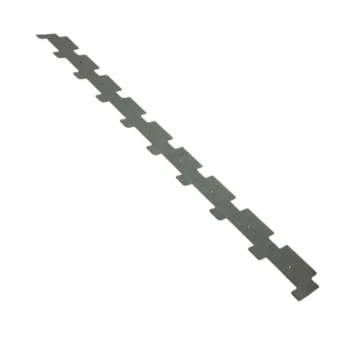
- Heavy Duty Castellated Iron Frame Spacer for Honey Supers
- Durable 16 Way Circular Bee Escape for Efficient Honey Harvesting
- Digital Honey Refractometer for Precision Measurement of Optimal Honey Quality
- Precision Honey Refractometer Instrument for Quality Assessment
- Professional Plastic Honey Dipper for Easy Honey Drizzling
People Also Ask
- What are honey super frames and what foundation options are available? Choose the Best Support for Your Bees
- What are the reasons and drawbacks of using nine frames in a ten-frame honey super? Boost Extraction Speed Today
- What are honey super frames and how many are needed per box? A Beekeeper's Essential Guide
- What are honey super frames and their foundation options? Choose the Best Support for Your Hive's Honey Production
- Why might a beekeeper use fewer than the standard number of frames in a honey super? Boost Extraction Efficiency