Managing European and native Asian honey bees in the same operating region requires more than standard hive equipment. Shared foraging areas can increase the risk of pest and parasite transmission, while different bee species may require different hive dimensions, ventilation arrangements, and handling methods. Specialized hive-manufacturing machinery, transport hardware, inspection tools, and honey-processing equipment help commercial operators separate species appropriately, reduce colony disturbance, and maintain efficient production.
The central challenge is operational compatibility: commercial apiaries must manage different biological requirements without losing standardization, speed, or sanitary control. Flexible hive production and purpose-built beekeeping machinery provide the infrastructure to balance species-specific needs with large-scale efficiency.
Why Overlapping Bee Populations Create Operational Pressure
Cross-species pest and parasite exposure
European honey bees, particularly Apis mellifera, are vulnerable to ectoparasitic mites such as Varroa destructor and Tropilaelaps mercedesae. Where European and Asian honey bee species forage in the same areas, shared contact and equipment movement can complicate parasite management.
The practical risk is not limited to direct bee-to-bee contact. Bees, frames, hive tools, transport equipment, and relocated colonies can all contribute to the movement of pests if biosecurity controls are inconsistent.
Different species require different hive configurations
Native Asian honey bees are not a single uniform management category. Species and local populations can differ in colony behavior, nesting preferences, space requirements, and tolerance for hive conditions.
A hive format that works well for European honey bees may therefore be unsuitable for a native Asian species. Fixed, one-size-fits-all production can create problems with colony fit, ventilation, inspection access, and pest exclusion.
Large-scale handling magnifies small problems
Commercial operators may manage hundreds of hives, often moving them before dawn into orchards or remote nectar-producing areas. A minor weakness in hive closure, loading procedure, or transport stability can become a significant loss when repeated across a large fleet.
Heavy lifting, nighttime work, limited cellular coverage, and difficult terrain further increase the risk of hive scattering, worker injury, colony stress, and operational delay.
How Specialized Hive Machinery Supports Multi-Species Management
Flexible hive-making equipment
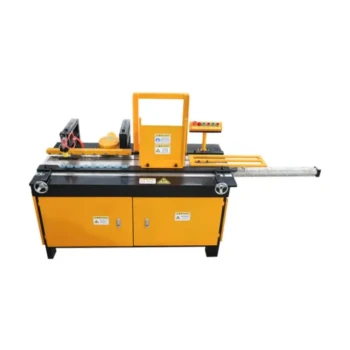
Precision hive-manufacturing machinery allows operators to produce customized hive bodies, covers, frames, entrances, and internal components for different bee species.
This flexibility is important because commercial standardization should apply to the production process—not necessarily force every species into an identical hive design.
Standardized components within each hive system
Once the correct dimensions are established for a particular species, machinery can produce repeatable components with consistent tolerances. This improves interchangeability within that species-specific hive system.
Standardized components also simplify inventory control, repairs, expansion, and replacement planning for distributors, wholesalers, and commercial apiaries.
Hive designs that support biosecurity
Precision manufacturing can improve the fit of hive bodies and covers, reducing unnecessary gaps and making inspection and cleaning more consistent. Properly designed components can support pest-resistant hive management, although equipment alone cannot replace diagnosis, treatment protocols, quarantine, or sanitation.
The most effective approach is to combine species-appropriate hive construction with clear separation of tools, colonies, and workflows where required.
Equipment That Reduces Colony Disturbance
Inspection and handling tools
Specialized hive tools allow beekeepers to open, inspect, manipulate, and close colonies more efficiently. Gentle handling is especially valuable when managing different species with distinct defensive behavior or nesting patterns.
The objective is not simply speed. It is to complete necessary interventions while minimizing unnecessary hive opening, crushing, vibration, and exposure.
Diagnostic and treatment hardware
Commercial operators need suitable equipment for detecting pest pressure and applying treatments accurately. Diagnostic tools help identify problems earlier, while treatment-application hardware supports more controlled and repeatable interventions.
These tools are most effective when integrated into a documented monitoring program that tracks colony condition, hive location, species, and treatment history.
Intelligent monitoring systems
Monitoring systems can improve visibility into colony and environmental conditions, particularly at remote sites. Earlier awareness of abnormal conditions can help operators prioritize inspections and reduce avoidable travel or disturbance.
For multi-species operations, monitoring data can also help compare how different hive configurations perform under the same environmental conditions.
Transporting Large Numbers of Hives Safely
Secure closures and ventilation
Transport-ready hive hardware helps maintain secure closures and adequate ventilation during relocation. This is essential when colonies are moved over long distances or under time-sensitive conditions.
Stable hive units reduce the risk of shifting, opening, overheating, and colony disruption during loading and transit.
Forklifts and handling equipment
Electric transport forklifts and other purpose-built lifting equipment reduce manual strain during loading and unloading. They also make it easier to move hive groups consistently without relying on repeated individual lifting.
This is particularly valuable for commercial operators moving colonies into orchards before dawn or deploying them to locations with limited infrastructure.
Faster relocation with less downtime
Efficient transport equipment allows operators to move more colonies within a limited nectar-flow window. Faster deployment can help commercial apiaries capitalize on seasonal forage while reducing the time colonies spend in staging areas.
The equipment should be selected as a complete handling system, including hive bases, pallets, closures, lifting points, trailers, and loading procedures.
Maintaining Efficiency After Harvest
Centrifugal extraction equipment
Automated or semi-automated extractors reduce the labor required to remove honey from combs. Mechanized extraction also supports more consistent throughput as colony numbers increase.
The equipment must be matched to the operator’s hive and frame formats. This is another reason why standardized components within each species-specific system are operationally valuable.
Honey-filling machinery
Honey-filling machines provide consistent volume, improved hygiene, and faster packaging than manual filling. These capabilities are important for products entering formal retail and wholesale channels.
Accurate filling also supports professional branding, repeatable product presentation, and more predictable inventory planning.
Integrated processing workflows
Extraction, filtration where applicable, filling, labeling, and order preparation should be planned as one workflow. If the apiary increases extraction capacity without improving filling or dispatch capacity, the bottleneck simply moves downstream.
For distributors and B2B buyers, a supplier offering hive equipment and processing machinery through one coordinated channel can reduce sourcing complexity and improve replacement-part availability.
Understanding the Trade-offs
Standardization versus species-specific design
Standardization improves efficiency, but excessive standardization can undermine colony welfare when species have different requirements. The better model is modular standardization: use repeatable manufacturing and logistics processes while retaining species-appropriate dimensions and features.
Automation versus capital and maintenance requirements
Machinery can reduce labor intensity and increase throughput, but it introduces equipment costs, maintenance needs, operator-training requirements, and potential downtime if spare parts are unavailable.
Buyers should evaluate total operating support—not only the initial machine price. Rapid technical response, replacement components, and reliable order fulfillment can be as important as the equipment specification.
Speed versus biosecurity discipline
Fast hive movement and processing do not automatically improve colony health. Rushed inspections, shared tools, inadequate cleaning, or poor separation between apiary groups can increase biological risk.
Commercial operators should design workflows that make the safe procedure the efficient procedure, rather than treating biosecurity as an additional task performed only when time allows.
Equipment capability versus management protocol
Hive machinery, monitoring systems, and treatment hardware support good management; they do not replace it. Species identification, quarantine, pest surveillance, sanitation, and trained personnel remain necessary.
Equipment should therefore be purchased as part of an operating system, not as an isolated solution.
Making the Right Choice for Your Goal
The appropriate product mix depends on whether the priority is colony protection, production capacity, logistics, or supply-chain efficiency.
- If your primary focus is multi-species colony management: Choose flexible hive-making machinery and species-appropriate standardized components that support separation, consistent inspection, and improved hive fit.
- If your primary focus is biosecurity: Prioritize diagnostic tools, controlled treatment-application hardware, hygienic hive components, and workflows that limit cross-use of equipment between colony groups.
- If your primary focus is large-scale relocation: Select transport-ready hive hardware, secure closures, ventilation solutions, pallets, lifting equipment, and trailer-compatible systems designed for rapid loading and unloading.
- If your primary focus is processing and market access: Combine extraction and honey-filling machinery that provides reliable throughput, hygienic handling, and consistent filling accuracy.
- If your primary focus is procurement efficiency: Work with a supplier capable of providing a full-spectrum product portfolio, responsive technical service, compatible components, and fast fulfillment from one coordinated source.
With the right combination of species-specific design, standardized operations, and dependable machinery, commercial beekeepers can manage overlapping bee populations more safely, efficiently, and sustainably.
Summary Table:
| Challenge | Specialized Solution | Benefit |
|---|---|---|
| Cross-species pest transmission | Biosecurity-focused workflows, diagnostic tools, treatment hardware | Reduced pest spread and improved monitoring |
| Different hive requirements | Flexible hive-making machinery, species-specific standardized components | Optimal colony fit and management |
| Manual handling and transport stress | Forklifts, secure closures, ventilation systems | Safer, faster colony relocation |
| Inefficient honey processing | Centrifugal extractors, honey-filling machines | Higher throughput and consistent quality |
| Sourcing complexity | Full-spectrum supplier with rapid service and fulfillment | Simplified procurement and reliable support |
Ready to optimize your multi-species apiary operations? At HONESTBEE, we provide a comprehensive range of beekeeping machinery, hive equipment, and processing tools tailored for commercial apiaries and distributors. Our one-stop sourcing, certified quality, and efficient fulfillment ensure you maintain high standards while scaling your business. Contact us today to discuss how we can support your operational goals — get in touch now!
Related Products
- Stainless Steel J Hook Hive Tool for Beekeeping
- HONESTBEE Classic Pry Bar Hive Tool with High Visibility Finish for Beekeeping
- HONESTBEE Professional Mini J-Hook Hive Tool for Beekeeping
- High-Efficiency Pneumatic Bee Hive Making Machine for Rapid Box Assembly
- Multi-Function Plier-Style Frame Grip Hive Tool
People Also Ask
- What specific challenges do beekeeping hive tools address during hive maintenance? Essential Solutions for Apiaries
- What is a J-hook hive tool and why is it favored by some beekeepers? Master Gentle Frame Handling
- What are the features of a J-hook hive tool? Effortlessly Lift Frames with Superior Leverage
- What is the purpose of the J-hook hive tool? Effortlessly Lift Frames with Superior Leverage
- How is a J-hook hive tool designed and what is its primary use? Master Effortless Hive Inspections