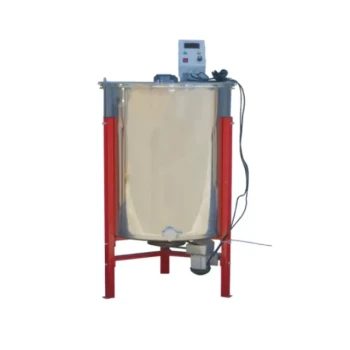
Balanced loading and controlled startup are the two essential practices for operating a motorized honey extractor smoothly. Place frames of similar weight opposite each other, distribute the load evenly around the rotor, and never start at full speed. Begin slowly, increase speed gradually, and drain honey through the gate before it reaches the spinning basket.
The central rule is simple: balance the rotor before starting, then control speed and honey flow throughout extraction. These practices prevent violent vibration, equipment movement, mechanical strain, and damage to fragile wax combs.
Balance the Extractor Before Starting
Distribute Frame Weight Evenly
Load frames so their weight is evenly distributed across the basket. Frames with similar weights should be positioned opposite each other to maintain dynamic balance during rotation.
An uneven load creates centrifugal instability. The result can be heavy vibration, rocking, movement across the floor, and excessive stress on the motor, drive axle, housing, and mounts.
Check the Load Before Engaging the Motor
Before starting, inspect the rotor to confirm that frames are seated correctly and that the cage is loaded symmetrically. Do not operate the extractor if one side is visibly heavier than the other.
If strong vibration begins, stop the machine and correct the load rather than attempting to control the extractor while it is running.
Handle Fragile or Loose Comb Carefully
Newly drawn or white seasonal comb can be especially vulnerable to sudden centrifugal force. Heavy or loosely attached comb should be handled carefully and spun conservatively to reduce the risk of comb rupture or separation from the frame.
Control Speed and Acceleration
Start at Low Speed
Begin rotation slowly and allow liquid honey to clear the cells before increasing the speed. A gradual increase reduces physical stress on both the comb and the extractor’s drive components.
Starting too quickly can rupture delicate wax comb or throw it out of the frame.
Match Speed to the Comb Condition
Speed should be controlled according to the strength and condition of the comb. Fragile comb requires a slower ramp-up and more cautious operation than strong, well-established comb.
Motorized equipment provides speed and productivity, but it also applies force quickly. Operators must control that force rather than treating maximum speed as the default setting.
Keep the Lid Closed During Operation
The extractor lid should remain fully closed while the rotor is moving. This helps contain honey and supports a cleaner work area.
The lid should only be opened after the motor has stopped and the rotor has come to a complete halt.
Manage Honey Flow During Extraction
Open and Monitor the Honey Gate
Place a food-grade collection bucket with a strainer beneath the outlet and open the honey gate so extracted honey can leave the tank. Monitor the flow and drain the tank before honey rises to the level of the spinning frame basket.
Accumulated honey can create drag against the rotor and may eventually submerge or jam the spinner.
Use a Strainer During Collection
Filtering honey as it leaves the extractor captures wax particles and other remaining impurities. This supports cleaner downstream processing before storage or bottling.
For commercial operators, consistent drainage and filtration also help standardize the workflow across different extractor sizes and production volumes.
Prepare Frames Before Loading
Remove the wax cappings before placing frames in the extractor. Uncapped cells allow honey to flow out efficiently and reduce the need for excessive speed.
Only honey-bearing, properly prepared frames should be processed. Indiscriminate extraction can introduce excess pollen and foreign matter into the honey.
Follow the Correct Extraction Method
Operate Tangential Extractors in Two Stages
Tangential extractors expose one side of the frame to the outer wall at a time. Spin the first side gently, stop the rotor, turn the frames over, and then spin the opposite side.
This two-sided process extracts honey efficiently while reducing the risk of damaging the comb through excessive force on one side.
Use Radial Extractors as Designed
Radial extractors remove honey from both sides of the frame simultaneously. Even with this design, the rotor must be balanced and acceleration must remain gradual, particularly when processing fragile comb.
Radial operation does not eliminate the need for correct loading or controlled speed.
Allow the Honey to Clear Before Increasing Speed
Heavy honey may initially resist movement out of the cells. A slow initial rotation gives it time to drain toward the tank walls and outlet before higher speed is applied.
This staged approach improves extraction while reducing stress on the wax structure and drive system.
Understand the Trade-offs
Higher Speed Does Not Always Mean Better Extraction
Increasing speed too aggressively may shorten extraction time, but it raises the risk of comb rupture, violent vibration, and mechanical wear. The appropriate operating speed is the lowest speed that extracts honey effectively for the specific comb condition.
Maximum Capacity Can Reduce Stability
Loading every available slot may improve throughput only when the frames are evenly matched and distributed. A partially loaded but balanced rotor is safer than a full rotor with a significant weight imbalance.
Capacity claims should therefore be considered alongside frame weight, comb condition, and rotor balance.
Speed Control Requires Operator Attention
Motorized extractors reduce manual effort, but they require active monitoring. Operators must watch for abnormal vibration, movement, restricted honey flow, or changes in sound and stop the equipment when conditions become unstable.
Automation does not replace loading discipline or operational judgment.
Common Operational Mistakes to Avoid
Starting With an Uneven Rotor
The most serious preventable error is starting the motor before checking frame balance. This can cause the extractor to wobble, travel across the floor, or damage internal components.
Always arrange similar-weight frames opposite each other before energizing the motor.
Accelerating Suddenly
A sudden increase in speed can damage newly drawn comb and impose unnecessary loads on the drive system. Use a controlled ramp rather than an immediate high-speed setting.
Allowing Honey to Accumulate
Operating with a closed or neglected honey gate allows liquid honey to build up inside the tank. The resulting drag can interfere with the basket and reduce extraction efficiency.
Keep the outlet prepared, open, and monitored throughout the cycle.
Opening the Lid While the Rotor Moves
Never reach into or open a moving extractor. Stop the motor, wait for the rotor to stop completely, and then make any adjustment or remove frames.
Applying These Practices to Your Operation
Use the following priorities when selecting, supplying, or operating motorized honey extractors:
- If your primary focus is smooth operation: Load similar-weight frames opposite each other, verify rotor balance, and correct any vibration immediately.
- If your primary focus is comb protection: Start at low speed and accelerate gradually, especially when processing newly drawn or loosely attached comb.
- If your primary focus is extraction efficiency: Uncap frames properly, use the correct tangential or radial procedure, and keep honey flowing through the outlet.
- If your primary focus is equipment reliability: Prevent rotor imbalance and honey buildup, since both can place excessive strain on the motor, axle, basket, and housing.
- If your primary focus is consistent commercial service: Standardize loading, speed control, drainage, and filtration procedures across operators and extractor models.
A disciplined process—balanced loading, gradual acceleration, continuous drainage, and correct frame handling—keeps motorized honey extraction safe, efficient, and repeatable.
Summary Table:
| Practice | Description |
|---|---|
| Balanced Loading | Place frames of similar weight opposite each other to maintain dynamic balance and prevent vibration. |
| Controlled Startup | Start at low speed and gradually increase to reduce stress on comb and equipment. |
| Speed Management | Adjust speed based on comb condition; fragile comb requires slower ramp-up. |
| Honey Drainage | Open and monitor the honey gate; drain before honey reaches the basket to avoid drag. |
| Proper Frame Prep | Remove wax cappings before extraction for efficient honey flow. |
| Correct Method | Use tangential (two-sided) or radial techniques as designed for optimal extraction. |
Looking for top-quality beekeeping equipment and supplies? HONESTBEE offers a comprehensive wholesale range, from extractors to hive tools, designed for efficiency and reliability. Whether you're a commercial apiary or a distributor, our one-stop sourcing, rapid delivery, and expert support ensure your operation runs smoothly. Contact us today to discuss your needs and discover how we can boost your productivity and profitability. Get in touch now!
Related Products
- Commercial Electric 12 Frame Honey Extractor Spinner Motorized Honey Extractor
- 8-Frame Electric Self-Reversing Honey Extractor Spinner for Commercial Honey Extraction Equipment
- HONESTBEE 6 Frame Three Use Electric Honey Extractor for Beekeeping
- Vertical Motor Kits for 2 3 4 Frame Electric Honey Extractors
- HONESTBEE 72 Frame Industrial Electric Honey Extractor for Beekeeping
People Also Ask
- Who are commercial honey extractors designed for? Scaling Your Industrial Beekeeping Success
- What is a commercial honey extractor? The Essential High-Volume Solution for Large Apiaries
- How is honey extracted commercially? Maximize Your Apiary's Efficiency and Honey Yield
- What are commercial honey extractors used for? Boost Your Apiary's Efficiency & Profitability
- What are the advantages of motorized extractors? Boost Honey Production and Save Time