To prevent surface defects in beeswax candles, you must prioritize a steady, continuous pouring motion combined with strict temperature control. Interrupting the flow creates visible "jump lines" where the wax hardens at different rates, while pouring between 160°F and 165°F ensures the material remains fluid enough to fill the mold completely before setting.
The quality of a beeswax candle is determined by the consistency of the pour. Maintaining a continuous stream of wax within the optimal temperature window prevents the layering effects that ruin the surface finish.
Controlling the Pour Dynamics
The Necessity of Continuous Motion
When filling a mold, the flow of wax must be steady and uninterrupted.
If you pause or hesitate during the pour, the wax already in the mold begins to cool immediately. When you resume pouring, the fresh wax sits on top of the partially cooled layer rather than integrating with it.
This results in visible horizontal lines or rings on the finished candle. To avoid this, commit to a single, fluid motion from the bottom of the mold to the top.
The Role of Temperature
While motion prevents lines, temperature ensures proper structure. The ideal pouring range for beeswax is between 160°F and 165°F.
Pouring within this specific window is critical for achieving a high-quality finish. If the wax is too cool, it may not settle flat or bond correctly; if it is too hot, it can alter the cooling mechanics.
Managing Mold Details and Setting
Filling Intricate Cavities
For molds that feature complex designs or detailed patterns, simply pouring the wax is not always enough.
You must ensure the wax flows into every small cavity. The fluidity provided by the 160°F–165°F temperature range helps here, allowing the wax to capture the fine details before it begins to harden.
Crucial Setting Times
Patience immediately after pouring is just as important as the pour itself. You must let the mold sit undisturbed for 15 to 20 minutes.
This waiting period allows the wax to firm up sufficiently. Attempting to loosen securing bands or move the mold before this time can cause the semi-soft wax to rip or deform, destroying the surface integrity you worked to create.
Common Pitfalls to Avoid
The Risk of Premature Handling
A common error is attempting to inspect or release the candle too early.
While the surface may look solid, the internal heat of beeswax retains softness longer than expected. Loosening bands before the 15-minute mark creates stress fractures or tears in the wax, rendering the candle unusable.
The Cost of Variable Flow
Inconsistent pouring speed is the primary cause of cosmetic failure.
Varying the speed of your pour changes the rate at which the wax hits the mold walls. This inconsistency leads to surface irregularities that cannot be fixed once the candle has set.
Making the Right Choice for Your Project
To ensure your beeswax candles are free of defects, tailor your approach based on these priorities:
- If your primary focus is surface smoothness: Prioritize a single, continuous pouring motion to eliminate visible hardening lines.
- If your primary focus is detail retention: Ensure your wax is strictly within the 160°F–165°F range so it flows easily into intricate mold cavities.
- If your primary focus is structural integrity: strictly observe the 15 to 20-minute waiting period before loosening any mold bands to prevent ripping.
Mastering the temperature and the continuity of the pour is the only way to replicate a professional finish consistently.
Summary Table:
| Key Technique | Ideal Parameter | Benefit |
|---|---|---|
| Pouring Temperature | 160°F – 165°F | Ensures fluidity and detail capture |
| Pouring Motion | Steady & Uninterrupted | Eliminates visible jump lines and rings |
| Initial Setting Time | 15 – 20 Minutes | Prevents stress fractures and ripping |
| Handling | Post-cooling period | Protects structural integrity and surface finish |
Elevate Your Candle Production with HONESTBEE
Are you looking to scale your production or source professional-grade beekeeping equipment? At HONESTBEE, we specialize in supporting commercial apiaries and distributors with high-performance wholesale solutions.
Our extensive portfolio includes:
- Advanced Machinery: From precision hive-making to efficient honey-filling machines.
- Beekeeping Essentials: A full spectrum of durable tools, equipment, and industry consumables.
- Commercial Support: Tailored wholesale offerings for large-scale operations.
Whether you are refining your artisanal products or expanding a distribution network, our expertise ensures you have the tools to succeed. Contact HONESTBEE today to discover how our comprehensive equipment range can streamline your business and improve your bottom line.
Related Products
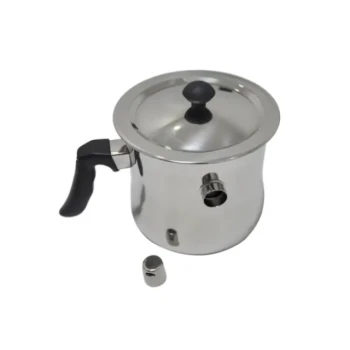
- Beeswax Melter for Candle Making Honey Bee Wax Melter
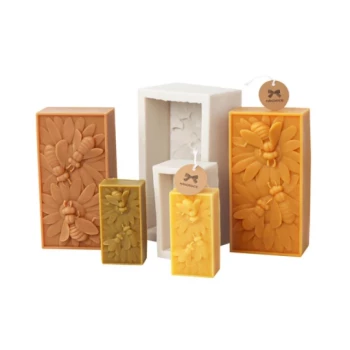
- 3D Square Honeycomb Pillar Silicone Candle Molds for Making Beeswax Candles
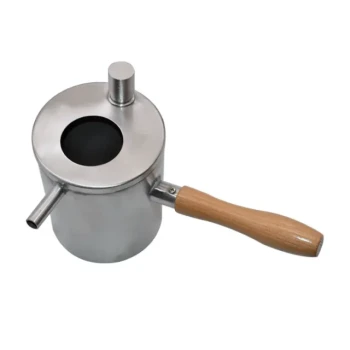
- Professional Stainless Steel Wax Melter for Beekeeping and Crafts
- 3D Beehive Silicone Skep Wax Candle Molds for Candles
- Manual Beeswax Flat Sheet Machine for Beeswax Processing
People Also Ask
- What is the best way to melt beeswax? Safely Preserve Quality with Indirect Heat
- What is the best way to melt beeswax? Use a Solar Wax Melter for Simple, Pure Results
- What types of beeswax melters are available for beekeepers? Choose the Right One for Your Operation
- What safety precautions should be taken when melting beeswax? A Guide to Flammable Wax Handling
- What types of beeswax melters are available for different scales of beekeeping? Solar vs. Electric Melters Compared