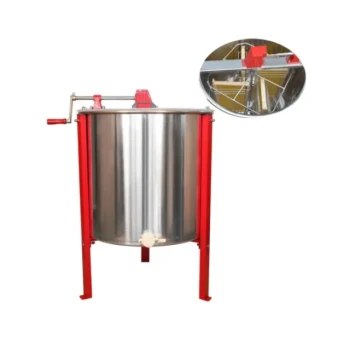
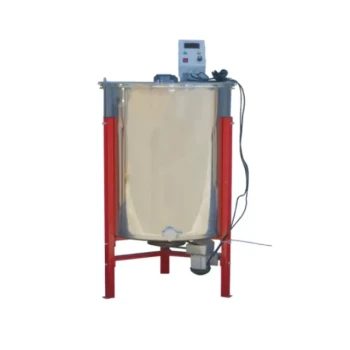
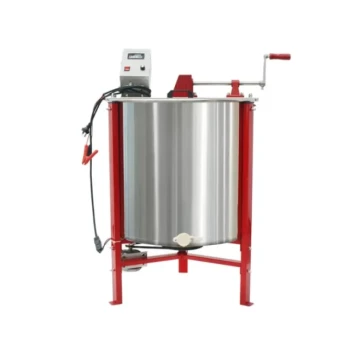
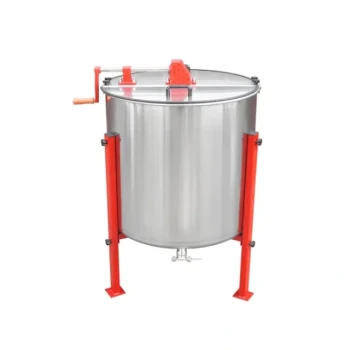
The power source for a honey extractor is primarily determined by the unit's size and frame capacity. Small models designed for holding only a few frames typically rely on manual operation, often utilizing a gearing system to manage speed. Large commercial units usually require electric motors, while specific portable models utilize small petrol or diesel engines.
While the mechanical orientation (radial vs. tangential) affects how honey is extracted, the choice of power source is fundamentally dictated by the scale of your operation and the availability of electricity.
Scale Determines the Power Source
The method of powering an extractor correlates directly with the number of frames it must spin and the environment in which it operates.
Manual Power for Small Batches
Manual extractors are the standard for hobbyists or small-scale operations. These units typically hold between 2 to 4 frames.
To generate the necessary centrifugal force without exhausting the operator, these extractors often incorporate a gearing system. This mechanism increases the spinning speed of the basket relative to the speed of the hand crank.
Electric Motors for Commercial Volume
As capacity increases, manual operation becomes impractical. Large commercial models are driven by electric motors.
These motors are essential for high-capacity units, particularly large radial extractors. While radial extractors can start at 4 frames, commercial versions can hold anywhere from 20 to over 100 frames at a time, a load that requires consistent, automated power.
Fuel Engines for Portability
For beekeepers who operate in remote locations or require mobility, electric power may not be accessible.
In these specific scenarios, extractors are powered by small petrol or diesel engines. This allows for the mechanical processing of honey in the field without reliance on a power grid or generators.
Understanding the Trade-offs
Choosing a power source requires balancing physical effort against cost and infrastructure.
The Limits of Manual Operation
Manual extractors are cost-effective and simple to maintain. However, they are physically demanding and limit your throughput. They are generally best suited for tangential extractors (3 to 6 frames) where the volume of honey is low.
The Requirements of Motorized Systems
Electric and fuel-based systems offer speed and the ability to process massive volume. The trade-off is increased complexity and cost. Electric models require a reliable power source, while petrol or diesel engines introduce noise, fumes, and engine maintenance into the extraction process.
Making the Right Choice for Your Goal
To select the correct power source, you must evaluate your current hive count and your future expansion plans.
- If your primary focus is a small hobby apiary (2-10 hives): A manual extractor with a geared crank is sufficient and cost-effective for processing small batches.
- If your primary focus is commercial efficiency or high volume: An electric motor is mandatory to handle large radial extractors capable of spinning dozens of frames simultaneously.
- If your primary focus is mobile processing in remote fields: A petrol or diesel-powered extractor provides the necessary torque without requiring a grid connection.
Match the power source to your volume requirements to ensure your extraction process is efficient rather than exhausting.
Summary Table:
| Power Source | Ideal Capacity (Frames) | Best Suited For | Key Advantage |
|---|---|---|---|
| Manual | 2 - 4 Frames | Hobbyists & Small Batches | Cost-effective & low maintenance |
| Electric | 20 - 100+ Frames | Commercial Apiaries | High efficiency & automated speed |
| Fuel (Petrol/Diesel) | Variable | Remote or Mobile Operations | Grid-independent portability |
Maximize Your Honey Yield with HONESTBEE Professional Equipment
Whether you are expanding a commercial apiary or supplying the next generation of beekeepers, HONESTBEE provides the heavy-duty machinery and precision tools you need to succeed. As a leading wholesale partner for distributors worldwide, we offer a comprehensive range of electric radial extractors, hive-making machinery, and honey-filling systems designed for industrial performance.
Why partner with HONESTBEE?
- Scalable Solutions: From manual tools to high-capacity automated lines.
- Complete Portfolio: Access beekeeping hardware, machinery, and honey-themed cultural merchandise.
- Wholesale Excellence: Competitive pricing and robust supply chains tailored for distributors.
Ready to upgrade your extraction workflow? Contact us today to explore our wholesale catalog!
Related Products
- HONESTBEE 72 Frame Industrial Electric Honey Extractor for Beekeeping
- Commercial Electric 12 Frame Honey Extractor Spinner Motorized Honey Extractor
- HONESTBEE 6 Frame Self Reversing Electric Honey Extractor for Beekeeping
- HONESTBEE 3-Frame Manual Acrylic Honey Extractor
- Stainless Steel Manual 8 Frame Radial Honey Extractor Machine for Beehives
People Also Ask
- What is the importance of balancing honeycomb frames within a honey extractor? Ensure Stability and Protect Machinery
- How is honey separated from the frames after they are uncapped? Efficient Extraction Methods for High Yields
- What are the main benefits of using a honey extractor? Maximize Yields and Protect Your Honeycomb
- What are the recommended methods for removing honey from the honeycomb? Top Extraction Techniques for Maximum Efficiency
- How do manual honey extractors compare to electric honey extractors? Choosing the Right Tool for Your Apiary Growth