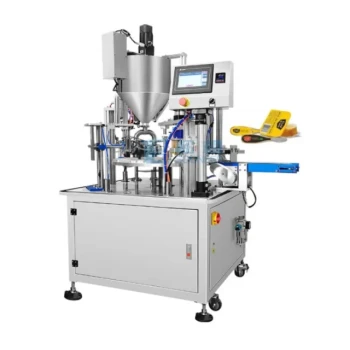
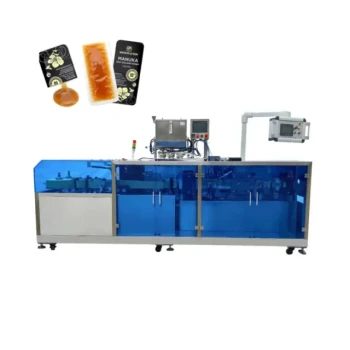
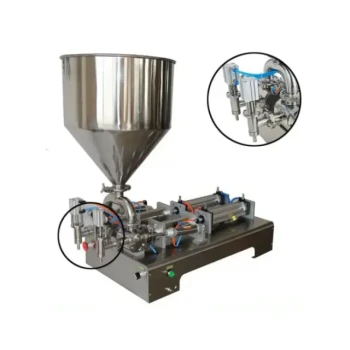
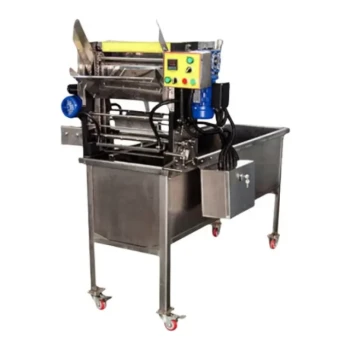
Automated honey filling machines guarantee precise volumetric accuracy and waste reduction through the use of specialized anti-drip mechanisms designed for high-viscosity fluids. Furthermore, their enclosed operational design minimizes the honey's exposure to air and contaminants, while integrated capping guarantees airtightness to extend shelf life and maintain commercial presentation.
Automated filling goes beyond speed; it provides a structural guarantee of product integrity. By isolating honey from environmental variables during packaging, these machines ensure that chemical stability, hygiene, and net weight remain consistent across every unit produced.
Ensuring Precision and Material Efficiency
Automated systems address the physical challenges of packaging viscous fluids. By replacing manual estimation with mechanical precision, producers secure two specific process guarantees.
Precise Volumetric Control
The primary guarantee is the consistency of net weight. Automated machines utilize high-precision metering systems (often piston or mass-based) to dispense exact volumes.
This ensures that every container meets strict commercial compliance standards, eliminating the variance found in manual filling.
Anti-Drip Mechanisms
Honey is notoriously difficult to handle due to its high viscosity ("thickness") and tendency to string.
Automated machines employ active anti-drip mechanisms that cut the flow cleanly after filling. This prevents product loss on the conveyor or the bottle exterior, guaranteeing that valuable product ends up inside the jar rather than as waste.
Preserving Hygiene and Bio-Activity
The packaging stage is the point of highest risk for contamination. Automation transforms this stage from an open process to a closed, sterile loop.
Enclosed Operation
These machines operate within an enclosed environment. This physical barrier significantly reduces the exposure of honey to airborne particulates and atmospheric moisture.
By preventing moisture absorption, the system prevents fermentation and spoilage, effectively securing the biological safety of the product.
Contaminant Isolation
Manual handling introduces the risk of cross-contamination from human contact or non-sterile tools.
Automated systems utilize food-grade materials and sterile environments to isolate the honey. This guarantees compliance with strict food safety standards required for large-scale distribution.
Preservation of Chemical Integrity
Honey contains delicate aromatic compounds and heat-sensitive enzymes (such as amylase).
By minimizing air contact and eliminating the need for excessive heating to facilitate flow, automated fillers preserve these natural components. This guarantees that the final product retains its nutritional profile and flavor complexity.
Optimization of the Final Product
The guarantees provided by automation extend to the moment the product leaves the facility.
Integrated Sealing
Filling is only half the equation; the container must be immediately secured.
These machines function in conjunction with capping and sealing equipment. This integration guarantees an immediate airtight seal, preventing oxidation and maximizing the commercial shelf life of the honey.
Visual Consistency
Commercial presentation relies on uniformity.
Automation ensures bubble-free injection and consistent fill levels. This guarantees that when products are lined up on a shelf, they present a uniform, professional appearance that builds brand trust.
Understanding the Operational Trade-offs
While automation provides critical process guarantees, it introduces new operational variables that must be managed.
Cleaning and Maintenance Rigor
Honey crystallizes and hardens when left static. The complex anti-drip nozzles and metering pumps require rigorous, regular cleaning cycles to prevent clogging.
Failure to maintain the machine results in a complete loss of the precision guarantees discussed above.
Flexibility Limitations
High-speed automated lines are optimized for specific container sizes and viscosity levels.
Switching between vastly different jar shapes or honey types (e.g., from liquid to creamed honey) often requires significant downtime for recalibration and tooling changes.
Making the Right Choice for Your Production
To leverage these guarantees effectively, align the technology with your specific production objectives.
- If your primary focus is Commercial Compliance: Prioritize machines with mass-based metering to guarantee net weight accuracy and meet legal trade standards.
- If your primary focus is Product Purity: Select equipment with a fully enclosed, sterile filling environment to protect enzyme activity and prevent moisture absorption.
- If your primary focus is Cost Efficiency: Look for robust anti-drip mechanisms to minimize material waste during the handling of high-viscosity honey.
By implementing the right automated solution, you convert the packaging stage from a production bottleneck into a critical quality control checkpoint.
Summary Table:
| Process Guarantee | Key Mechanism/Technology | Benefit to Producer |
|---|---|---|
| Volumetric Accuracy | Precision metering (Piston/Mass-based) | Eliminates variance; ensures commercial compliance |
| Waste Reduction | Active anti-drip mechanisms | Prevents product loss and maintains clean packaging |
| Biological Safety | Enclosed, food-grade sterile environment | Prevents fermentation, moisture absorption, and contamination |
| Product Integrity | Low-heat flow & minimal air contact | Preserves heat-sensitive enzymes and flavor complexity |
| Commercial Longevity | Integrated airtight capping/sealing | Prevents oxidation and maximizes shelf life |
| Brand Consistency | Uniform fill levels & bubble-free injection | Professional, uniform shelf presentation |
Elevate Your Honey Production with HONESTBEE
Transitioning to automated packaging is a critical step in scaling your commercial apiary. HONESTBEE provides the specialized equipment needed to turn these process guarantees into reality. We offer a comprehensive wholesale range, from high-precision honey-filling machines to specialized hive-making hardware and essential industry consumables.
Why partner with HONESTBEE?
- Industry Expertise: We cater specifically to commercial apiaries and distributors with equipment designed for high-viscosity fluids.
- Total Solutions: Beyond machinery, we supply beekeeping tools and honey-themed cultural merchandise to enhance your brand.
- Efficiency & Quality: Our systems are engineered to minimize waste and maximize the biological purity of your harvest.
Ready to optimize your packaging line and ensure the highest product standards? Contact our experts today to find your custom solution!
References
- Anuradha Kumari, Laxmikant Laxmikant. Socio-economic profile and training needs of beekeepers in Samastipur district of Bihar. DOI: 10.15740/has/au/11.1/1-6
This article is also based on technical information from HonestBee Knowledge Base .
Related Products
- Fully Automatic Honey Filling Packaging Machine for Processing Line
- Automatic Honey Filling and Filtering Machine for Beekeeping Bottle Filling
- Precision Durable Efficient HONESTBEE Rotary Honey Filling Machine
- Semi Automatic Small Honey Bottle Filling Machine Honey Filler
- Precision Automated Packaging Turntable Honey Spoon Filling Sealing Packing Machine
People Also Ask
- Why are fully automatic honey filling and packaging lines essential? Boost Your Honey's Market Value and Quality
- What is a fully-automatic honey filler? Streamline Your Production with High-Precision Automation
- How do automated honey filling and packaging machines affect profitability? Boost Margins with HONESTBEE Technology
- How do automated honey filling and packaging machines contribute to the market value of honey products? Maximize Your ROI
- How do industrial-grade automated honey filling and packaging machines mitigate the risk of physical contamination?