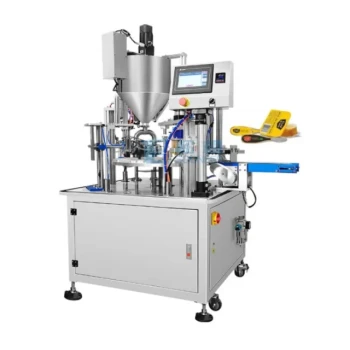
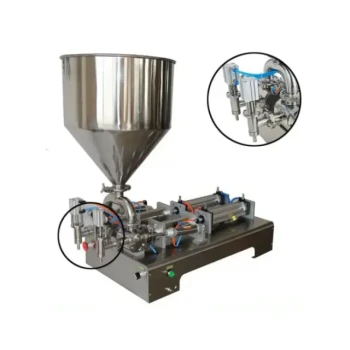
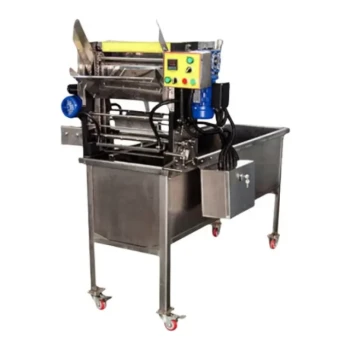
Automated honey filling machines serve as the critical technological bridge between raw apiary harvesting and professional commercial retail. By utilizing high-precision quantitative filling technology, these systems ensure that the net content of every unit is chemically and physically consistent, virtually eliminating the variability and errors inherent in manual operations. They are the essential hardware for producers aiming to achieve large-scale packaging, rigorous food safety compliance, and the aesthetic uniformity required for retail success.
By replacing variable manual labor with sterile, high-precision automation, these machines transform honey from a raw bulk commodity into a standardized, high-value consumer product capable of competing in international markets.
Transforming Production Efficiency
To move from local sales to broader markets, producers must overcome the bottlenecks of manual labor. Automated filling is the lever that multiplies output capabilities.
Accelerating Throughput
Manual filling is time-consuming and limits the volume a facility can handle. Automated machines facilitate large-scale packaging workflows, allowing producers to process substantial harvests rapidly.
This speed is crucial for meeting the demands of commercial honey production without sacrificing the integrity of the product.
Reducing Operational Costs
While the initial investment is higher, automation significantly reduces long-term labor costs.
By streamlining the packaging line, you minimize the number of personnel required for repetitive tasks. This shifts your labor resources from basic dispensing to higher-value quality control or management roles.
Minimizing Material Loss
Manual dispensing often leads to spills, overfilling, or drips. Automated machines offer precise dosage control, ensuring that valuable product ends up in the jar, not on the production floor.
This reduction in waste directly correlates to better economic returns on raw materials.
Achieving Standardization and Consistency
In the retail market, consistency is synonymous with quality. Consumers and regulators expect every jar to be identical.
High-Precision Quantitative Filling
The core function of these machines is quantitative consistency. They utilize advanced flow control to ensure the net weight of each bottle is exact.
This precision prevents legal issues related to underweight products and financial losses related to accidental overfilling.
Aesthetic Uniformity
Beyond volume, appearance matters. Automated lines ensure consistent fill levels and standardized container sealing.
This improves the aesthetic quality of the finished product, making it visually appealing on store shelves and reinforcing brand professionalism.
Managing Viscosity Variations
Honey is not a uniform fluid; its viscosity changes based on temperature and floral source.
Industrial-grade machines are engineered to handle these variations, as well as related products like royal jelly or propolis. They maintain the unique physical properties of different subspecies while ensuring steady flow and accurate filling.
Elevating Hygiene and Safety
As honey moves from the hive to the table, the risk of contamination increases. Automation is the primary defense against this risk.
Eliminating Human Contact
Manual filling introduces multiple touchpoints where bacteria or foreign objects can enter the product.
Automated systems minimize manual contact, effectively acting as a barrier against secondary pollution. This isolation is critical for maintaining product purity.
Sterile Processing Environments
Advanced machines incorporate sterile filling processes and sealing techniques.
This allows producers to meet strict international food safety and hygiene standards. It ensures the product remains safe for consumption and extends shelf life by preventing microbial contamination.
Understanding the Trade-offs
While automated filling is essential for scaling, it is important to recognize the operational realities of implementing this technology.
Maintenance and Calibration requirements
Precision equipment requires regular maintenance. To maintain quantitative accuracy, sensors and nozzles must be calibrated frequently, especially when switching between different honey viscosities.
Initial Capital vs. Long-Term Gain
Transitioning to automation involves a significant upfront cost compared to manual tools. This investment is justified only when production volume is sufficient to amortize the cost through labor savings and reduced waste.
Making the Right Choice for Your Goals
Selecting the right level of automation depends on your specific business objectives and market targets.
- If your primary focus is International Export: Prioritize machines with sterile filling capabilities and high-precision metering to meet strict regulatory and safety standards.
- If your primary focus is Brand Building: Focus on equipment that ensures aesthetic consistency and superior sealing to position your honey as a high-end, premium retail good.
- If your primary focus is Product Diversity: Choose versatile machinery capable of adjusting to different viscosities to handle niche products like royal jelly or specific floral source honeys.
The transition to automated filling is not just an operational upgrade; it is the strategic step that converts raw agricultural potential into a scalable, competitive commercial brand.
Summary Table:
| Key Feature | Benefit for Producers | Strategic Value |
|---|---|---|
| Quantitative Filling | Eliminates manual errors and overfilling | Ensures regulatory compliance & cost savings |
| High-Speed Throughput | Accelerates large-scale packaging | Enables rapid transition from harvest to market |
| Sterile Automation | Minimizes human contact & contamination | Meets international food safety standards |
| Viscosity Management | Handles various honey types & royal jelly | Maintains product integrity across diverse lines |
| Aesthetic Uniformity | Standardized fill levels and sealing | Enhances retail shelf appeal and brand trust |
Transform Your Apiary into a Competitive Commercial Brand
At HONESTBEE, we specialize in bridging the gap between raw honey harvesting and professional retail success. Whether you are a commercial apiary seeking to scale production or a distributor looking for reliable machinery, our comprehensive wholesale offering is designed for you.
Our Value to You:
- Complete Equipment Solutions: From high-precision honey-filling machines to specialized hive-making hardware.
- Industry Consumables: A wide array of essential supplies to keep your production line running smoothly.
- Cultural Merchandise: Unique honey-themed products to diversify your brand portfolio.
Ready to eliminate manual bottlenecks and achieve world-class standardization? Contact HONESTBEE today to discover how our professional beekeeping tools and machinery can optimize your operations.
References
- Beekeeping In The Mediterranean, From Antiquity To The Present. DOI: 10.1080/0005772x.2014.11417587
This article is also based on technical information from HonestBee Knowledge Base .
Related Products
- Fully Automatic Honey Filling Packaging Machine for Processing Line
- Automatic Honey Filling and Filtering Machine for Beekeeping Bottle Filling
- Precision Durable Efficient HONESTBEE Rotary Honey Filling Machine
- Semi Automatic Small Honey Bottle Filling Machine Honey Filler
- Precision Automated Packaging Turntable Honey Spoon Filling Sealing Packing Machine
People Also Ask
- Why are fully automatic honey filling and packaging lines essential? Boost Your Honey's Market Value and Quality
- What is a fully-automatic honey filler? Streamline Your Production with High-Precision Automation
- How do automated honey filling and packaging machines affect profitability? Boost Margins with HONESTBEE Technology
- How do automated honey filling and packaging machines contribute to the market value of honey products? Maximize Your ROI
- How do industrial-grade automated honey filling and packaging machines mitigate the risk of physical contamination?