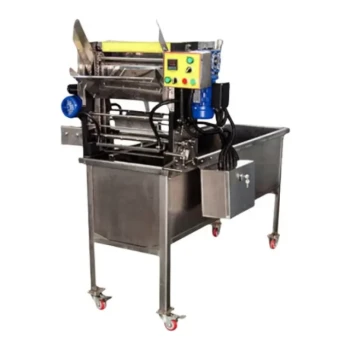
Automated honey packaging lines primarily manage production costs by drastically increasing operational efficiency, reducing reliance on manual labor, and minimizing expensive material waste through precision filling. Because honey is typically a high-priced commodity, these automated systems allow manufacturers to optimize the cost-per-unit, creating the necessary margin to offer competitive pricing or promotions in a price-sensitive market.
Core Takeaway: Automation is not just an operational upgrade; it is a critical financial strategy. By lowering the unit cost of packaging, manufacturers gain the flexibility to lower prices or run promotions, stimulating purchase frequency for a product often viewed as a luxury item.
Optimizing the Cost Structure
Reducing Raw Material Loss
Honey is a valuable resource, and manual filling often leads to inconsistency.
Automated lines utilize high-precision quantitative systems to ensure exact net weights for every unit.
This precision significantly reduces "product giveaway" (overfilling) and material loss, ensuring that every ounce of processed honey generates revenue.
Offsetting Rising Raw Material Costs
Honey production faces external pressures, such as colony losses, which drive up the cost of raw honey.
High-efficiency packaging offsets these rising input costs by improving the speed and purity of the harvest.
By streamlining the processing stage, manufacturers can maintain competitive margins even when the cost of raw honey increases due to slow production growth.
Minimizing Labor Dependencies
Manual packaging is labor-intensive and prone to human error.
Integrating industrial-grade machinery allows facilities to achieve standardized management across large-scale operations without a proportional increase in headcount.
This reduction in manual handling lowers direct labor costs and reduces expenses related to human error correction.
Strategic Pricing and Market Competitiveness
Enabling Flexible Pricing Models
The primary reference highlights that controlling packaging costs is critical for effective pricing strategies.
When manufacturers lower their unit costs through automation, they gain the financial buffer to offer promotional pricing.
This flexibility is essential for attracting price-sensitive consumers and encouraging them to buy honey more frequently.
protecting Inventory Value
Waste isn't just about what spills on the floor; it's also about spoilage.
Automated machines utilize reliable sealing processes that prevent secondary contamination and fermentation.
By extending product shelf life, automation reduces financial losses associated with spoiled inventory and returns.
Understanding the Trade-offs
High Initial Capital Expenditure
While automation reduces operating costs (OPEX), it requires significant upfront capital expenditure (CAPEX).
Implementing industrial-scale harvesting tools and high-precision filling machines is a substantial investment that requires a calculated return-on-investment (ROI) strategy.
Operational Complexity
Transitioning to automated lines shifts the workforce requirement from manual laborers to skilled operators.
Maintenance becomes a critical factor; downtime on an automated line can be more costly than a slowdown in a manual process.
Manufacturers must account for the costs of maintenance and skilled oversight to ensure the high-efficiency claims of the machinery are actually realized.
Making the Right Choice for Your Goal
Automation is a tool, and its application should depend on your specific business pressures.
- If your primary focus is Margin Protection: Prioritize machines with high-precision weighing systems to eliminate overfilling and reduce raw material loss.
- If your primary focus is Market Expansion: Leverage automation to standardize packaging and hygiene, meeting the strict requirements for export and high-end retail markets.
- If your primary focus is Volume Growth: Implement high-speed automated lines to offset rising raw material costs and ensure supply stability during periods of slow production growth.
By viewing automation as a mechanism for cost control rather than just speed, you turn a production expense into a competitive pricing advantage.
Summary Table:
| Cost Management Factor | Impact of Automation | Business Benefit |
|---|---|---|
| Material Waste | High-precision filling prevents overfilling | Maximizes revenue per drop of honey |
| Labor Costs | Reduces reliance on manual packaging | Lowers OPEX and human error rates |
| Shelf Life | Superior sealing and hygiene control | Reduces losses from spoilage and returns |
| Pricing Strategy | Lowers the cost-per-unit | Enables competitive promotional pricing |
| Production Speed | High-throughput industrial processing | Maintains supply during high demand |
Maximize Your Margin with HONESTBEE Beekeeping Solutions
At HONESTBEE, we specialize in empowering commercial apiaries and distributors with the high-precision machinery needed to thrive in a price-sensitive market. From advanced honey-filling machines that eliminate product giveaway to industrial hive-making equipment, our comprehensive wholesale offering is designed to reduce your overhead and scale your output.
Whether you are looking for specialized hardware or essential industry consumables, our team provides the tools to turn your production expenses into a competitive advantage. Contact us today to optimize your honey production line!
References
- Adam Roman, Maria Kozak. Factors influencing consumer behavior relating to the purchasing of honey part 1. The buying process and the level of consumption. DOI: 10.2478/jas-2013-0026
This article is also based on technical information from HonestBee Knowledge Base .
Related Products
- Fully Automatic Honey Filling Packaging Machine for Processing Line
- Precision Automated Packaging Turntable Honey Spoon Filling Sealing Packing Machine
- Automatic Single-Dose Snap & Squeeze Honey Sachets Packing Machine
- Double Nozzle Small Honey Filling Machine Honey Sachet Packing Packaging Equipment
- Automatic Honey Filling and Filtering Machine for Beekeeping Bottle Filling
People Also Ask
- Why are fully automatic honey filling and packaging lines essential? Boost Your Honey's Market Value and Quality
- What is a fully-automatic honey filler? Streamline Your Production with High-Precision Automation
- How do automated honey filling and packaging machines affect profitability? Boost Margins with HONESTBEE Technology
- How do automated honey filling and packaging machines contribute to the market value of honey products? Maximize Your ROI
- How do industrial-grade automated honey filling and packaging machines mitigate the risk of physical contamination?