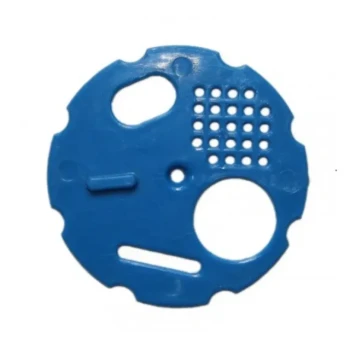
Beehive entrance protectors serve as critical terminal equipment in modern apiary defense systems. These devices, which function through mechanical obstruction or electrical principles, physically block invasive hornets from hovering and hunting directly at the hive's threshold. By establishing this barrier, they significantly reduce hornet harassment and ensure the colony remains productive during peak invasion periods.
By transforming the hive entrance from a vulnerable flat plane into a defended zone, protectors do more than save individual bees; they prevent the colony from entering a defensive paralysis, ensuring foraging and production continue despite external threats.
The Mechanics of Exclusion
Disrupting the Hunting Pattern
Hornets, particularly invasive species like the Asian hornet (Vespa velutina), rely on establishing a dominant position at the hive entrance to hawk for returning foragers.
Entrance protectors disrupt this behavior by physically blocking the hornet's ability to hover immediately in front of the landing board.
The Buffer Zone Concept
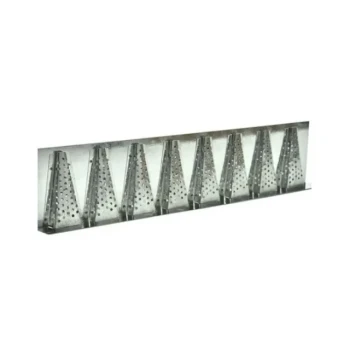
Advanced protectors, such as cuboid queen excluder devices, utilize a three-dimensional structure rather than a simple flat mesh.
This volumetric design creates a vital "buffer space" between the external predator and the colony's internal environment.
Dispersing Predator Pressure
Grid spacing on these devices is calibrated to physically block larger hornets while allowing worker bees to pass through.
By offering multiple entry and exit faces on a 3D structure, the device disperses predator focus, making it difficult for hornets to lock onto a single stream of emerging bees.
Strategic Impact on Management
Maintaining Production Stability
The primary strategic value of these tools is the prevention of foraging interruption.
Without protection, a colony under siege may cease activity to defend the hive, halting honey production. Protectors allow the "biological assets" (the bees) to continue foraging loops even when predators are present in the apiary.
Reducing Colony Mortality
By preventing hornets from entering the hive and decimating the brood or food stores, these barriers directly lower bee mortality rates.
This reduction in loss is essential for maintaining the population density required for winter survival and spring buildup.
Understanding the Trade-offs
Equipment as Consumables
It is important to view items like high-density traps and protective nets as apiary consumables rather than permanent fixtures.
They require monitoring and occasional replacement to remain effective, which adds a layer of logistical maintenance to apiary management.
The "Terminal" Limitation
The primary reference categorizes these tools as "terminal equipment," meaning they are the last line of defense at the hive itself.
Relying solely on entrance protectors without broader apiary management (such as locating and destroying nests) treats the symptom rather than the source of the invasion.
Making the Right Choice for Your Goal
To integrate entrance protectors effectively into your management plan, consider your immediate objectives:
- If your primary focus is Colony Survival: Prioritize 3D or cuboid structures that create a retreat buffer, preventing hornets from reaching bees on the landing board.
- If your primary focus is Production Continuity: Ensure the protector has high-flow porosity (multiple exit faces) so that heavy traffic during nectar flows is not bottlenecked by the defense mechanism.
Effective defense is not just about blocking a predator; it is about empowering the colony to function as if the predator were not there.
Summary Table:
| Feature | Function & Purpose | Strategic Benefit |
|---|---|---|
| Mechanical Obstruction | Blocks hornets from hovering at the landing board | Disrupts predator hunting patterns |
| 3D Buffer Zones | Creates physical space between predator and colony | Prevents defensive paralysis of worker bees |
| Calibrated Grids | Allows worker bee passage while excluding larger hornets | Maintains colony population density |
| Multi-face Porosity | Provides multiple entry/exit points for foragers | Ensures high-flow production during nectar runs |
Secure Your Apiary’s Future with HONESTBEE Professional Solutions
Protecting your colony from invasive hornets is critical for both survival and profit. At HONESTBEE, we specialize in empowering commercial apiaries and distributors with high-performance beekeeping tools and machinery designed for the modern industry. From robust beehive entrance protectors and advanced traps to industrial-grade honey-filling machines, our comprehensive wholesale offering ensures your operations remain productive and resilient.
Our Value to You:
- Expert Wholesale Supply: Direct access to a full spectrum of beekeeping hardware and consumables.
- Scalable Solutions: Equipment tailored for large-scale commercial success.
- Industry Expertise: We understand the biological and logistical needs of professional beekeepers.
Don't let predators paralyze your production. Contact HONESTBEE Today to equip your apiary with the industry's most reliable defense systems and specialized machinery.
References
- Ana Bessa, Frederico Santarém. Climate and land‐use drivers of invasion: predicting the expansion of <i>Vespa velutina nigrithorax</i> into the Iberian Peninsula. DOI: 10.1111/icad.12140
This article is also based on technical information from HonestBee Knowledge Base .
Related Products
- Beehive Entrance Discs Plastic Bee Entrance Disc for Bee Hives
- Beehive Entrance Reducer Guardian Metal Hive Entrance for Bees
- Professional Hive Front Entrance Bee Feeder
- 8-Cone Galvanized Steel Bee Robber Guard
- Steel Round Disc Entrance Reducer for Flexzion Bee Hive Nuc Box Gate
People Also Ask
- What is the best entrance for a bee hive? Maximize Colony Health & Honey Production
- What happens if you block the entrance to a bee hive? Avoid This Dangerous Mistake
- How does entrance configuration vary seasonally for beekeepers? A Guide to Year-Round Hive Health
- Why adjust beehive entrance size for humidity? Boost Honey Ripening and Varroa Control in Commercial Apiaries
- How big should a beehive entrance be? Optimize for Colony Health & Honey Production