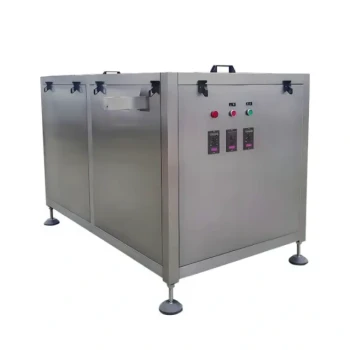
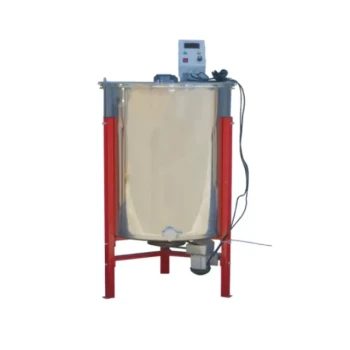
In melissopalynological analysis, laboratory centrifuges act as the primary mechanical engine for separating and concentrating microscopic pollen grains from the viscous honey matrix. By applying high-speed rotational force to dissolved honey samples, these devices overcome the natural viscosity of the fluid to force pollen, fungal spores, and honeydew elements into a dense sediment pellet at the bottom of the tube.
The Core Takeaway The centrifuge transforms a diluted honey sample into a concentrated, statistically representative sediment. This step is a non-negotiable prerequisite for microscopic analysis, as it ensures there is sufficient density of pollen to accurately determine the honey’s botanical origin, geographical source, and commercial grade.
The Mechanics of Pollen Enrichment
Overcoming Matrix Viscosity
Honey is naturally viscous, which suspends particles and prevents them from settling by gravity alone. To extract these particles, the honey must first be dissolved in water.
Even in a diluted solution, pollen grains are too light to settle quickly. High-speed rotation generates the centrifugal force necessary to drive these microscopic solids out of the suspension.
Creating the Sediment Pellet
The physical goal of the centrifuge is to create a "pellet"—a concentrated collection of solid matter—at the bottom of the test tube.
This sediment contains the pollen grains, fungal spores, and dust required for analysis, while the remaining liquid (supernatant) is discarded. This process is defined as enrichment, maximizing the number of observable elements in a small volume.
Why Concentration is Critical for Accuracy
Enabling Quantitative Analysis
For a valid scientific analysis, a technician cannot rely on a few random pollen grains found in a drop of raw honey.
Centrifugation concentrates the sample so that hundreds or thousands of grains can be counted. This high density allows researchers to calculate the precise proportions of pollen from various plant families (such as Brassicaceae or Fabaceae), which is impossible with non-centrifuged samples.
Ensuring Representative Sampling
Using large-capacity centrifuges allows analysts to process a significant volume of honey solution at once.
This ensures the final sediment is highly representative of the entire batch, rather than a localized pocket. It provides the physical assurance needed for accurate statistical analysis regarding the honey's origin.
Impact on Classification and Grade
Verifying Botanical Origin
The efficiency of the centrifuge directly impacts the ability to classify honey as monofloral (derived mostly from one plant source) or polyfloral (multi-flower).
By isolating a sufficient quantity of pollen, analysts can confirm if the honey meets the legal standards for specific labeling, such as confirming the presence of Robinia pseudoacacia (Acacia) pollen.
Establishing Commercial and Medicinal Value
The sediment profile helps classify the honey's commercial grade and potential medicinal properties.
Accurate extraction of pollen and honeydew indicators allows for the verification of authenticity and traceability, ensuring the product matches its labeled geographical origin and quality claims.
Understanding the Trade-offs
The Necessity of Standardization
While powerful, the centrifugation process introduces a variable that must be strictly controlled: standardization.
If the centrifugation parameters (speed and time) are inconsistent, the "recovery rate" of pollen will vary between samples. This leads to non-uniform concentration, making it difficult to compare results across different batches or laboratories.
Balancing Force and Integrity
There is a delicate balance required in applying centrifugal force.
Insufficient force may fail to precipitate smaller pollen grains, skewing the botanical profile. Conversely, excessive force could potentially compact the sediment too tightly or damage fragile biological markers, complicating the subsequent microscopic examination.
Making the Right Choice for Your Goal
Whether you are equipping a lab for regulatory compliance or academic research, the role of the centrifuge dictates your workflow.
- If your primary focus is Authenticity Verification: Ensure your centrifugation protocol is standardized to maximize the recovery of specific indicator pollen for unifloral classification.
- If your primary focus is Geographical Tracing: Prioritize large-capacity centrifugation to ensure the sediment sample captures the full diversity of trace pollens and dusts unique to a specific region.
Ultimately, the reliability of any microscopic honey analysis is only as good as the quality of the sediment pellet produced by the centrifuge.
Summary Table:
| Process Phase | Function of Centrifuge | Impact on Analysis |
|---|---|---|
| Particle Separation | Overcomes honey viscosity to force solids downward | Isolates pollen, spores, and dust from the liquid matrix |
| Enrichment | Creates a concentrated sediment pellet | Maximizes observable elements for statistical accuracy |
| Standardization | Controls speed and duration parameters | Ensures consistent recovery rates across different batches |
| Verification | Provides high-density samples for microscopy | Confirms monofloral/polyfloral status and commercial grade |
Elevate Your Honey Quality Control with HONESTBEE
Precise melissopalynological analysis starts with the right equipment. HONESTBEE provides professional-grade laboratory machinery and specialized beekeeping tools designed to help commercial apiaries and distributors verify botanical authenticity and maximize product value.
From high-performance centrifuges to honey-filling machines and specialized hardware, we supply the full spectrum of equipment needed to scale your operations and ensure industry compliance.
Ready to optimize your honey processing? Contact HONESTBEE Today for Wholesale Solutions
References
- İlginç Kızılpınar Temizer, Aytaç Güder. Assessment of Palynological Characterization and Total Phenol-Flavonoid Content of Some Honeys from Ordu in Turkey. DOI: 10.18185/erzifbed.476345
This article is also based on technical information from HonestBee Knowledge Base .
Related Products
- Manual Hand Crank 4 Frame Honey Extractor Centrifuge for Beekeeping
- electric honey extractor honey centrifuge 3 frame honey extractor stainless steel honey frame extractor
- Fully Automatic High Speed Centrifugal Bottle Unscrambler
- Professional 4 Frame Self Reversing Electric Honey Extractor for Beekeeping
People Also Ask
- What are some tips for achieving efficient honey extraction with a centrifuge extractor? Maximize Your Yield & Efficiency
- What is the proper procedure for maintaining a centrifuge honey extractor? Expert Tips for Longevity and Hygiene
- What are the advantages of using a centrifuge honey extractor? Maximize Yields and Protect Your Honeycombs
- Which type of honey extractor is generally more durable? Focus on Material & Build Quality for Longevity
- What is a manual honey extractor? The Essential Guide to Cost-Effective Beekeeping for Beginners