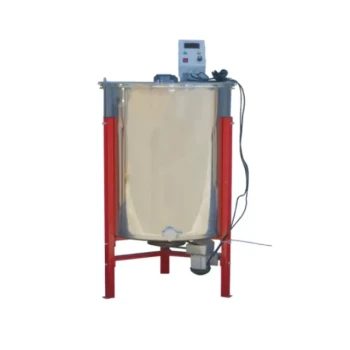
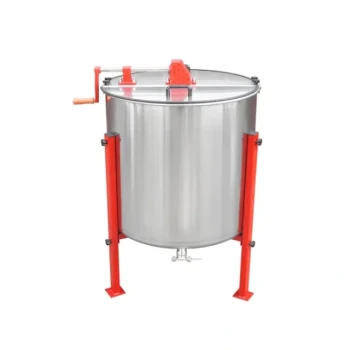
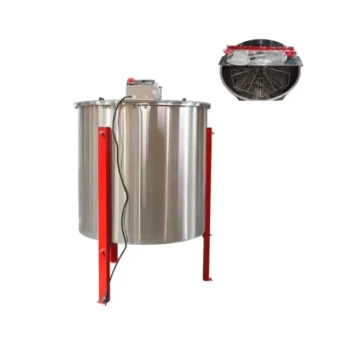
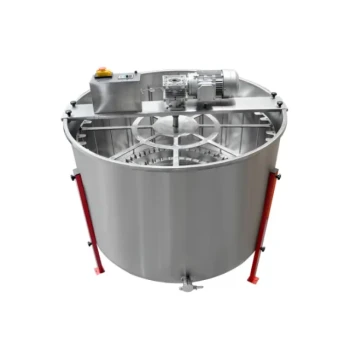
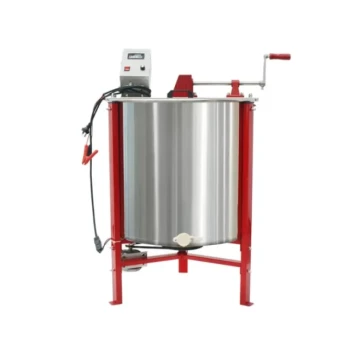
Industrial centrifugal honey extractors fundamentally transform the harvesting process by utilizing high-speed rotational force to separate honey from combs in a fraction of the time required by manual methods. This mechanical advantage allows medium-to-large scale operations to process vast quantities of frames rapidly while ensuring the physical and nutritional properties of the honey remain unaltered.
The true efficiency of centrifugal extraction extends beyond mere speed. By extracting honey without destroying the wax comb, these systems allow for immediate reuse of the frame, saving the colony the immense energy required to rebuild wax and significantly shortening the honey production cycle.
The Mechanics of Extraction Speed
Utilizing Centrifugal Force
Manual extraction often relies on gravity or crushing, which is time-consuming and labor-intensive. Industrial extractors use high-speed rotation to generate centrifugal force.
This force pulls the honey out of the comb cells almost instantly. This allows for a thorough separation of the liquid from the waxy structure in a very short operational window.
Handling Volume at Scale
For medium-to-large scale operations, manual extraction is a bottleneck that limits yield. Industrial units are designed to handle high throughput efficiently.
By mechanizing the separation process, producers can maximize their collection per season, processing more frames per hour than is physically possible with manual techniques.
Biological Efficiency: The "Bee Energy" Factor
Non-Destructive Extraction
One of the most critical advantages of centrifugal extraction is that it preserves the structural integrity of the honeycomb.
Manual methods, such as pressing, often destroy the wax foundation. Centrifugal force removes the fluid while leaving the delicate wax cells intact.
Eliminating the Rebuilding Phase
When honeycombs are destroyed during harvest, bees must consume significant resources to rebuild them.
By returning intact combs to the hive, you eliminate the need for bees to secrete new wax. This saves the colony time and metabolic energy, allowing them to focus immediately on refilling the cells with nectar.
Optimizing the Production Cycle
Because the bees are spared the task of rebuilding the nest, the turnaround time for the next harvest is drastically reduced.
This optimization of the biological cycle directly contributes to higher overall honey output for the entire season.
Quality and Purity Efficiency
Reducing Impurities
Manual extraction can introduce debris, such as soil, bee fragments, or larvae, into the final product.
Centrifugal extraction isolates the honey cleanly. The physics of the process helps separate the liquid without dislodging these heavier solid impurities, resulting in higher clarity and purity.
Preserving Chemical Integrity
Industrial extractors are typically constructed from food-grade stainless steel.
This ensures that the chemical and nutritional profile of the honey is maintained throughout the high-speed process. The extraction is efficient without compromising the natural quality of the product.
Understanding the Operational Context
The Necessity of Scale
While highly efficient, these systems are engineered specifically for operations where volume is a priority.
The primary reference indicates these benefits are most pronounced for medium-to-large scale operations. For very small hobbyists, the efficiency gains may not outweigh the operational footprint of industrial machinery.
Maintenance of Equipment
To ensure the "food-grade" promise holds true, the stainless steel components require standard industrial cleaning.
However, this maintenance is generally offset by the time saved during the actual extraction process compared to cleaning manual pressing equipment.
Making the Right Choice for Your Goal
To determine if an industrial centrifugal extractor is the right upgrade for your operation, consider your primary objectives:
- If your primary focus is Volume and Throughput: This technology is essential for medium-to-large operations to remove harvesting bottlenecks and maximize seasonal collection.
- If your primary focus is Colony Health and Sustainability: The ability to reuse honeycombs saves bee energy and reduces colony stress, making this the superior choice for sustainable apiary management.
- If your primary focus is Product Purity: The mechanical separation process reduces the risk of biological impurities (larvae/pollen) entering the honey compared to manual pressing.
Ultimately, industrial centrifugal extractors align mechanical speed with biological conservation, allowing the apiary to produce more honey by letting the bees focus on foraging rather than building.
Summary Table:
| Feature | Manual Extraction | Industrial Centrifugal Extraction |
|---|---|---|
| Processing Speed | Slow; gravity or crush-based | High-speed; instant separation via centrifugal force |
| Comb Preservation | Often destroyed (pressing) | Intact; frames are reusable immediately |
| Scalability | Limited to small batches | High-throughput for medium-to-large operations |
| Honey Purity | Higher risk of debris/impurities | Clean isolation with food-grade stainless steel |
| Bee Energy | High waste (bees must rebuild wax) | Significant savings; bees focus on foraging |
Maximize Your Apiary’s Yield with HONESTBEE
Transitioning from manual labor to industrial efficiency is essential for growing commercial apiaries and distributors. HONESTBEE provides the professional-grade tools you need to scale, including high-capacity centrifugal honey extractors, specialized honey-filling machines, and durable hive-making machinery.
By preserving your combs and optimizing the production cycle, our equipment helps your bees focus on honey production rather than rebuilding wax. Partner with us to access a comprehensive wholesale inventory of beekeeping hardware and essential industry consumables.
Ready to elevate your production volume? Contact us today to explore our wholesale solutions!
References
- Patricia Huerta Riveros, Carolina Elena Leyton Pavez. Análisis de la miel de abeja en Chile: un estudio de caso en el sector apícola. DOI: 10.18041/1900-3803/entramado.2.8625
This article is also based on technical information from HonestBee Knowledge Base .
Related Products
- electric honey extractor honey centrifuge 3 frame honey extractor stainless steel honey frame extractor
- HONESTBEE 72 Frame Industrial Electric Honey Extractor for Beekeeping
- Manual Hand Crank 4 Frame Honey Extractor Centrifuge for Beekeeping
- Professional 4 Frame Self Reversing Electric Honey Extractor for Beekeeping
- Commercial 48-Frame Stainless Steel Honey Extractor
People Also Ask
- What are the characteristics of electric honey extractors? Boost Your Apiary Efficiency with Automated Technology
- What are the disadvantages of using an electric honey extractor? Weighing Cost, Power, and Comb Safety
- What are the advantages of an electric honey extractor? Boost Efficiency and Scale Your Honey Production
- What are the technical advantages of electric honey extractors? Maximize Yield and Protect Your Bee Colony
- How does an electric honey extractor affect the quality of honey? Preserve Flavor & Purity with Precision Extraction