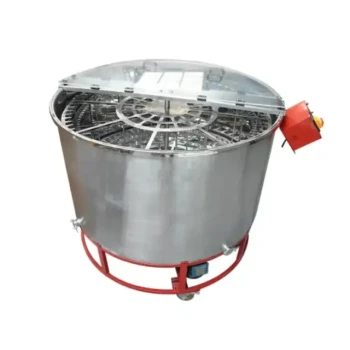
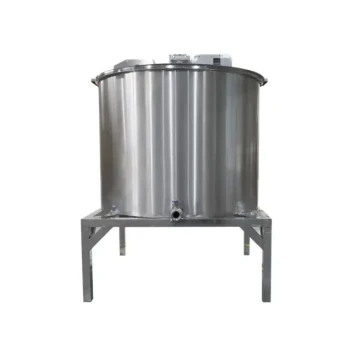
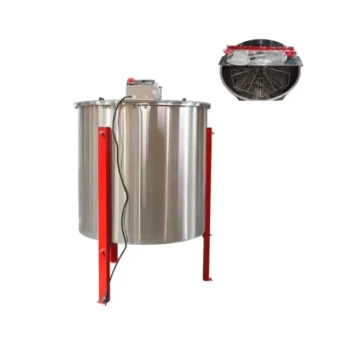
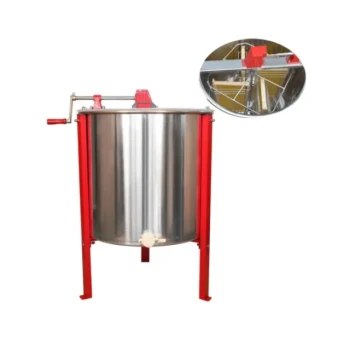
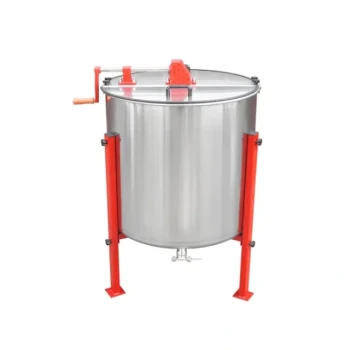
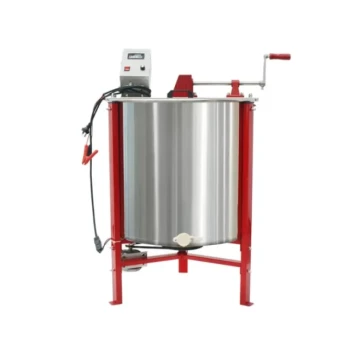
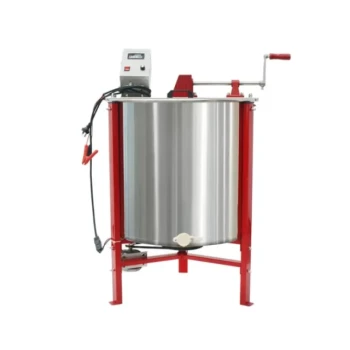
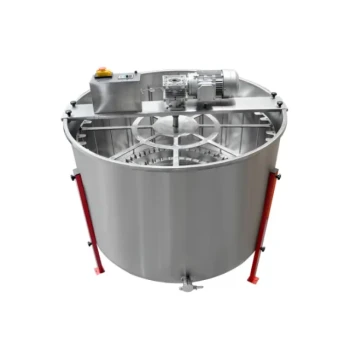
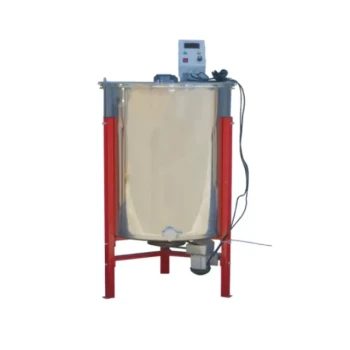
Mechanical honey extractors are the critical mechanism for isolating harvest data. By utilizing centrifugal force to separate liquid honey from wax combs, these machines allow apiary managers to process frames from specific colonies individually. This separation is the prerequisite for independently weighing yields, enabling the precise comparison of productivity between different apiary management models.
The mechanical extractor does more than harvest; it segments your data. By isolating the honey output of specific colonies, it transforms a bulk harvest into granular metrics used to evaluate the "exploitation rate" of nectar sources.
The Mechanics of Data Isolation
Separation via Centrifugal Force
The core function of the mechanical extractor is the application of centrifugal force. This physical process spins honey out of the comb without destroying the wax structure.
Because the wax remains intact, the resulting weight measurements reflect only the pure honey yield. This eliminates variables such as comb weight or brood presence, providing a clean metric for productivity.
Independent Colony Evaluation
In comparative studies, aggregate data often hides individual performance issues. Mechanical extractors allow managers to perform independent extraction.
By processing frames from a single colony as a distinct batch, you can attribute specific yield volumes to that specific hive. This transforms the extractor from a harvesting tool into a verifying instrument for colony-specific performance.
Evaluating Management Models
Assessing Nectar Source Exploitation
The primary strategic use of this data is evaluating the exploitation rate of available nectar. This is the measure of how effectively a colony gathers resources from its immediate environment.
Accurate extraction data allows you to determine if a colony is reaching the biological potential of the local flora. This is essential for determining if an area is overstocked with hives or if specific colonies are underperforming.
Stationary vs. Migratory Comparisons
The primary reference highlights the role of extraction data in comparing stationary and migratory beekeeping.
By weighing the extracted output, managers can scientifically determine if the logistical cost of moving hives (migratory) results in a statistically significant increase in honey yield compared to keeping them in one location (stationary).
Operational Considerations and Limitations
The Necessity of Batch Integrity
For the extractor to serve as a measurement tool, batch separation must be strictly maintained. If frames from multiple colonies are mixed during the spin cycle, the granular data is immediately lost.
Dependency on Precision Scales
While the extractor separates the product, it relies on external weighing equipment to finalize the data. As noted in supplementary contexts, high-precision electronic scales are required to measure the extracted volume accurately.
The extractor prepares the sample; the scale records the metric. Both are required to calculate gross honey productivity effectively.
Applying Extraction Data to Apiary Strategy
To leverage mechanical extraction for better decision-making, align your process with your management goals:
- If your primary focus is evaluating management models: Isolate extraction batches to compare the "exploitation rate" of stationary hives against migratory groups to verify the economic benefit of travel.
- If your primary focus is genetic selection: Use independent extraction to identify outlier colonies that consistently produce higher yields from the same nectar sources, indicating superior foraging traits.
By treating the extraction floor as a data collection point, you convert physical labor into the strategic insight needed to optimize apiary profitability.
Summary Table:
| Feature | Role in Data Collection | Strategic Value |
|---|---|---|
| Centrifugal Force | Isolates pure honey from wax combs without damage | Provides clean, weight-only metrics for honey yield |
| Batch Separation | Processes frames from individual colonies independently | Enables granular performance tracking per hive |
| Yield Comparison | Quantifies output from different apiary locations | Compares exploitation rates of stationary vs. migratory models |
| Output Metrics | Generates raw volume data for high-precision weighing | Identifies superior genetics and high-performing colonies |
Maximize Your Apiary’s Yield with HONESTBEE Precision Equipment
Transform your honey harvest from a manual task into a data-driven operation. HONESTBEE specializes in empowering commercial apiaries and distributors with high-performance beekeeping machinery and tools.
From industrial-grade mechanical honey extractors that ensure batch integrity to automated honey-filling machines and specialized hive-making hardware, our comprehensive wholesale portfolio is designed to optimize your productivity. Whether you are scaling a migratory operation or supplying the industry with essential consumables and cultural merchandise, HONESTBEE delivers the quality and reliability your business demands.
Ready to elevate your production efficiency?
Contact our experts today to explore our full range of wholesale solutions!
References
- Dariusz Teper, W. Skowronek. Exploitation of Rape Flow by Bee Colonies in Stationary and Migratory Apiary. DOI: 10.2478/jas-2013-0010
This article is also based on technical information from HonestBee Knowledge Base .
Related Products
- Commercial Electric 12 Frame Honey Extractor Spinner Motorized Honey Extractor
- HONESTBEE 72 Frame Industrial Electric Honey Extractor for Beekeeping
- Stainless Steel 3 Frame Manual Honey Extractor Spinner for Bee Honey Extraction
- Stainless Steel Manual 8 Frame Radial Honey Extractor Machine for Beehives
- 32 Frame Commercial Electric Honey Extractor for Beekeeping and Honey Production
People Also Ask
- Who are commercial honey extractors designed for? Scaling Your Industrial Beekeeping Success
- What is a commercial honey extractor? The Essential High-Volume Solution for Large Apiaries
- How is honey extracted commercially? Maximize Your Apiary's Efficiency and Honey Yield
- What are commercial honey extractors used for? Boost Your Apiary's Efficiency & Profitability
- What are the advantages of motorized extractors? Boost Honey Production and Save Time