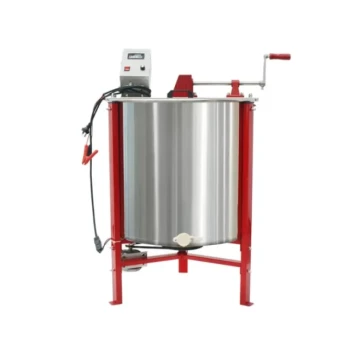
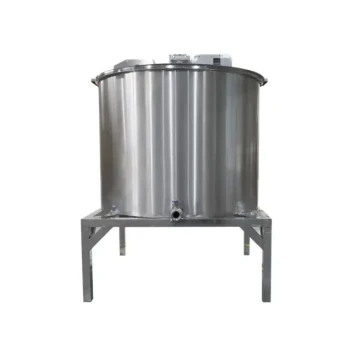
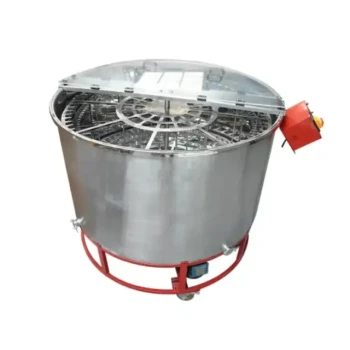
Modern honey-processing equipment is the bridge between hive production and commercial readiness. Honey extraction systems, filtration and settling equipment, and automated filling machines help commercial apiaries process larger harvests while preserving purity, improving hygiene, and delivering consistent package weights. They also enable faster bottling, lower dependence on manual labor, and more reliable fulfillment for retail, wholesale, and export markets.
The central role of modern honey machinery is controlled scale: it helps apiaries move honey from extraction to market with greater consistency, less contamination risk, and packaging capacity suited to global distribution.
Why Commercial Apiaries Need More Than Manual Processing
Large harvests create a capacity challenge
Manual extraction and filling may be practical for small volumes, but they become difficult to control during peak flowering periods or high-frequency harvesting. Commercial apiaries need equipment that can process concentrated harvests quickly without creating bottlenecks between extraction, filtration, storage, and packaging.
A coordinated processing line allows producers to handle higher volumes while maintaining a predictable workflow from comb removal to finished product.
Global buyers expect repeatable quality
Wholesale distributors, retailers, and importers generally require products that are consistent in appearance, weight, hygiene, and packaging quality. Variations caused by manual filling or uncontrolled handling can undermine customer confidence and complicate regulatory compliance.
Modern equipment helps standardize the steps that most directly affect commercial acceptance.
How Extraction and Filtration Equipment Protect Product Quality
Efficient extraction improves throughput
Professional honey extraction systems remove honey from the comb more efficiently than manual methods. This increases processing capacity and helps apiaries convert harvested honey into a stable, market-ready product without unnecessary delays.
Faster processing is particularly valuable when large quantities arrive during a short harvest window.
Filtration removes unwanted material
Processing filtration equipment helps separate honey from wax particles and other residual material after extraction. This supports a cleaner, more uniform product for subsequent settling, storage, and filling.
Filtration does not replace responsible harvesting or quality control, but it provides an important control point in the processing chain.
Heating and settling require process discipline
Heating and settling vats can support the handling of concentrated honey and help prepare it for filling. However, temperature management is essential because excessive heat can negatively affect honey quality.
Equipment should therefore be selected and operated with appropriate controls rather than treated as a substitute for careful process management.
How Automated Filling Machines Meet Packaging Demands
Precise dosing creates uniform products
Industrial honey-filling machines use controlled metering systems, such as piston-type or weight-based systems, to deliver consistent quantities into each container. This improves package uniformity and helps producers meet declared-weight and commercial packaging expectations.
Accurate dosing also reduces product giveaway and makes inventory planning more predictable.
Automation reduces manual contact
Automated filling limits unnecessary human handling during the packaging stage. Fewer manual touchpoints can reduce the risk of secondary contamination and support more hygienic processing conditions.
This is especially important for apiaries supplying retail chains, export buyers, and other customers with formal sanitation requirements.
Higher speeds support peak-season demand
Automated filling lines can package honey at a substantially more consistent pace than manual operations. This helps apiaries respond to large orders, seasonal demand, and rapid order-fulfillment requirements without expanding labor at the same rate as output.
For distributors and wholesalers, that capacity can translate into more dependable product availability.
Sealing protects the finished product
Appropriate sealing and packaging systems help limit exposure to air and external contaminants after filling. Reduced exposure can support the preservation of honey’s natural characteristics during storage and distribution, although packaging performance still depends on container quality, storage conditions, and correct machine setup.
The objective is not merely to fill containers quickly, but to protect product integrity through the route to the end market.
How Machinery Supports Commercial Growth
It lowers the labor burden
Automation reduces the amount of repetitive manual work required for extraction, filling, and packaging. Labor can then be directed toward quality checks, equipment supervision, apiary management, and order preparation.
Lower labor intensity improves operational efficiency, particularly where commercial volumes make manual processing expensive or difficult to scale.
It enables standardized product lines
With reliable filling and packaging equipment, apiaries can produce consistent retail units, larger wholesale containers, or bulk export formats. A more flexible packaging operation allows suppliers to serve multiple customer segments from the same processing base.
This supports a broader product portfolio without requiring every order to be handled as a separate manual project.
It strengthens brand and value creation
Professional packaging allows producers to move beyond selling honey only as an undifferentiated bulk commodity. Consistent filling, hygienic presentation, and differentiated packaging can support brand development and improve the perceived value of the product.
That can reduce dependence on low-price intermediary purchasing, although branding success still depends on verified quality, market positioning, and reliable distribution.
It improves the economics of the apiary
Higher extraction and packaging efficiency can help commercial operations generate more predictable output and cash flow. This matters because apiaries must continually fund colony replenishment, equipment, maintenance, labor, and general management.
Machinery is therefore not only a production investment; it can be part of the apiary’s broader economic sustainability strategy.
What This Means for Distributors and B2B Buyers
Equipment affects supply reliability
A supplier’s processing capability directly influences whether it can fulfill recurring orders, seasonal demand, and urgent replenishment requirements. Extraction and filling capacity should therefore be considered when evaluating a honey producer or equipment partner.
Reliable machinery does not guarantee reliable supply, but it provides the operational foundation for it.
One-stop sourcing reduces project complexity
Commercial apiaries often need more than a filling machine. They may require extraction equipment, filtration units, settling or heating vats, packaging components, technical guidance, and after-sales support.
A one-stop sourcing partner can help coordinate the product portfolio, technical requirements, response times, and delivery schedule rather than leaving the buyer to integrate unrelated equipment sources.
Service quality is part of the investment
Fast communication, professional expertise, efficient order fulfillment, and dependable delivery are operational advantages for distributors and resellers. They reduce delays when customers need replacement units, expanded capacity, or complete processing solutions.
For B2B buyers, the value of machinery includes both its technical performance and the support available before and after purchase.
Understanding the Trade-offs
Automation requires proper specification
A machine that is too small may create a production bottleneck, while an oversized system can increase capital cost and remain underutilized. Selection should reflect harvest volume, product formats, target filling rates, available space, and future growth plans.
The correct solution is the one that matches the operation’s actual workflow, not simply the machine with the highest nominal capacity.
Hygiene depends on the entire process
Automated equipment reduces handling, but it does not eliminate contamination risk. Cleaning procedures, food-contact materials, operator practices, storage conditions, and maintenance all remain essential.
A hygienic machine cannot compensate for poor sanitation elsewhere in the processing line.
Product protection requires controlled operation
Filling and sealing systems can reduce exposure to air and improve consistency, but they must be correctly calibrated and operated. Excessive heating, inaccurate metering, poor seals, or unsuitable containers can still compromise quality.
Equipment should be assessed as part of a complete quality-control system rather than as an isolated purchase.
Integration can affect delivery timelines
A complete processing line may involve several machines and technical interfaces. Confirming compatibility, electrical requirements, installation needs, spare parts, and operator training before ordering helps prevent avoidable commissioning delays.
This is where experienced technical and commercial support can materially reduce project risk.
How to Apply This to Your Project
The strongest equipment decision starts with the apiary’s required quality level, throughput, package formats, and distribution model.
- If your primary focus is higher extraction capacity: Prioritize a professional extraction, filtration, and settling workflow that can handle peak harvest volumes without creating downstream bottlenecks.
- If your primary focus is retail consistency: Select an automated filling and sealing system with precise metering, hygienic product contact surfaces, and packaging flexibility.
- If your primary focus is export or wholesale fulfillment: Evaluate the complete line for repeatable weights, sanitary handling, dependable output, and compatibility with bulk or retail formats.
- If your primary focus is lower operating cost: Compare labor savings and throughput improvements against equipment, maintenance, training, and integration requirements.
- If your primary focus is dependable sourcing: Work with a supplier that combines a full-spectrum product portfolio with rapid response, technical expertise, customer service, and efficient delivery.
Modern honey machinery gives commercial apiaries the control and consistency needed to turn natural harvests into dependable, market-ready products at global scale.
Summary Table:
| Aspect | Role of Modern Machinery |
|---|---|
| Extraction | Efficient removal from comb, handles large volumes, reduces bottlenecks. |
| Filtration | Removes wax and impurities, ensures cleaner honey for settling. |
| Settling/Heating | Controlled heating for optimal viscosity, preserves quality. |
| Filling | Precise dosing, uniform package weights, minimal manual contact. |
| Sealing | Protects product, extends shelf life, meets sanitary requirements. |
| Automation | Reduces labor, increases throughput, supports peak season demand. |
| Standardization | Consistent product lines, multiple package formats, brand value. |
| Economics | Higher efficiency, cash flow, sustainability for apiaries. |
Ready to elevate your honey processing line? At HONESTBEE, we supply a comprehensive range of extraction, filtration, settling, and automated filling machines designed for commercial apiaries and distributors. Our one-stop sourcing simplifies your equipment acquisition, ensuring compatibility and efficiency. With rapid response, expert technical support, and ultra-fast delivery, we help you meet global quality standards and expand your market reach. OEM/ODM services and certifications available to support your growth.
Contact us today to discuss your requirements and get a tailored solution!
Related Products
- Precision Durable Efficient HONESTBEE Rotary Honey Filling Machine
- Automatic Honey Filling and Filtering Machine for Beekeeping Bottle Filling
- Fully Automatic Honey Filling Packaging Machine for Processing Line
- Economy Small Honey Filling Machine Honey Bottle Filler Packaging Machine
- Double Nozzle Small Honey Filling Machine Honey Sachet Packing Packaging Equipment
People Also Ask
- What are the common types of bottling machines used for honey? Choosing the Right Solution for Your Apiary
- What is a key feature of the new generation of the honey filling machine? The Advanced Electronic Control Unit
- How do high-precision honey filling machines ensure quality? Optimize Your Commercial Production with HONESTBEE
- How do honey filling machines work? Achieve Precision & Speed for Your Apiary
- How do honey filling and processing machines aid native bee product conservation? Boost Value with HONESTBEE Technology