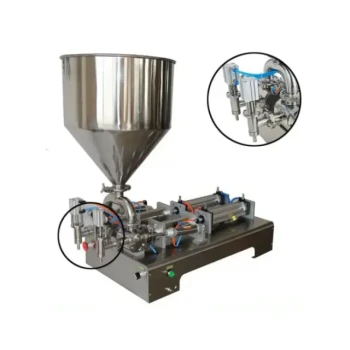
Professional Honey-filling Machines serve as the critical gateway between raw agricultural production and the commercial retail market. In the downstream value chain, their primary role is to provide high-precision quantitative filling, ensuring absolute consistency across product units to meet commercial standards. Simultaneously, they operate within closed environments to eliminate contamination risks, thereby extending shelf life and preserving the honey's distinct flavor profile.
Core Takeaway While raw honey holds intrinsic natural value, it is the filling machine that transforms it into a viable commercial asset. By automating precision and hygiene, these machines bridge the gap between local beekeeping and international retail compliance, turning a variable agricultural output into a standardized, shelf-stable product.
Standardization and Commercial Compliance
The transition from a hive product to a retail product requires rigorous standardization. Professional filling machines are the primary mechanism for achieving this.
Achieving Volumetric Consistency
Manual filling often leads to variances in product weight, which violates retail laws and damages reputation. Professional machines utilize high-precision quantitative controls to ensure every unit matches its label specifications exactly. This consistency is the foundation of consumer trust.
Meeting International Regulatory Standards
Global markets enforce strict rules regarding net weight and packaging integrity. Automated equipment ensures your product complies with these commercial retail standards, allowing for smoother entry into high-end supermarkets and export channels.
Enhancing Brand Perception
Standardized packaging affects how a brand is perceived on the shelf. The uniformity provided by automation supports a professional brand image, differentiating premium products from artisanal or inconsistent competitors.
Hygiene and Quality Preservation
Honey is a delicate biological substance that degrades when exposed to air, moisture, or contaminants. The filling process is the most critical point of vulnerability in the downstream chain.
Reducing Contamination Risks
Automated machines operate in a closed environment, removing the need for manual handling. This mechanization drastically minimizes the risk of secondary contamination from human contact or environmental debris.
Preventing Oxidation and Moisture Absorption
Honey is hygroscopic (it absorbs moisture from the air) and prone to oxidation. Integrated filling systems seal the product immediately after dispensing. This protects the honey’s natural flavor profile and prevents fermentation or spoilage caused by excess moisture.
Preserving Pharmacological Value
For high-value honeys (such as Manuka), preserving active properties is essential. By limiting exposure time and strictly controlling the environment, these machines ensure that active pollen particles and pharmacological benefits are retained through long-term storage.
Operational Efficiency and Scalability
Beyond quality, these machines drive the economic engine of the honey value chain.
Lowering Unit Costs
While the initial investment is higher, automated filling significantly reduces the labor cost per unit. High-volume processing capabilities allow producers to scale operations without a linear increase in workforce.
Reducing Product Loss
Manual filling frequently results in spills, drips, and over-filling. Precision machines minimize waste, ensuring that product loss is negligible during the packaging phase, which directly improves the bottom line.
Understanding the Trade-offs
While essential for growth, implementing professional filling technology introduces specific challenges that must be managed.
Capital Expenditure vs. Volume
These machines represent a significant capital expense. For very small, local operations, the cost may outweigh the efficiency gains unless there is a clear strategy to enter high-volume or export markets.
Technical Maintenance Requirements
Unlike manual labor, automated lines require specialized maintenance. Producers must account for the need for technical skills to maintain hygiene control systems and calibration, as a breakdown can halt the entire downstream flow.
Making the Right Choice for Your Goal
The specific value of a honey-filling machine depends on your strategic position in the value chain.
- If your primary focus is Market Expansion: Prioritize machines with certification-grade precision to ensure your product meets the strict weight and safety standards of international retailers.
- If your primary focus is Brand Protection: Focus on the machine's "closed-loop" hygiene capabilities to guarantee flavor preservation and eliminate the risk of spoilage or contamination.
- If your primary focus is Economic Efficiency: Look for high-speed sealing and volume capabilities to lower your cost-per-unit and maximize the profitability of your raw supply.
Ultimately, a professional honey-filling machine is not just a packaging tool; it is the technological assurance of quality that allows a local resource to compete on a global stage.
Summary Table:
| Key Role | Primary Benefit | Commercial Impact |
|---|---|---|
| Standardization | High-precision volumetric consistency | Ensures regulatory compliance & consumer trust |
| Hygiene Control | Closed-environment processing | Minimizes contamination & extends shelf life |
| Quality Preservation | Prevents oxidation & moisture absorption | Protects honey's natural flavor & bioactive properties |
| Operational Scale | High-volume automated processing | Lowers unit costs & reduces product wastage |
Scale Your Honey Business with HONESTBEE
As a dedicated partner to commercial apiaries and honey distributors, HONESTBEE understands that professional machinery is the backbone of a successful downstream value chain. We provide a comprehensive wholesale suite of beekeeping tools, specialized hardware, and high-precision honey-filling machines designed to transform your raw harvest into a standardized, market-ready asset.
Whether you are looking to enter international retail markets or optimize your production efficiency, our equipment ensures your honey retains its premium quality from hive to shelf. Maximize your commercial potential and protect your brand value today.
Contact HONESTBEE for Expert Equipment Solutions
References
- Willickister R. Kadigi, Reuben M. J. Kadigi. Economic Viability of Smallholder Agroforestry and Beekeeping Projects in Uluguru Mountains, Tanzania: A Cost Benefit Analysis. DOI: 10.4236/ojf.2021.112007
This article is also based on technical information from HonestBee Knowledge Base .
Related Products
- Precision Durable Efficient HONESTBEE Rotary Honey Filling Machine
- Semi Automatic Small Honey Bottle Filling Machine Honey Filler
- Fully Automatic Honey Filling Packaging Machine for Processing Line
- Commercial Rotary Honey Filling Machine for Production
- Economy Small Honey Filling Machine Honey Bottle Filler Packaging Machine
People Also Ask
- What quality control role does professional honey filling equipment perform? Ensure Consistency and Product Stability
- What is a key feature of the new generation of the honey filling machine? The Advanced Electronic Control Unit
- What are the common types of bottling machines used for honey? Choosing the Right Solution for Your Apiary
- How do honey filling machines work? Achieve Precision & Speed for Your Apiary
- How do high-precision honey filling machines ensure quality? Optimize Your Commercial Production with HONESTBEE