Professional honey storage facilities act as the critical safeguard for inventory stability, ensuring that honey retains its biological integrity and market value after harvest. These facilities utilize advanced environmental controls to manage honey’s hygroscopic nature, preventing moisture absorption and subsequent fermentation. By maintaining a constant-temperature, sealed environment, these facilities preserve the delicate balance of enzymes and antioxidants that define premium-grade honey.
Core Takeaway: Professional storage is not merely about space; it is a sophisticated quality-control mechanism that protects your investment by preventing spoilage, maintaining chemical compliance, and ensuring product consistency for year-round distribution.
Mitigating Environmental Risks to Product Integrity
Preventing Abnormal Fermentation
Honey is highly hygroscopic, meaning it naturally absorbs moisture from the surrounding air. Professional facilities provide a dry, sealed environment that stops honey from reaching the moisture threshold required for yeast activity. This prevents the "abnormal fermentation" that can ruin entire batches and lead to significant financial loss for wholesalers.
Controlling Temperature for Bioactive Stability
Bioactive components like diastase and antioxidants are extremely heat-sensitive and can degrade rapidly in sub-optimal conditions. Specialized storage uses constant-temperature systems to lock in these nutritional markers. For distributors serving the pharmaceutical or high-end food sectors, this preservation is essential for meeting strict physical and chemical indicators.
Managing the Crystallization Lifecycle
While crystallization is a natural process, uncontrolled temperature fluctuations can lead to "over-crystallization" or uneven textures. Professional storage allows for precise cooling and heating cycles that slow down the crystallization process. This ensures the honey remains in a state that is easy to process, fill, and present to the end consumer.
Enhancing Marketability and Supply Chain Agility
Protecting Aesthetic and Aromatic Profiles
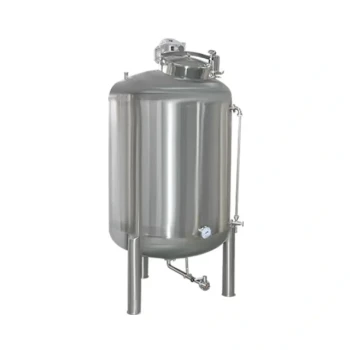
External odors and light exposure can quickly degrade the natural color and aromatic compounds of raw honey. Professional-grade food tanks provide superior sealing and chemical stability, blocking out contaminants and preserving the sensory profile. This protection ensures the product maintains the "premium" look and taste that B2B buyers demand.
Supporting Off-Season Sales Strategies
High-standard storage facilities enable distributors to maintain a full-spectrum product portfolio even when certain varieties are out of season. By preserving the honey’s "fresh-harvest" characteristics for extended periods, these facilities allow for strategic inventory releases. This ensures that you can meet customer demand during peak periods without compromising on quality.
Streamlining Compliance and Grading
Many professional facilities integrate filtration and grading equipment directly into the storage workflow. This allows for the removal of impurities and fermenting yeasts before the honey is sealed for long-term holding. The result is a standardized, compliant product that meets international benchmarks like AGMARK or specific industrial requirements.
Understanding the Trade-offs: Professional vs. Standard Warehousing
The Risk of Standard Ambient Storage
Utilizing standard warehouse space without dedicated humidity and temperature controls often leads to moisture creep and enzyme degradation. While the initial cost may be lower, the risk of "off-spec" product increases exponentially over time. For high-volume traders, a single fermented batch can outweigh the savings of cheaper storage.
Energy Costs vs. Product Longevity
Operating a climate-controlled facility involves higher energy overhead than traditional storage solutions. However, this cost is a direct investment in shelf-life extension and waste reduction. In the global honey trade, the ability to guarantee ultra-fast delivery of a stable product often justifies the premium associated with specialized facilities.
Making the Right Choice for Your Goal
To maximize the ROI on your honey inventory, your storage strategy must align with your specific business model and the needs of your target market.
- If your primary focus is Premium Retail Distribution: Prioritize facilities with advanced aroma-locking sealing technology and strict temperature monitoring to preserve delicate floral notes.
- If your primary focus is Industrial/Pharmaceutical Supply: Ensure the facility provides documented proof of bioactive component stability, specifically focusing on diastase activity and antioxidant levels.
- If your primary focus is Rapid Order Fulfillment: Look for centralized, professional storage that offers integrated filling and packaging services to reduce the lead time between order and dispatch.
By leveraging professional storage, distributors transform a volatile raw material into a stable, high-value asset ready for the global market.
Summary Table:
| Key Storage Function | Impact on Honey Integrity | Business Value for Distributors |
|---|---|---|
| Moisture Control | Prevents abnormal fermentation | Minimizes product loss and wastage |
| Temperature Regulation | Preserves enzymes and antioxidants | Ensures compliance with pharmaceutical standards |
| Aroma-Lock Sealing | Protects natural color and scent | Maintains premium market positioning |
| Crystallization Management | Ensures consistent texture | Simplifies downstream processing and filling |
| Strategic Inventory | Extends shelf-life for off-season | Supports year-round sales and supply agility |
Maximize Your Honey Business with HONESTBEE
At HONESTBEE, we understand that maintaining honey quality is just one piece of the puzzle for commercial apiaries and B2B distributors. We provide a one-stop sourcing solution with a comprehensive portfolio of professional beekeeping tools, specialized machinery—including honey-filling and hive-making machines—and essential industry consumables.
Partner with us to benefit from:
- Deep Industry Expertise: Specialized hardware and high-end cultural merchandise tailored for resellers.
- Premium Trading Services: Dedicated OEM/ODM support and rapid response times.
- Efficient Fulfillment: Ultra-fast delivery to ensure your inventory never runs low.
Ready to scale your operations and secure higher profit margins? Contact HONESTBEE Today to explore our full-spectrum wholesale offerings and expert equipment solutions!
References
- Obiekwe Ngozi Josephine, Ekwelie Obiageli Stella. Technical Efficiency of Honey Production by Members of Apicultural Society of Nigeria, Anambra State Chapter. DOI: 10.54660/ijasf.2025.1.6.15-24
This article is also based on technical information from HonestBee Knowledge Base .
Related Products
- Stainless Steel Honey Storage and Settling Tank with Double Strainer
- Professional Honey Storage Tank with Agitation System
- Stainless Steel Honey Storage Tank with Lid for Honey
- Hexagonal Glass Honey Jar with Wooden Lid Integrated Dipper Elegant Functional Storage
- Classic Glass Honey Jar with Metal Lug Cap for Beehive Storage
People Also Ask
- What economic role do honey storage tanks play? Boost Your Revenue Through Strategic Inventory Management
- What roles do industrial honey storage tanks and filtration meshes play in processing? Ensure Purity & Consistency
- What is the purpose of a honey storage tank? Streamline Your Honey Processing for Quality & Efficiency
- What role do settling tanks play in honey production? Achieve Pure, High-Clarity Honey Naturally
- Why are large settling tanks used in the honey clarification process? Achieve Natural Purity & Batch Consistency