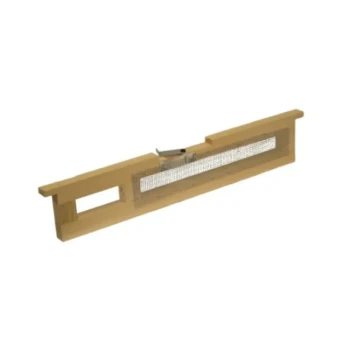
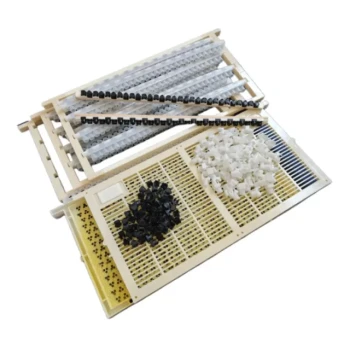
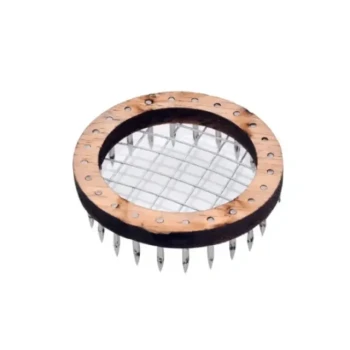
Professional queen rearing hardware acts as the fundamental mechanism for controlled genetic propagation in modern apiaries. By utilizing specialized frames, grafting needles, and cell cups, beekeepers can systematically transfer larvae from superior mother colonies to create new queens. This process shifts reproduction from a random natural event to a planned operation, essential for both precise genetic selection and large-scale colony replenishment.
The use of precision rearing tools is not merely about increasing numbers; it is the primary method for preventing accidental inbreeding and larval degradation. This hardware serves as the bridge between isolating superior genetic traits and deploying them across an industrial-scale apiary.
Mastering Genetic Control
Targeted Trait Selection
Professional rearing frames allow the beekeeper to identify a specific "mother colony" that exhibits superior traits, such as disease resistance or high honey production.
By using grafting needles to move larvae from this chosen colony into artificial cups, you ensure the next generation inherits these desirable characteristics.
Preventing Biological Degradation
Without controlled rearing tools, colonies may breed randomly, leading to accidental inbreeding.
This lack of diversity often results in larval degradation and a significant loss of vitality in the workforce.
Preserving Genetic Diversity
Standardized rearing hardware enables the implementation of a planned selection program.
This approach maintains a high standard of genetic diversity, which is crucial for the long-term biological health of the apiary.
Facilitating Rapid Expansion
Enabling Artificial Division
To expand an apiary, beekeepers rely on artificial colony division rather than waiting for natural swarming.
High-precision tools provide the biological units—the queen cells—necessary to make these splits successful and sustainable.
Proactive Queen Replacement
Tools like grafting needles and cell cups facilitate the mass-rearing of queens to replace aging or unproductive stock.
This ensures that every colony maintains a dynamic balance and operates at peak efficiency.
Industrial Scaling
For commercial operations, manual or natural reproduction is too slow and unpredictable.
Specialized hardware provides the controlled environment required to mass-rear high-quality nucleus colonies for rapid industrial scaling.
Understanding the Operational Trade-offs
The Precision Requirement
While these tools enable mass production, they require a high degree of manual dexterity and strict adherence to timing.
Improper use of grafting needles or poor handling of the frames can damage larvae, negating the benefits of the hardware.
Amplification of Genetics
These tools are highly efficient amplifiers; they will propagate bad traits just as effectively as good ones.
If the mother colony is not selected with rigorous scrutiny, you risk scaling a genetic flaw across your entire operation rather than a strength.
Making the Right Choice for Your Goal
To effectively utilize professional queen rearing tools, aligns your approach with your specific management objectives:
- If your primary focus is Genetic Vitality: Prioritize the selection of the mother colony above all else, using the hardware to protect against inbreeding and larval degradation.
- If your primary focus is Apiary Expansion: Focus on the mass-production capabilities of the frames to generate sufficient queen cells for aggressive artificial colony division.
Mastering these tools transforms queen rearing from a biological lottery into a predictable, scalable engineering process.
Summary Table:
| Feature | Role in Genetic Selection | Impact on Colony Replenishment |
|---|---|---|
| Specialized Frames | Provides a controlled environment for queen cell development. | Enables mass-rearing for industrial-scale expansion. |
| Grafting Needles | Allows precise transfer of larvae from high-performing mother colonies. | Facilitates proactive replacement of aging or weak queens. |
| Artificial Cell Cups | Standardizes queen production to prevent random biological degradation. | Essential for successful artificial colony division (splitting). |
| Planned Breeding | Maintains high genetic diversity and disease resistance. | Ensures a predictable supply of high-quality nucleus colonies. |
Elevate Your Apiary’s Performance with HONESTBEE
Maximize your genetic potential and scaling efficiency with HONESTBEE’s professional-grade beekeeping solutions. As a dedicated partner to commercial apiaries and global distributors, we provide more than just tools—we provide the foundation for industrial success.
Our comprehensive wholesale range includes:
- Precision Rearing Hardware: High-quality grafting tools and frames for superior genetic propagation.
- Industrial Machinery: Advanced hive-making and honey-filling machines to streamline your production.
- Complete Essentials: From protective gear to specialized consumables and honey-themed cultural merchandise.
Whether you are looking to refine your breeding program or expand your wholesale inventory, HONESTBEE delivers the reliability and expertise you need to thrive.
Contact Us Today to Discuss Your Wholesale Requirements
References
- Gökhan KAVAK. SON YILLARDA GÖRÜLEN KOLONİ KAYIPLARI VE MUHTEMEL SEBEPLERİ. DOI: 10.31467/uluaricilik.377585
This article is also based on technical information from HonestBee Knowledge Base .
Related Products
- JZBZ Langstroth Queen Rearing Frame for Beekeeping
- Professional Wooden Requeening Frame for Beekeeping
- Portable Bee Mating Hive Boxes Mini Mating Nucs 8 Frames for Queen Rearing
- Jenter Queen Rearing Kit Complete Set for Bee Breeding
- Premium Nicot Style Queen Rearing Kit with Hair Roller Bee Cages
People Also Ask
- Why use finishing colonies for queen cell capping? Secrets to Superior Queen Quality and Performance
- How do queen rearing frames and grafting needles function together? Master the Doolittle Method for High-Quality Queens
- What is the purpose of queen rearing frames? Master Controlled Queen Production for Your Apiary
- What are the functions of queen rearing frames and artificial queen cells? Master Bee Genetic Improvement
- What roles do professional queen rearing frames and artificial queen cells play? Scaling Your Queen Bee Production