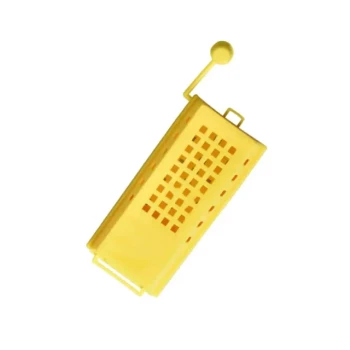
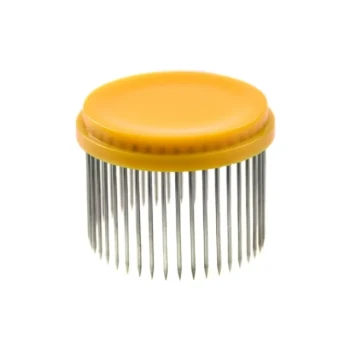
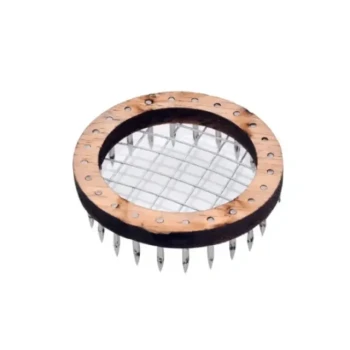
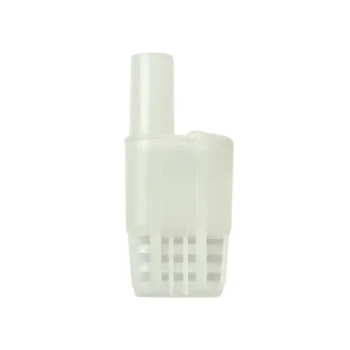
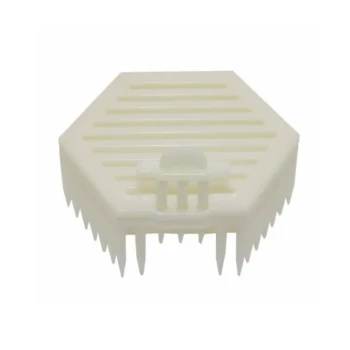
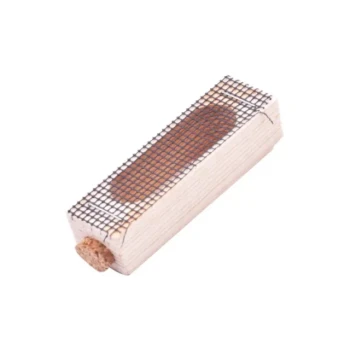
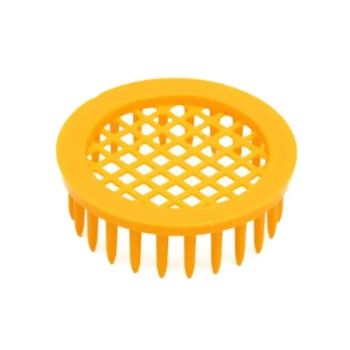
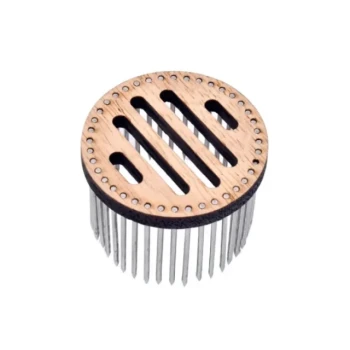
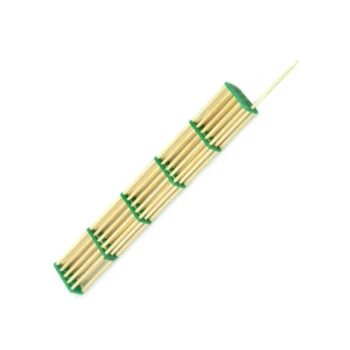
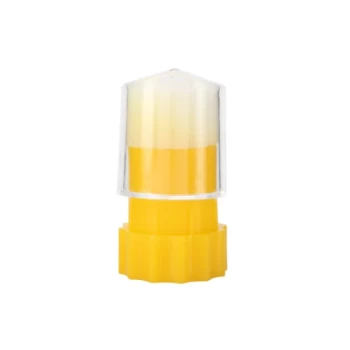
Queen cages with candy plugs function as a critical timed-release mechanism during the delicate process of introducing a breeding queen to a new colony. By forcing the worker bees to consume a barrier of sugar to release the queen—a task taking approximately 1 to 2 days—the cage ensures a gradual acclimation period. This prevents immediate contact between the new queen and potentially hostile workers, significantly reducing the likelihood of rejection or lethal attacks.
Core Takeaway Direct introduction of a new queen often triggers a defensive response from an established colony, risking valuable breeding stock. The candy plug mitigates this by enforcing a mandatory "buffer period," allowing pheromones to harmonize and acceptance to occur before physical contact is possible.
The Mechanics of Gradual Acceptance
Creating a Time Buffer
The primary function of the candy plug is to slow down the introduction process.
Worker bees in the recipient colony must physically eat through the candy at the cage entrance. This consumption process typically lasts 1 to 2 days. This delay is not accidental; it is a calculated pause that prevents the queen from being released before the colony is ready.
Facilitating Pheromone Diffusion
Honey bee colonies rely heavily on chemical signals to identify friend from foe.
While the workers work on the candy plug, the cage allows the new queen's pheromones to diffuse through the mesh. This gradual exposure allows the colony's chemical signature to merge with the new queen's scent, shifting the colony's status from "hostile" to "accepting."
Physical Protection
The cage acts as a secure physical barrier during the volatile initial hours.
According to industry data, this method achieves success rates as high as 85 percent. The mesh structure protects the queen from direct aggression while still permitting the necessary chemical communication required for long-term integration.
Protecting Genetic Resources
Safeguarding Core Genetics
Breeding queens represent a significant investment in genetic resources.
The candy plug system is essential for protecting this investment. By minimizing the risk of the workers killing the queen (balling), the beekeeper ensures that the specific genetic traits carried by the queen are successfully added to the apiary.
Minimizing Rejection Risks
Sudden introductions almost invariably lead to rejection.
The 1-2 day delay provided by the candy plug is the standard best practice for minimizing this risk. It converts a high-stakes, chaotic event into a controlled, passive integration process.
Understanding the Trade-offs
Time vs. Immediate Laying
The use of a candy plug inherently delays the start of egg production.
You are trading 24 to 48 hours of potential egg-laying time for the safety of the queen. In the context of breeding and long-term colony health, this short delay is a necessary expense to ensure the queen survives to lay eggs at all.
Reliance on Worker Activity
The release mechanism is entirely dependent on the recipient colony's behavior.
The queen cannot release herself; she relies on the workers to consume the plug. This ensures that release only happens when the workers are engaging with the cage, which is often a proxy for their growing interest in and acceptance of the new matriarch.
Making the Right Choice for Your Goal
When managing honey bee genetics, patience is often the most valuable tool.
- If your primary focus is Protecting High-Value Genetics: Rely on the candy plug to provide the essential 1-2 day safety buffer, even if it delays egg-laying slightly.
- If your primary focus is Maximizing Success Rates: Avoid direct release methods; utilizing the slow-release cage can push acceptance rates up to 85%.
The candy plug transforms queen introduction from a gamble into a calculated, high-probability procedure.
Summary Table:
| Feature | Function & Impact | Benefit to Beekeeper |
|---|---|---|
| Candy Plug | Creates a 1-2 day delay for release | Prevents immediate worker aggression |
| Mesh Barrier | Allows pheromone diffusion & scent masking | Shifts colony status from hostile to accepting |
| Timed Release | Dependent on worker bee consumption | Ensures release only occurs upon worker interest |
| Success Rate | Reaches up to 85% with slow-release | Protects expensive genetic investments |
Maximize Your Apiary's Genetic Potential with HONESTBEE
At HONESTBEE, we understand that breeding queens are the heart of your operation. Whether you are managing a large-scale commercial apiary or supplying the industry as a distributor, our high-quality beekeeping tools are designed to safeguard your investments. From precision-engineered queen cages to professional honey-filling machinery and hive-making equipment, we provide the full spectrum of hardware and consumables you need to thrive.
Ready to upgrade your wholesale supply? Contact us today to explore our comprehensive product portfolio and discover how our expertise can streamline your beekeeping success.
References
- Thomas E. Sprenger, Robert Brodschneider. Investigating mating reliability and drone congregation areas on an island in Lake Neusiedl (Austria) for the potential establishment of a mating station for honey bee breeding. DOI: 10.5194/aab-68-507-2025
This article is also based on technical information from HonestBee Knowledge Base .
Related Products
- Professional Queen Cage with Sliding Gate and Feeder Plug
- Professional Multi-Compartment Queen Cage with Sliding Lid
- Professional Round Push-In Queen Cage with Metal Tines
- Durable Galvanized Steel Spring Queen Bee Cage
- Wood and Mesh Push-In Queen Cage
People Also Ask
- Why are specialized queen bee cages used for the banking of mated queen bees? Maximize Commercial Apiary Storage Efficiency
- What is the mechanism of action for using temporary queen bee cages? Master Successful Queen Introduction
- How is a queen bee released from a queen cage? Ensure Safe Colony Integration & Hive Success
- What is the step-by-step process for installing a queen bee's cage onto a frame? Ensure Hive Acceptance Safely
- What technical precaution must be taken regarding the mesh or grill side of a queen bee cage? Ensure Queen Survival