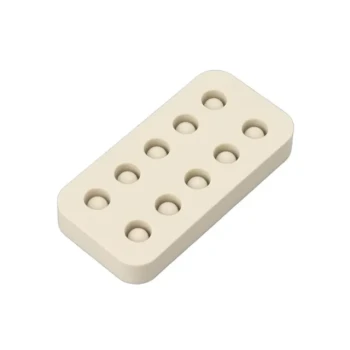
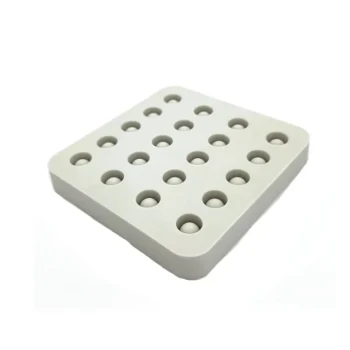
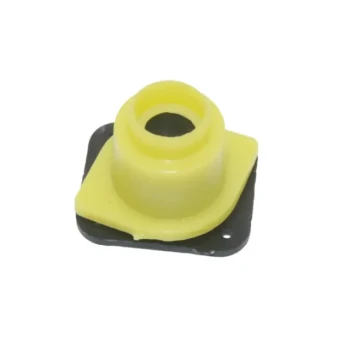
Queen Cups act as the fundamental hardware interface between biological instinct and industrial production in royal jelly harvesting. They serve as artificial vessels that mimic natural queen cells, inducing worker bees to fill them with royal jelly to feed transferred larvae, thereby enabling mass collection.
The core function of a Queen Cup is to deceive the colony into triggering its queen-rearing instinct on a mass scale. By simulating the specific environment of a queen cell, these cups transform a standard hive into a high-output biological factory for royal jelly.
Simulating the Biological Environment
The Mechanism of Induced Secretion
In a natural setting, a bee colony produces royal jelly sparingly, solely to rear a new queen. Queen Cups simulate the physical structure of a natural queen cell. This triggers nurse bees to secrete and deposit large quantities of royal jelly into the cup to feed the larva inside.
The Role of Larval Transfer
The process begins with the "larval transfer stage," where larvae are grafted into these artificial cups. This placement serves as the biological signal for worker bees to commence feeding. Without the cup structure and the transferred larva, the colony would not produce royal jelly in harvestable volumes.
Enabling High-Volume Production
High-Density Arrangement
While a natural hive creates very few queen cells, artificial Queen Cups can be arranged at high density on a single hive frame. This arrangement provides the hardware foundation necessary for large-scale production.
Overriding Natural Regulation
By introducing a massive number of potential "queens" via these cups, beekeepers alter the colony's natural regulation. This manipulation forces the colony to significantly increase its total yield of royal jelly per collection cycle.
Material Trade-offs: Wax vs. Polymer
Wax Cups for Biological Acceptance
Wax Queen Cell Cups are designed to offer high material affinity. Because they closely simulate the texture and smell of natural comb, they generally result in a higher acceptance rate of grafted larvae by worker bees. This makes them critical for the initial success of the grafting process.
Polymer Cups for Standardization
Polymer plastic cups offer standardized diameters and depths. This consistency ensures that the space available for larval growth and jelly deposition is uniform across the entire operation.
Chemical Stability and Purity
Industrial-grade plastic consumables possess excellent chemical stability. This prevents the royal jelly from being contaminated by impurities, a critical factor for maintaining high-quality standards in commercial products.
Facilitating Mechanical Extraction
Structural Integrity
Large-scale collection often involves mechanical or semi-mechanical extraction tools. Plastic cups provide high physical strength, preventing them from deforming or breaking when micro-tools are used to extract the jelly.
Standardization for Automation
The specific dimensions of the cups directly influence how efficiently machinery can interact with them. Uniform cups allow for reproducible processes, making them essential for standardized scientific experiments and automated harvesting lines.
Making the Right Choice for Your Goal
Ideally, the choice of Queen Cup depends on the specific bottleneck in your production line, be it biological acceptance or mechanical processing.
- If your primary focus is maximizing larval survival rates: Prioritize Wax Queen Cell Cups to leverage their material affinity and ensure high acceptance by worker bees.
- If your primary focus is automated extraction and hygiene: Utilize Polymer plastic cups to ensure dimensional consistency, chemical stability, and physical durability during mechanical harvesting.
Success in large-scale production relies on balancing the biological needs of the bee with the mechanical requirements of the extraction process.
Summary Table:
| Feature | Wax Queen Cups | Polymer Plastic Cups |
|---|---|---|
| Primary Benefit | High biological acceptance | Standardization & Durability |
| Material Affinity | Mimics natural comb texture | Chemically stable & Pure |
| Best For | Maximizing larval survival | Automated/Mechanical extraction |
| Consistency | Variable | Uniform diameter and depth |
| Cleaning | Difficult/One-time use | Easy to clean/Reusable |
Scale Your Royal Jelly Production with HONESTBEE
Are you looking to optimize your commercial apiary's output? HONESTBEE specializes in providing the high-quality hardware and consumables necessary for professional royal jelly harvesting. From high-density Queen Cups that ensure maximum biological acceptance to advanced honey-filling machines and specialized beekeeping tools, we support distributors and commercial operations worldwide.
Our value to your business:
- Comprehensive Wholesale Range: Access a full spectrum of beekeeping machinery and essential consumables.
- Industrial Efficiency: Our products are designed for durability and standardization in large-scale operations.
- Global Supply Expertise: We cater specifically to the needs of large-scale distributors and professional beekeepers.
Contact HONESTBEE today to upgrade your equipment!
References
- Ratna Iffany Faradilla Besari, Mochammad Junus. Royal Jelly (Apis mellifera) As an Antimicrobial Activity Inhibition. DOI: 10.47191/ijcsrr/v6-i6-49
This article is also based on technical information from HonestBee Knowledge Base .
Related Products
- Brown Nicot Queen Cell Cups for Breeding Queen Bees Beekeeping
- JZBZ Type Wide Base Plastic Queen Cell Cups for Base Mounting and Queen Rearing
- 10-Cell Silicone Beeswax Bee Queen Cups Forming Mold
- Clear Black Plain Polystyrene Queen Bee Grafting Cell Cups No Lug for Bee Queen Cup
- JZBZ Push-In Queen Cell Cups for Beekeeping
People Also Ask
- What role do specialized queen rearing tools play in developing mite-resistant honeybee stock? Master Genetic Selection
- What materials are used to make artificial queen cell cups for grafting? Beeswax vs. Plastic Guide
- What roles do specialized queen cell cups play in royal jelly production? Optimize Your Hive's Secretion and Yield
- How does the standardized depth of queen cell cups affect larval acceptance? Boost Success with 6mm Precision
- Why is a diluted royal jelly solution applied to queen cell cups? Boost Acceptance in Artificial Grafting