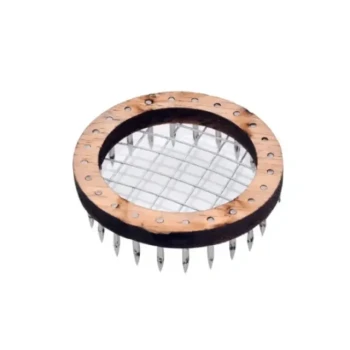
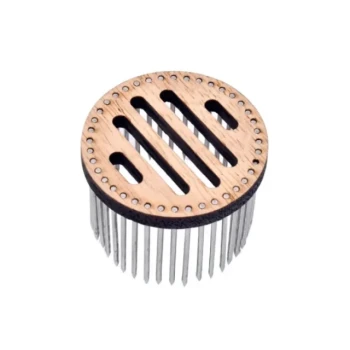
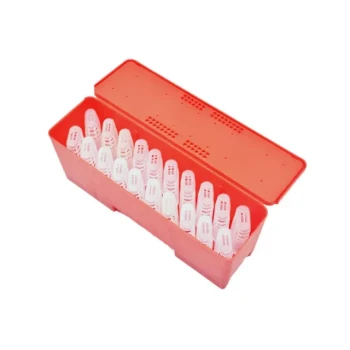
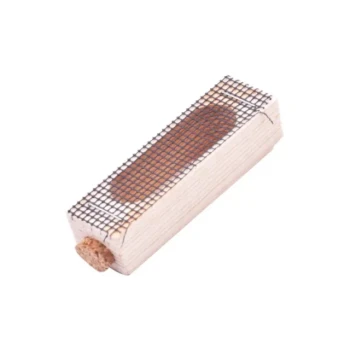
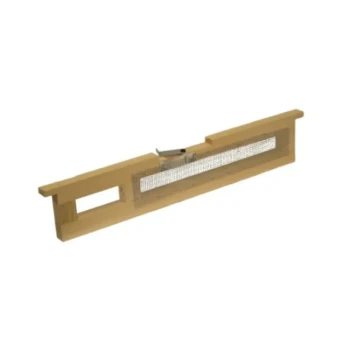
Specialized bee experimental cages act as precision instruments that transform honeybee research from an observational study into a controlled science. They allow researchers to isolate specific generations of honeybees, such as 15-20 day old summer flight bees, in a laboratory environment to rigorously test how infection impacts survival.
Core Takeaway By removing the chaos of the natural environment—such as predation and straying—these cages enable the precise correlation between pathogen spore dosage and cumulative mortality rates, providing clean data that cannot be obtained in field settings.
Achieving Laboratory Precision
Controlling Pathogen Dosage
In a natural hive, it is impossible to know exactly how much of a pathogen an individual bee has consumed. Experimental cages allow for the precise control of pathogen intake.
Researchers can administer specific doses of pathogen spores to the isolated bees. This capability is essential for establishing clear dose-response relationships and understanding the virulence of specific infections.
Isolating Specific Demographics
Honeybee colonies are complex societies with bees of varying ages and roles. Cages allow researchers to isolate specific demographic groups.
The primary reference notes the ability to isolate 15-20 day old summer flight bees. This standardization ensures that mortality data reflects the impact of the disease, rather than the natural aging process of older bees or the vulnerability of newly emerged ones.
Eliminating Environmental Noise
To study infection dynamics accurately, you must ensure that a dead bee died from the infection, not an environmental accident.
Removing Natural Loss Factors
In the wild, bees disappear for many reasons unrelated to disease. They may be eaten by predators or simply lose their way (straying) and fail to return to the hive.
Experimental cages eliminate these natural loss factors entirely. By confining the bees, researchers guarantee that every missing or dead bee is accounted for within the context of the experiment.
Recording Accurate Cumulative Mortality
Because external variables are removed, the data collected represents true physiological feedback.
Researchers can track cumulative mortality rates over time with high confidence. This allows for the construction of accurate survival curves that directly reflect the progression of the infection under different dosage conditions.
Understanding the Trade-offs: Cages vs. Field Tools
While experimental cages provide control, they create an artificial environment. It is crucial to understand how they differ from field-based tools mentioned in broader research contexts.
Artificial Isolation vs. Field Realism
Cages isolate the individual from the "superorganism" of the colony. While this is perfect for testing physiological responses to pathogens, it removes social immunity behaviors found in a full hive.
Contrast with Field Traps
For studies requiring field realism, researchers use specialized bee traps (as noted in supplementary references). Unlike cages, traps are attached to hives to collect dead bees in the field.
Traps prevent scavengers (like birds) from removing bodies, ensuring accurate mortality counts in a natural setting. However, unlike cages, traps cannot control the initial pathogen dose or prevent bees from dying away from the hive.
Making the Right Choice for Your Research
Selecting the correct apparatus depends entirely on whether you need to control the input (dosage) or observe the output (field mortality).
- If your primary focus is establishing dose-dependency: Use experimental cages to control pathogen intake and eliminate environmental variables like predation.
- If your primary focus is field monitoring: Use specialized bee traps to collect mortality data from active hives while preventing scavenger interference.
- If your primary focus is live sampling: Use specialized bee brushes to collect samples without harming the bee or damaging the hive structure.
The experimental cage is the definitive tool for converting the chaotic variables of a bee infection into quantifiable, reproducible data.
Summary Table:
| Feature | Specialized Experimental Cages | Field-Based Bee Traps |
|---|---|---|
| Primary Purpose | Controlled dose-response & mortality studies | Monitoring natural mortality in the field |
| Environment | Controlled laboratory setting | Natural hive environment |
| Pathogen Control | Precise spore dosage administration | Natural/uncontrolled exposure |
| Data Precision | High (eliminates predation/straying) | Moderate (captures on-site deaths only) |
| Target Group | Isolated demographics (e.g., flight bees) | Entire active colony population |
| Best Used For | Establishing virulence & survival curves | Environmental monitoring & scavenger prevention |
Elevate Your Beekeeping Research with HONESTBEE
Are you looking to scale your research or optimize your commercial apiary operations? HONESTBEE provides professional-grade solutions for commercial apiaries and global distributors.
We offer a comprehensive wholesale portfolio designed to meet every industry need, including:
- Precision Research Tools: High-quality experimental cages and sampling brushes for accurate data collection.
- Advanced Machinery: Efficient hive-making and honey-filling machines to streamline your production.
- Essential Consumables: A wide array of beekeeping tools, hardware, and industry-standard consumables.
- Cultural Merchandise: Unique honey-themed products to expand your market reach.
Partner with HONESTBEE to access world-class beekeeping equipment and expertise.
Contact us today to discuss your wholesale requirements!
References
- H. V. Odnosum, Н. М. Сорока. Dynamics of bees extinction under condition of their invasion with different doses of spores of Nosema apis and Nosema ceranae. DOI: 10.15407/animbiol19.02.087
This article is also based on technical information from HonestBee Knowledge Base .
Related Products
- Professional Bamboo Queen Isolation Cage
- Professional Queen Bee Introduction and Transport Cage
- Durable Plastic Push In Queen Bee Cage
- Professional Multi-Functional Queen Bee Cage
- Durable Galvanized Steel Spring Queen Bee Cage
People Also Ask
- Why are specialized queen bee cages used for the banking of mated queen bees? Maximize Commercial Apiary Storage Efficiency
- What is the mechanism of action for using temporary queen bee cages? Master Successful Queen Introduction
- How does the side ventilation design of a queen bee cage impact the safety of the queen during long-distance transport?
- What should you do if the queen is still in the cage and the worker bees have not accepted her? Protect Your Colony from Queen Rejection
- What technical precaution must be taken regarding the mesh or grill side of a queen bee cage? Ensure Queen Survival