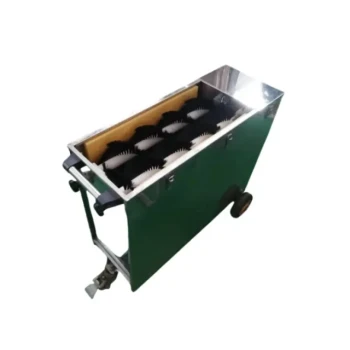
Specialized bee samplers serve as the primary instrument for standardizing data collection in the field. In the context of surveying Tropilaelaps clareae in Apis dorsata colonies, these tools are responsible for the efficient and quantitative collection of adult worker bees. They function to ensure that the physical sample extracted from the colony is statistically representative, which is a prerequisite for accurate laboratory analysis.
The reliability of any epidemiological survey is defined by the quality of its input data. Specialized samplers bridge the gap between field conditions and laboratory precision, ensuring that infestation estimates are based on consistent, unbiased sample populations.
Ensuring Data Integrity in the Field
Quantitative Consistency
To determine an infection rate, you must know exactly how many hosts were examined. Specialized samplers are designed to collect a specific, consistent volume or number of bees. This standardization allows for the calculation of precise infestation percentages rather than vague estimates.
Representative Sampling
A major challenge in surveying Apis dorsata or commercial hives is selection bias. These tools help ensure the collected bees represent the average condition of the colony. By standardizing the collection method, researchers avoid capturing only the most accessible or least active bees, which would skew the data.
Enabling Downstream Laboratory Analysis
Preparation for Elution
The collection mechanism is the first step in the laboratory workflow. The samples gathered are specifically intended for laboratory elution, a process where mites are washed from the bees for counting. The sampler ensures the biological material is preserved in a state suitable for this chemical or mechanical separation.
Microscopic Verification
Once the sample is processed, accurate identification relies on microscopy. Specialized samplers provide the clean, countable baseline required for microscopic analysis. This allows epidemiologists to assess not just the presence, but the specific severity of Tropilaelaps clareae infestation within the population.
Understanding the Constraints
Focus on Phoretic Phase
The primary reference highlights the collection of adult worker bees. It is important to recognize that Tropilaelaps clareae spends a significant portion of its life cycle inside sealed brood cells. Therefore, sampling only adult bees assesses the "phoretic" (traveling) mite population, which may differ from the total colony infestation level.
Operational Context
While the reference discusses these tools in the context of "commercial apiaries," applying them to Apis dorsata requires caution. Apis dorsata is a wild, open-nesting, and often aggressive species. The principles of the tool—quantitative and representative collection—remain valid, but the physical application may be more hazardous and difficult than in standard commercial hives.
Making the Right Choice for Your Survey
When planning your epidemiological study, select your tools based on the specific data fidelity you require.
- If your primary focus is calculating infection prevalence: Ensure your sampler is calibrated to collect a consistent number of bees to serve as a reliable denominator for your statistics.
- If your primary focus is severity assessment: Prioritize sampling methods that integrate seamlessly with laboratory elution protocols to ensure no mites are lost during transfer.
By removing human error from the collection process, specialized samplers transform a biological sample into a reliable data point for epidemiological modeling.
Summary Table:
| Feature | Role in Epidemiological Surveys | Impact on Data Accuracy |
|---|---|---|
| Quantitative Consistency | Collects a fixed volume/number of adult bees | Enables precise infestation rate calculation |
| Selection Bias Removal | Standardizes collection across diverse colony types | Ensures samples are statistically representative |
| Elution Compatibility | Prepares samples for chemical/mechanical washing | Minimizes mite loss during laboratory transfer |
| Microscopic Readiness | Provides clean, countable biological baselines | Supports accurate identification of mite species |
Elevate Your Apiary’s Health with HONESTBEE
Precise epidemiological data is the foundation of a thriving beekeeping operation. At HONESTBEE, we understand the unique challenges faced by commercial apiaries and distributors in managing pests like Tropilaelaps clareae.
We provide a comprehensive wholesale range of high-performance beekeeping machinery, hive-making tools, and specialized equipment designed to professionalize your workflow. From honey-filling machines to essential consumables, our portfolio empowers you to scale efficiently while maintaining the highest standards of bee health.
Ready to optimize your production and pest management?
Contact HONESTBEE today for specialized wholesale solutions
References
- R. C. Sihag. Phenology of Migration and Decline in Colony Numbers and Crop Hosts of Giant Honeybee (<i>Apis dorsata</i>F.) in Semiarid Environment of Northwest India. DOI: 10.1155/2014/639467
This article is also based on technical information from HonestBee Knowledge Base .
Related Products
- Full Set Beekeeping Electronic Bee Venom Collector Machine Device for Bee Venom Collecting
- Professional Stainless Steel Pry-Bar Hive Tool
- Professional Bee Smoker with Elongated Spout and Durable Bellows for Beekeeping
- Professional Dual Action Queen Excluder Scraper for Beekeeping
- Economy Galvanized Beekeeping Honey Bee Smoker for Wholesale
People Also Ask
- How does the glass plate integrated into a bee venom collector contribute to maintaining quality and purity?
- What is the function of specialized collection equipment in the production process of bee venom? Expert Guide
- What is the significance of using specialized bee venom collection devices in commercial beekeeping operations?
- Why are bee venom collection devices typically mounted on specialized wooden carrier boards? Maximize Yield & Purity.
- How does a dedicated bee venom collection device operate? Extract Pure Venom Safely Without Harming Your Bees