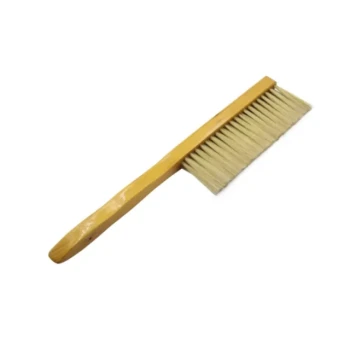
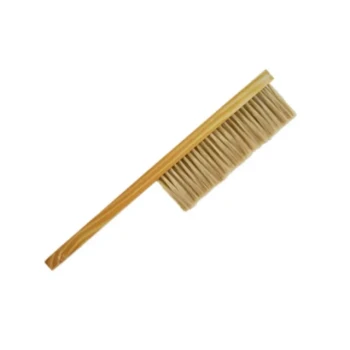
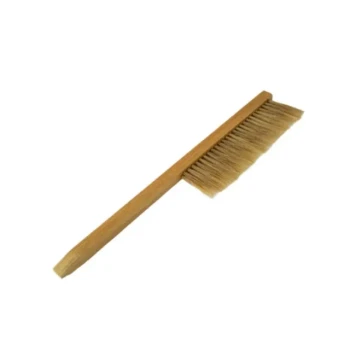
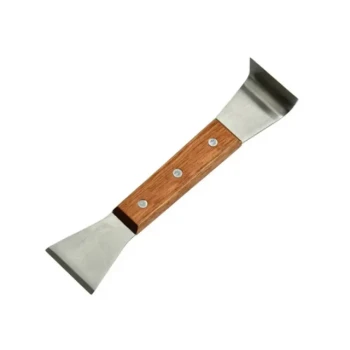
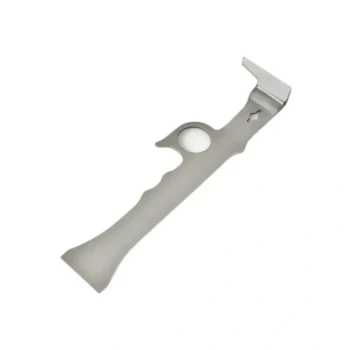
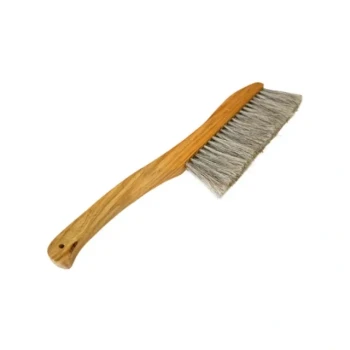
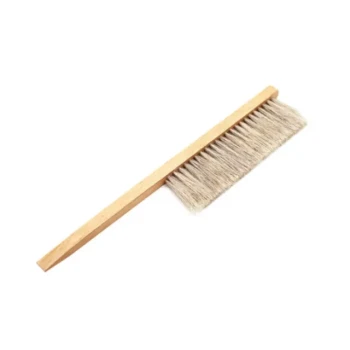
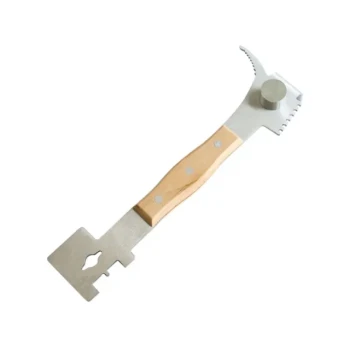
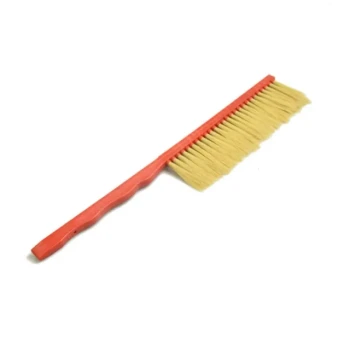
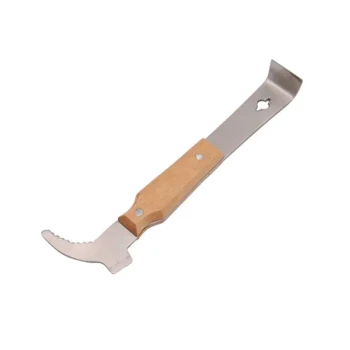
Hive tools and bee brushes function as essential preservation instruments that directly mitigate apiary expenses by preventing damage to both physical assets and the biological workforce. Specifically, hive tools pry apart propolis-bonded components to prevent structural breakage, while bee brushes allow for the gentle removal of insects to minimize colony mortality.
By replacing forceful manual handling with specialized leverage and gentle manipulation, these tools shift apiary management from a cycle of repair and replacement to one of preservation and efficiency.
The Hive Tool: Protecting Structural Assets
The primary economic function of the hive tool is the preservation of standardized hive bodies and frames.
Overcoming Propolis Bonds
Bees naturally seal crevices with propolis, a resinous substance that bonds hive components together with surprising strength.
The hive tool is specifically designed to apply leverage to these bonded areas. This allows the beekeeper to pry apart boxes and frames without resorting to brute force.
Preventing Equipment Damage
Without the mechanical advantage of a hive tool, beekeepers often resort to forceful manual handling to separate components.
This force frequently results in structural damage, such as snapped frame ears or cracked hive bodies. By eliminating the need for such force, the hive tool significantly extends the lifespan of these wooden or plastic accessories.
The Bee Brush: Preserving the Workforce
While the hive tool protects the "hardware" of the apiary, the bee brush is designed to protect the "software"—the bees themselves.
Gentle Extraction
During honey harvesting or hive transfers, bees must be cleared from the frames to access the comb.
The bee brush enables the removal of these insects without crushing or injuring them. It provides a soft, sweeping motion that displaces the bees effectively but safely.
Reducing Mortality Rates
Manual removal or shaking frames violently can injure bees or cause them to sting, leading to their death.
By using a brush, you directly lower the mortality rate of the colony during inspections. Maintaining a high population count is critical, as a larger workforce translates to better overwintering success and higher honey yields.
How Function Translates to Cost Reduction
The specific mechanical functions of these tools lead to measurable financial savings in apiary management.
Lowering Equipment Replacement Costs
Every frame or box broken due to improper handling requires capital to replace.
By reducing the damage rate of hive accessories, the hive tool acts as a preventative measure against recurring equipment costs. This is vital for maintaining the efficiency of modular management, where interchangeable frames are key to profitability.
Minimizing Labor and Production Loss
The primary reference notes that these tools reduce "labor loss." In this context, this refers to both human effort and bee productivity.
Injured colonies require more time to recover and produce less honey. By minimizing bee mortality, you ensure the colony focuses energy on nectar collection rather than population recovery.
Understanding the Trade-offs
While these tools are essential for cost reduction, improper use can introduce new risks that undermine their benefits.
The Risk of Disease Transmission
Hive tools and brushes come into direct contact with multiple colonies during daily inspections.
If not sterilized between hives, they become vectors for spreading pathogens like American Foulbrood. This can lead to catastrophic colony loss, far outweighing the savings from preserved equipment.
Potential for Agitation
While a bee brush is gentler than shaking, it can still agitate the colony if used too vigorously.
"Rolling" bees across the comb with a brush can incite stinging behavior. This increases stress within the hive, which creates a temporary drop in productivity as the colony moves into a defensive state.
Making the Right Choice for Your Goal
To maximize the cost-saving potential of these tools, consider your specific operational focus:
- If your primary focus is Asset Longevity: Prioritize high-quality hive tools to navigate propolis bonds, ensuring your standardized frames remain interchangeable and intact for years.
- If your primary focus is Yield Maximization: Rely on soft-bristled bee brushes during harvest to maintain maximum colony population and reduce the energy bees must expend on recovery.
Investing in and correctly using these simple tools is the most cost-effective insurance policy available for your apiary.
Summary Table:
| Tool Type | Primary Function | Economic Impact |
|---|---|---|
| Hive Tool | Prying propolis-bonded components | Reduces equipment damage and replacement costs |
| Bee Brush | Gentle bee removal from frames | Minimizes colony mortality and maintains productivity |
| Combined Use | Systematic hive maintenance | Lowers labor loss and preserves structural assets |
Maximize Your Apiary’s ROI with HONESTBEE
At HONESTBEE, we specialize in empowering commercial apiaries and distributors with high-durability beekeeping essentials that drive down operational costs. Our comprehensive wholesale catalog includes:
- Precision Hardware: From heavy-duty hive tools to honey-filling and hive-making machinery.
- Protective Equipment: Soft-bristled brushes and preservation tools designed to keep your workforce healthy.
- Essential Consumables: A wide array of industry-standard supplies for large-scale operations.
Whether you are scaling your honey production or stocking a distribution network, our expertise in beekeeping infrastructure ensures you get the best value for your investment. Contact us today to explore our wholesale solutions and elevate your apiary management!
References
- Yidiat O. Aderinto, T O Aliu. Optimization of Honey Bee Production. DOI: 10.46300/9101.2020.14.13
This article is also based on technical information from HonestBee Knowledge Base .
Related Products
- Wooden Bee Brush with Triple Row Artificial Fiber for Beekeeping
- Double Row Artificial Fiber Bee Brush for Beekeeping
- Classic Wooden Bee Brush with Double-Row Boar Bristles
- Professional Dual-End Stainless Steel Hive Tool for Beekeeping
- HONESTBEE Advanced Ergonomic Stainless Steel Hive Tool for Beekeeping
People Also Ask
- What is the specific function of a bee brush? Ensure Pure Harvests and Colony Welfare During Honey Extraction
- What are the key characteristics of the bristles on a bee brush? Master Gentle and Efficient Bee Removal
- What is the purpose of using a bee brush during the inspection of hive components? Safe & Precise Hive Management
- What problem does a bee brush solve? Protect Your Colony with Gentle Precision Tools
- Why is a bee brush necessary when extracting honeybee hive frames that contain larvae? Protect Your Brood and Colony