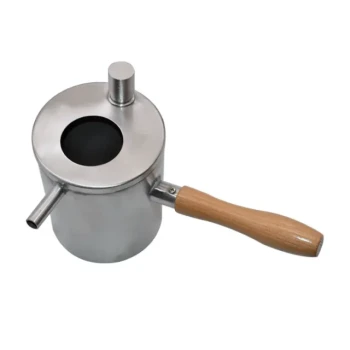
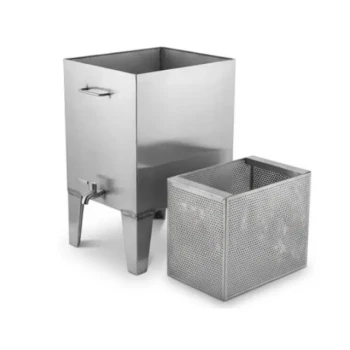
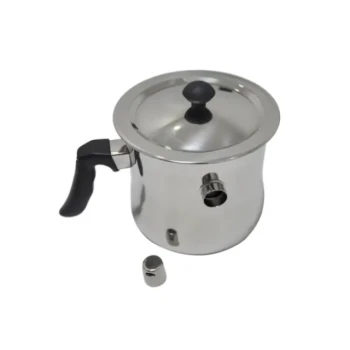
Wax boxes serve as the critical processing hub for recovering and refining beeswax within an apiary. Specifically, they are utilized to collect and consolidate hive by-products—such as wax cappings, old honeycombs, and accumulated debris—facilitating the initial melting and filtration necessary to convert raw waste into a valuable commodity.
By transforming production refuse into clean, industrial-grade beeswax, wax boxes allow beekeepers to turn waste disposal into a profitable revenue stream, significantly optimizing the economic structure of the operation.
Transforming Waste into Assets
The Collection Mechanism
The primary function of a wax box is the aggregation of material that would otherwise be discarded. Beekeepers use these units to gather cappings removed during honey extraction and old honeycombs that have cycled out of use.
From Debris to Industrial Grade
Once collected, the wax box acts as the vessel for the first stage of purification. Through initial melting and filtration, the device separates physical impurities from the raw wax. This process upgrades the material from mere hive debris into clean, industrial-grade beeswax ready for secondary applications.
Economic and Operational Impact
distinct Revenue Channels
The purified wax produced via these boxes opens specific financial avenues for the apiary. Instead of selling only honey, the operation can manufacture and sell value-added products like candles or raw ingredients for the cosmetics industry.
Optimizing Apiary Economics
Implementing wax boxes changes the economic model of beekeeping from linear to circular. It ensures that every output of the hive, not just the honey, contributes to the bottom line. This efficiency is crucial for maximizing the return on investment for the entire apiary operation.
Understanding the Operational Context
The Cycle of Hive Renewal
To fully understand the value of a wax box, one must recognize the source of the material. As noted in beekeeping best practices, wax foundations—the structural guides for honeycombs—require regular replacement to maintain colony hygiene and ensure uniform larval development.
Managing Material Flow
The wax box provides the necessary infrastructure to handle this constant flow of replaced material. Without a dedicated system to process these old foundations and cappings, the beekeeper loses a significant percentage of the hive's total productive output.
Maximizing Apiary Efficiency
To effectively integrate wax boxes into your operation, consider your specific end goals:
- If your primary focus is Revenue Generation: Prioritize filtration quality to ensure your beeswax meets the high purity standards required for cosmetic ingredients and premium candles.
- If your primary focus is Hive Health: Use the wax box as a dedicated disposal point for old foundations, encouraging frequent comb replacement to maintain high hygiene standards for larval development.
An efficient wax processing system is the bridge between a raw material surplus and a diversified, resilient beekeeping business.
Summary Table:
| Feature | Function in Wax Utilization | Economic Benefit |
|---|---|---|
| Material Aggregation | Collects cappings, old combs, and debris | Reduces waste disposal costs |
| Initial Purification | Filters impurities through melting | Upgrades waste to industrial-grade wax |
| Revenue Diversification | Processes raw wax for candles/cosmetics | Creates secondary income streams |
| Resource Recovery | Manages the cycle of hive renewal | Maximizes ROI of hive outputs |
Maximize Your Apiary’s Revenue with HONESTBEE
Don’t let valuable beeswax go to waste. HONESTBEE empowers commercial apiaries and distributors with the professional-grade tools needed to turn every hive by-product into a profitable commodity. From high-efficiency wax processing machinery to specialized hive-making and honey-filling systems, we provide a comprehensive wholesale portfolio to optimize your operation.
Whether you are scaling your honey production or expanding into wax-based merchandise, our expert team is ready to supply the hardware and consumables you need for success. Contact us today to explore our wholesale solutions and see how we can enhance your apiary’s efficiency.
References
- Nicol Gurung, Alisara Thapa. ECONOMICS OF PRODUCTION AND MARKETING OF HONEY IN CHITWAN DISTRICT OF NEPAL. DOI: 10.47760/cognizance.2024.v04i09.002
This article is also based on technical information from HonestBee Knowledge Base .
Related Products
- Stainless Steel Honey Press Wax Press with Tank
- Styrofoam Mini Mating Nuc Box with Frames Feeder Styrofoam Bee Hives 3 Frame Nuc Box
- Professional 600D Oxford Cloth Beekeeping Tool Bag with 8 Pockets and Elastic Loops
- Professional Stainless Steel Wax Melter for Beekeeping and Crafts
- HONESTBEE Classic Twist Up Lip Balm Tubes
People Also Ask
- What is the procedure for pressing honey? A Simple, Low-Cost Method for Small-Scale Beekeepers
- What other functions can a honey press serve besides honey extraction? Discover Versatile Multi-Purpose Uses
- What are the fundamental differences between manual honey presses and centrifugal honey extractors? A Guide for Pros
- What features contribute to the portability of a honey press? Compact Designs for Mobile Beekeeping
- What is the procedure for extracting honey using a honey press? A Guide to Maximum Yield