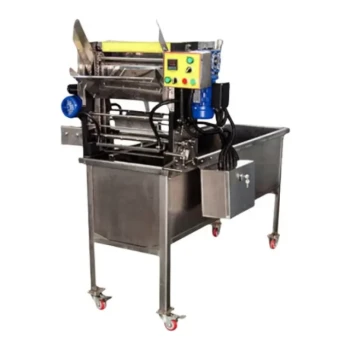
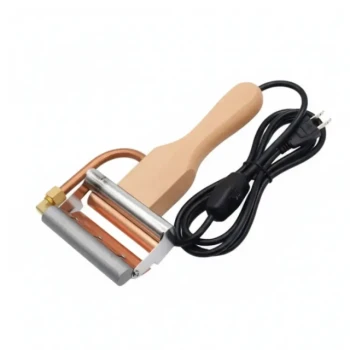
Acting as the mechanical heart of the system, a chain-type feeding device functions as the primary transmission hub in industrial honey uncapping. It employs a motor-driven arrangement of chains and clamps to lock honeycomb frames in a vertical position and drive them continuously through the cutting zone.
By governing the speed and stability of the frame, this device bridges the gap between manual handling and industrial automation. It ensures that high-volume processing does not come at the expense of cutting precision.
The Mechanics of Automated Transport
To understand the value of a chain-type feeding device, it is necessary to look beyond simple movement. This component is designed to solve specific stability and consistency challenges inherent in handling honeycomb frames.
Securing the Payload
The system relies on a specialized mechanism of chains and clamps. These components grip the honeycomb frames securely, holding them in a rigid vertical orientation.
By locking the frame in place, the device eliminates the wobbling or shifting that often occurs with manual feeding or gravity-fed systems.
Continuous Motor-Driven Flow
A dedicated motor drives the chain assembly. This creates a continuous transport loop that moves the frames directly into the cutting zone without interruption.
This automated flow removes the bottleneck of manual insertion, allowing the system to operate at a significantly higher volume than human operators could sustain.
The Critical Role of Constant Speed
The most significant technical contribution of the chain-type feeder is its ability to regulate velocity.
Ensuring Cutting Precision
For an uncapping blade to work effectively, the comb must move past it at a uniform rate. The chain drive ensures the frames pass through the cutters at a constant speed.
This consistency is critical for maintaining cutting precision. It prevents the uneven uncapping depths that result from the inconsistent speeds of manual pushing.
Reducing Labor Dependence
Because the device handles both the holding and the moving of the frames, it drastically reduces the need for manual labor.
Operators are freed from the repetitive, physically demanding task of feeding individual frames, shifting their role to supervision and quality control.
Operational Considerations and Trade-offs
While chain-type feeding devices offer superior consistency, they introduce specific mechanical considerations that operators must manage.
Mechanical Complexity
Unlike simple gravity slides, a chain-drive system involves multiple moving parts, including motors, gears, and links.
This increases the need for routine maintenance to ensure the chains remain tensioned and the motor functions correctly.
Dependency on Frame Standardization
The use of clamps implies a need for consistent frame dimensions.
If frames vary significantly in size or are warped, the clamps may struggle to secure them properly, potentially leading to jams or reduced stability during the cutting process.
Optimizing Your Uncapping Workflow
To determine if a system utilizing this feeding mechanism aligns with your operational needs, consider your production targets.
- If your primary focus is Cutting Quality: The constant speed provided by the chain drive is essential for achieving a uniform, precise cut across every frame.
- If your primary focus is Volume: The continuous, motor-driven feed capability is the only way to achieve true industrial-scale throughput.
The chain-type feeding device is not just a conveyor; it is the stabilizing force that makes high-speed, precision uncapping possible.
Summary Table:
| Feature | Function in Uncapping System | Operational Benefit |
|---|---|---|
| Chains & Clamps | Secures frames in a rigid vertical position | Eliminates wobbling and ensures stability during cutting |
| Motorized Drive | Provides a continuous transport loop | Enables high-volume, automated throughput |
| Speed Regulation | Governs frame velocity past blades | Guarantees consistent cutting depth and precision |
| Automated Feed | Replaces manual frame insertion | Drastically reduces labor dependence and physical strain |
Scale Your Apiary Operations with HONESTBEE Precision
Transitioning to industrial-scale honey production requires reliable, high-performance machinery. HONESTBEE specializes in supporting commercial apiaries and distributors with a complete range of professional beekeeping equipment. From advanced honey-filling machines and automated uncapping systems featuring precision chain-drive technology to high-quality consumables and specialized hardware, we provide the tools you need to maximize efficiency.
Partner with HONESTBEE to enhance your production quality and output. Contact our wholesale experts today to discuss how our solutions can grow your beekeeping business.
References
- Y. A. Shaaban, A. Ghania. Development and Evaluation of a Honeycomb Uncapping Machine. DOI: 10.21608/jssae.2019.53676
This article is also based on technical information from HonestBee Knowledge Base .
Related Products
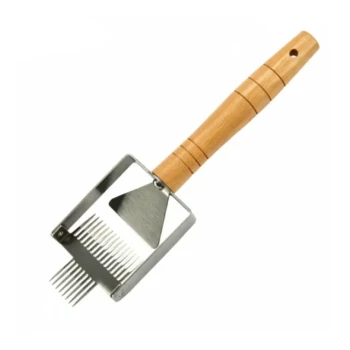
- Double-Sided Pivoting Honey Uncapping Fork with Scraper for Beekeeping
- Automatic Honey Frame Uncapper Machine for Beekeeping
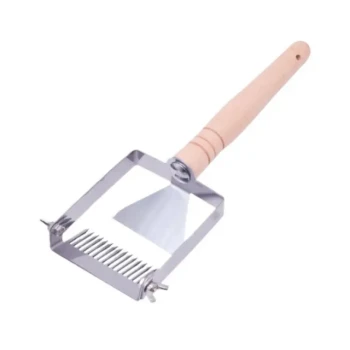
- All-Stainless Steel Pivoting Honey Uncapping Fork for Beekeeping
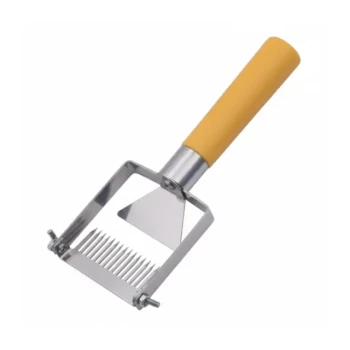
- Professional Customizable Honey Uncapping Fork with Adjustable Tine Options
- Professional Honey Uncapping Fork Tool with Customizable Tine Options
People Also Ask
- What is the design purpose of honey uncapping forks and honey uncapping tanks? Maximize Your Harvest Efficiency
- How does a honey uncapping fork supplement the use of an uncapping knife? Boost Your Honey Yield and Extraction Efficiency
- What are the essential tools for uncapping honey frames? Choose the Right Tool for Your Apiary
- What other tools are available for honey uncapping besides knives? Find the Right Tool for Your Apiary's Scale
- What tools are used for honey uncapping? Choose the Right Knife for Your Harvest