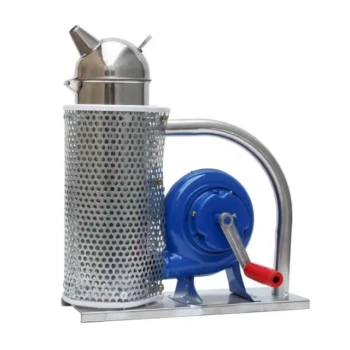
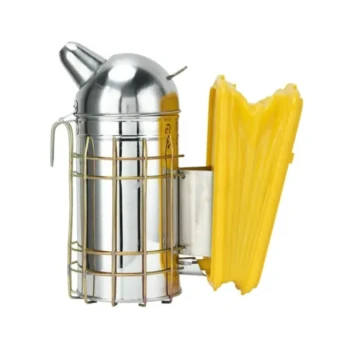
The Bee Smoker serves as a critical physiological regulator in apiary management by chemically masking the colony's defensive signals. By applying controlled amounts of cool smoke, the device disrupts the transmission of alarm pheromones, effectively severing the communication link that triggers collective aggression.
Core Takeaway A smoker does not merely "scare" bees; it fundamentally alters their biological priorities during a harvest. By blocking alarm signals and triggering a survival-based feeding instinct, it shifts the colony's focus from defense to resource preservation, ensuring safety for both the operator and the hive.
The Biological Mechanisms of Control
Disrupting Pheromone Communication
The primary function of the smoker is to interfere with chemical signaling. When a hive is disturbed, guard bees release alarm pheromones to alert the colony of a threat.
Smoke physically and chemically masks these pheromones. This prevents the "attack signal" from spreading throughout the hive, inhibiting the escalation of aggressive behavior.
Triggering the Survival Instinct
Beyond masking scents, the presence of smoke simulates a natural environmental threat: a forest fire. This triggers an immediate, evolutionary survival response within the colony.
Sensing potential danger, the bees instinctively begin to gorge on honey. They consume these resources to prepare for the possibility of abandoning the hive, ensuring they have the energy reserves needed to rebuild elsewhere.
Inducing a Docile State
The physiological act of consuming honey significantly reduces the bees' physical ability and willingness to sting.
Engorged bees are physically heavier and more lethargic, making defensive maneuvering more difficult. This diversion of energy toward consumption creates a calm, stable environment that allows the beekeeper to work without resistance.
Operational Impact on Harvesting
Maintaining Colony Stability
Harvesting honey is inherently invasive, yet the use of a smoker maintains the structural integrity of the colony's social order.
By preventing a mass panic, the smoker ensures that the queen and worker bees remain calm. This reduces the stress load on the colony, which is vital for its long-term health and productivity.
Protecting the Operator and the Bees
The use of a smoker is a dual-safety measure. It protects the operator from stings by suppressing the defensive mob response.
Simultaneously, it protects the bees themselves. Unlike traditional methods involving open fire or brute force, a professional smoker minimizes bee fatalities and prevents the chaos that often leads to crushed or injured insects during frame removal.
Efficiency in Extraction
Time is a critical factor during honey harvesting. A calm colony allows for rapid inspection and extraction of honeycombs.
By minimizing defensive interruptions, the smoker reduces the labor time required for the harvest. This efficiency is essential for commercial apiaries where multiple hives must be processed quickly.
Understanding the Trade-offs
The Necessity of "Cool" Smoke
Not all smoke is beneficial. Effective regulation requires the generation of cool, white smoke, often produced by smoldering fuels like burlap, pine needles, or dried manure.
Hot smoke can singe the bees' wings or bodies, causing permanent injury. It can also raise the internal temperature of the hive to dangerous levels, causing more panic rather than sedation.
The Risks of Traditional Open Fire
Some traditional methods utilize open flames rather than a directed smoker canister. This is highly discouraged in modern practice.
Open fire lacks control, posing a severe risk of killing bees and even starting wildfires. A dedicated smoker device provides the necessary directional control to apply smoke only where needed without thermal damage.
Making the Right Choice for Your Goal
To utilize a smoker effectively, you must align your technique with your specific objective:
- If your primary focus is Operator Safety: Prioritize applying smoke at the entrance before opening the hive to neutralize guard bees immediately.
- If your primary focus is Colony Health: Ensure the smoke is cool to the touch before application to avoid thermal injury to the bees or melting the wax.
- If your primary focus is Harvest Efficiency: Use the smoker intermittently to maintain the masking effect without over-smoking, which can sometimes drive bees too deep into the hive to work easily.
Mastering the smoker is about dosage and temperature; it is the difference between a chaotic extraction and a surgical procedure.
Summary Table:
| Mechanism | Biological Effect | Practical Benefit |
|---|---|---|
| Pheromone Masking | Disrupts alarm signals | Prevents collective aggression and stinging |
| Survival Instinct | Triggers honey engorgement | Bees become heavy, lethargic, and docile |
| Heat Control | Provides cool, white smoke | Prevents wing damage and hive overheating |
| Operational Flow | Minimizes colony panic | Increases extraction speed and labor efficiency |
Maximize Your Harvest Efficiency with HONESTBEE
At HONESTBEE, we understand that large-scale honey production requires precision and reliability. As a leading partner for commercial apiaries and distributors, we provide a comprehensive wholesale range of professional-grade beekeeping tools.
From high-output honey-filling machines to durable smokers and essential consumables, our equipment is designed to enhance your operational safety and hive productivity. Whether you are scaling your extraction line or stocking a distribution network, we deliver the specialized hardware and industry expertise you need.
Ready to elevate your apiary operations?
Contact us today to explore our wholesale catalog and custom solutions.
References
- Mohamed Hassan Mohamud, Hodan Ibrahim Nageye. Assessments of beekeeping production systems in Jambalul, Afgoi district, lower Shabelle region, Somalia. DOI: 10.4081/sjsts.2025.477
This article is also based on technical information from HonestBee Knowledge Base .
Related Products
- Stainless Steel Honey Bee Smoker Hive and Honeycomb Smoker for Beekeeping
- Professional Bee Smoker with Elongated Spout and Durable Bellows for Beekeeping
- Heavy Duty Manual Bee Smoker Blower for Beekeeping
- Premium Traditional Copper Bee Smoker with Bellows
- European Stainless Steel Bee Smoker for Honey Bee Hive
People Also Ask
- What are bee smokers made out of? Choose the Right Material for Your Apiary
- Why is a stainless steel bee smoker considered indispensable? Master Hive Management with Cool Smoke Technology
- What type of bee smoker is recommended for a beginner? Top Picks for Easy Hive Management
- What is the best material for a bee smoker? Choose the Right Fuel for a Calm Hive
- How do bee smokers and colored light sources work together to assist in night-time honey harvesting? Expert Strategies