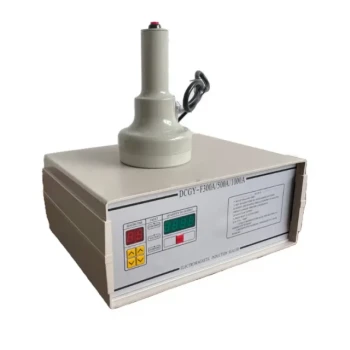
The industrial high-temperature muffle furnace serves as the definitive oxidation chamber for determining the ash content in honey. It provides a strictly controlled thermal environment, typically set to 600°C, to ensure the slow and complete decomposition of organic matter. This precise regulation is critical to prevent sample loss caused by splashing or sudden temperature fluctuations, ensuring that only the inorganic mineral residue remains for quantification.
Core Insight: The muffle furnace is the standard instrument for isolating honey's mineral content by incinerating all organic components. Its primary value lies in maintaining a stable, constant heat that ensures total oxidation without physical sample loss, providing the essential data needed to verify honey purity, quality, and origin.
The Mechanism of Separation
Controlled Calcination
The fundamental role of the muffle furnace is to subject the honey sample to extreme heat in an oxygen-rich environment. This process, known as calcination, converts organic substances (sugars, enzymes, proteins) into gas, driving them off completely.
Isolation of Inorganic Residue
Once the organic matter is volatilized, the only substance remaining in the crucible is the inorganic "ash." This residue represents the total mineral content of the honey, which the furnace preserves for accurate weighing.
Prevention of Sample Loss
A critical function of the furnace is to manage the rate of decomposition. By maintaining a constant temperature (specifically 600°C), the furnace prevents the rapid boiling or "splashing" of the sample, which would physically eject material from the crucible and invalidate the results.
Why Ash Determination Matters
Quantifying Mineral Richness
The ash content is a direct proxy for the mineral nutritional value of the honey. The furnace allows researchers to calculate the exact percentage of mineral mass relative to the total weight of the honey.
Determining Botanical Origin
The data derived from this process is used to distinguish between different types of honey. For instance, the ash content is a key physicochemical indicator for differentiating between blossom honey (nectar-based) and honeydew honey (excretion-based).
Assessing Geographical Indicators
Because the mineral content reflects the soil fertility of the plants that produced the nectar, the ash residue can help trace the honey's geographical origin. It also serves as a checkpoint for environmental contamination or adherence to international purity standards.
Understanding the Trade-offs
Temperature Sensitivity and Standards
While 600°C is a common set point, different international standards may require temperatures ranging from 500°C to 625°C. Selecting the incorrect temperature can lead to incomplete oxidation (if too low) or the volatilization of certain minerals (if too high), skewing the data.
The Necessity of Time
This is not a rapid process; the furnace must maintain heat until the sample reaches a "constant weight." This ensures that absolutely all organic carbon has been removed, but it requires significant time investment compared to other rapid-test methods.
Making the Right Choice for Your Goal
To effectively utilize a muffle furnace for honey analysis, align your protocol with your specific objective:
- If your primary focus is Quality Control and Purity: Ensure the furnace is calibrated to the exact temperature specified by the relevant standard (e.g., Codex Alimentarius) to prove compliance.
- If your primary focus is Origin Tracing: Use the ash content data to correlate mineral density with specific soil types or botanical sources, distinguishing between floral and honeydew varieties.
Ultimately, the muffle furnace transforms a complex organic mixture into a single, quantifiable metric that reveals the purity and history of the honey.
Summary Table:
| Process Step | Function of Muffle Furnace | Key Benefit |
|---|---|---|
| Calcination | Incinerates organic matter (sugars, proteins) into gas | Isolates pure inorganic mineral residue |
| Temperature Control | Maintains constant 600°C (standard) | Prevents sample splashing and physical loss |
| Total Oxidation | Ensures removal of all organic carbon | Accurate quantification of mineral richness |
| Origin Analysis | Provides ash mass for physicochemical data | Distinguishes between blossom and honeydew honey |
Elevate Your Honey Quality Standards with HONESTBEE
At HONESTBEE, we understand that precision in ash content determination is vital for commercial apiaries and distributors to prove product purity and origin. We provide the professional-grade honey-filling machines, specialized beekeeping tools, and essential industrial equipment needed to maintain world-class standards. Whether you are scaling up production or seeking to enhance your lab's accuracy, our comprehensive wholesale portfolio offers the specialized hardware and industry consumables your business deserves.
Ready to optimize your apiary or distribution network? Contact HONESTBEE Today to discover how our tailored equipment solutions can drive your success.
References
- Soraia I. Falcão, Giancarlo Quaglia. Composition and Quality of Honey Bee Feed: The Methodology and Monitoring of Candy Boards. DOI: 10.3390/ani14192836
This article is also based on technical information from HonestBee Knowledge Base .
Related Products
- Professional Thermostatic Conical Honey Melter
- Honey Tank Heater Drum Heating Blanket for Honey Barrel
- Solar Beeswax Melter Easy Solar Wax Melter for Beeswax
- Steam Beeswax Melter Wax Warmer for Wax Processing
- Electric Bee Smoker European Style Bee Hive Smoker for Beekeeping
People Also Ask
- What is melter honey used for? A Low-Cost Ingredient for Bakers and Brewers
- How does a honey melter address the issue of crystallized honey in storage? Restore Flow and Quality Efficiently
- How do you melt a bucket of honey? Safely Reliquefy Crystallized Honey Without Damage
- When is a honey melter necessary? Optimize Your Facility's Workflow for Crystallized Honey
- How to heat a bucket of honey? Safely Restore Liquid Honey While Preserving Quality