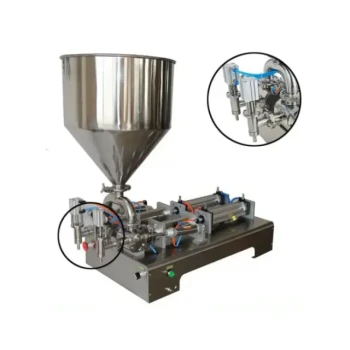
Industrial honey-filling and processing machinery serves as the critical operational bridge between raw hive extraction and the retail shelf. This equipment automates the filtration, dehydration, and precise volumetric packaging of honey, ensuring strict hygiene standards and standardized quality. By controlling the physical processing environment, these machines preserve the delicate active biological components of the honey while transforming a raw agricultural variable into a consistent, high-value commercial asset.
The Core Takeaway While mechanically designed for packaging, the true value of this machinery is economic stabilization. By converting honey—effectively a by-product of pollination services—into a profitable, standardized commodity, this technology provides the essential revenue stream required to sustain large-scale pollination operations.
Preserving Biological Integrity
Controlling Heat and Oxidation
Honey is a heat-sensitive product containing volatile flavor profiles and active enzymes. Industrial-grade machinery utilizes precise temperature-controlled filtration to process honey without degrading these nutrients.
By maintaining optimal thermal conditions, the equipment prevents the loss of active ingredients that often occurs during manual or unregulated extraction.
Preventing Secondary Contamination
Raw honey is susceptible to environmental contaminants once removed from the hive. Automated filling lines operate as closed-loop systems to isolate the product from the external environment.
This sterile processing workflow prevents secondary contamination from dust or microbes. It ensures the final product meets rigorous food safety standards required for market entry.
Standardization and Market Competitiveness
Precision Volumetric Control
To succeed in the retail market, producers must guarantee consistency across thousands of units. High-precision fluid control technology ensures that every jar contains the exact volume specified, regardless of batch variations.
This consistency eliminates product giveaway (overfilling) and regulatory disputes (underfilling). It creates a uniform product essential for building brand trust.
Managing Viscosity and Texture
Bee products, such as honey and royal jelly, vary significantly in viscosity. Specialized pneumatic and mechanical fillers are designed to handle high-viscosity fluids without clogging or inconsistent flow.
This capability allows producers to package thick, premium products efficiently. It compensates for raw material shortages in low-output regions by maximizing the yield and presentation of the available harvest.
The Economic Engine of Pollination
Monetizing the By-Product
In the broader apiculture value chain, the primary ecological service is pollination. However, industrial processing equipment allows farmers to capture significant additional value from the by-products of this service (honey and wax).
By transforming raw ecological output into shelf-ready commodities, beekeepers diversify their revenue. This added value protects them from market fluctuations in pollination contracts.
Financing Large-Scale Operations
The profitability of processed honey directly incentivizes the maintenance of stable pollinator populations. The revenue generated from high-quality, machine-processed honey subsidizes the operational costs of keeping bees.
Consequently, efficient processing infrastructure is not just about selling food; it is a financial pillar supporting the pollination services that underpin one-third of the human diet.
Understanding the Trade-offs
Capital Investment vs. Production Volume
Industrial machinery represents a significant capital expenditure. For smaller operations, the cost of automated lines must be weighed carefully against raw honey output.
However, in regions with lower raw output, advanced automation can ironically be more critical. It maximizes the revenue per unit of the scarce resource, compensating for lower volumes with higher efficiency and premium positioning.
Maintenance and Complexity
Moving from manual to automated processing introduces technical complexity. These machines require specialized maintenance to ensure the fluid control systems and sensors remain accurate.
Operators must balance the efficiency gains with the need for technical training and a robust maintenance schedule to prevent downtime.
Making the Right Choice for Your Goal
To select the appropriate processing infrastructure, you must identify your primary objective within the value chain.
- If your primary focus is Mass Market Distribution: Prioritize high-speed, automated filling lines with integrated capping and labeling to ensure maximum throughput and unit consistency.
- If your primary focus is Premium/Medicinal Honey: Prioritize machinery with advanced temperature controls and closed-loop filtration to guarantee the preservation of enzymes and biological activity.
- If your primary focus is Pollination Services: Invest in robust, versatile processing equipment that can handle variable yields efficiently, ensuring your honey revenue effectively subsidizes your hive maintenance costs.
Successful apiculture relies on using processing technology not just to package a product, but to stabilize the economic model of the entire operation.
Summary Table:
| Key Role | Primary Benefit | Operational Impact |
|---|---|---|
| Biological Preservation | Protects enzymes & volatile flavors | Precise thermal control & sterile closed-loop systems |
| Standardization | Ensures volume & texture consistency | Eliminates product giveaway; builds retail brand trust |
| Economic Stabilization | Monetizes pollination by-products | Diversifies revenue to subsidize hive maintenance costs |
| Market Competitiveness | High-viscosity fluid handling | Maximizes yield and presentation for premium positioning |
Scale Your Honey Production with HONESTBEE
Are you ready to transform your raw honey into a high-value commercial asset? HONESTBEE specializes in empowering commercial apiaries and distributors with the industry's most reliable honey-filling and processing solutions. From specialized hive-making and honey-filling machines to a comprehensive range of beekeeping tools and machinery, we provide the hardware you need to ensure hygiene, precision, and profitability.
Why partner with HONESTBEE?
- Comprehensive Wholesale Offering: A one-stop shop for all beekeeping equipment and consumables.
- Advanced Engineering: Preserve the biological integrity of your honey with our precision-controlled systems.
- Market-Ready Output: Achieve the standardization required for mass-market retail and premium distribution.
Contact us today to optimize your production line!
References
- Amarjit S Tanda. Why Insect Pollinators Important in Crop Improvement?. DOI: 10.55446/ije.2021.42
This article is also based on technical information from HonestBee Knowledge Base .
Related Products
- Fully Automatic Honey Filling Packaging Machine for Processing Line
- Precision Durable Efficient HONESTBEE Rotary Honey Filling Machine
- Economy Small Honey Filling Machine Honey Bottle Filler Packaging Machine
- Automatic Honey Filling and Filtering Machine for Beekeeping Bottle Filling
- Small Honey Filling Machine Sachet Packing Equipment Single Nozzle
People Also Ask
- Why are fully automatic honey filling and packaging lines essential? Boost Your Honey's Market Value and Quality
- What is a fully-automatic honey filler? Streamline Your Production with High-Precision Automation
- How do automated honey filling and packaging machines affect profitability? Boost Margins with HONESTBEE Technology
- How do automated honey filling and packaging machines contribute to the market value of honey products? Maximize Your ROI
- How do industrial-grade automated honey filling and packaging machines mitigate the risk of physical contamination?