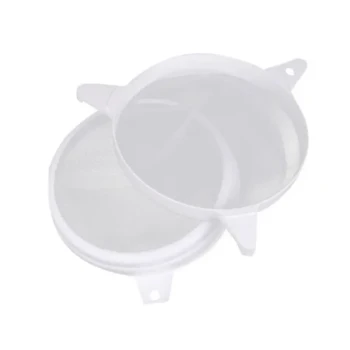
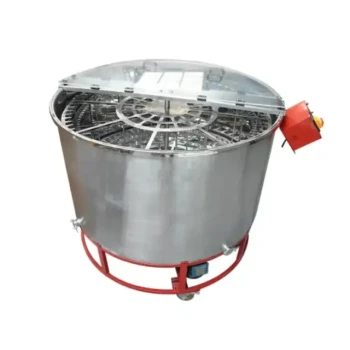
Industrial honey filtration and processing equipment serves as the critical bridge between raw apiary collection and the stringent demands of the global export market. By automating the standardization of purity, moisture content, and physical characteristics, these systems transform inconsistent raw honey into a high-value, uniform commodity that meets international trade specifications and pharmaceutical-grade hygiene standards.
Core Takeaway: Industrial processing equipment is the essential catalyst for large-scale export, turning raw, variable honey into a standardized, high-purity product that minimizes trade risks and maximizes market value for global distributors.
Standardizing Quality for Global Consistency
Achieving Uniformity Across Diverse Sources
Export-grade honey is often collected from hundreds of different apiaries, resulting in natural variations in color, flavor, and texture. Industrial homogenization equipment blends these diverse batches to create a uniform profile that meets the specific "type" requirements of international buyers.
Precision Moisture Control for Shelf Stability
Excessive moisture leads to fermentation, which can ruin entire shipments during long-range maritime transport. Processing lines use integrated dehydration and moisture control technology to ensure every batch falls within the strict percentage limits required for long-term stability and food safety compliance.
Sensory and Aesthetic Standardization
Consistency in color and clarity is a primary requirement for premium retail markets. Advanced machinery allows producers to remove cloudiness and unify the flavor profile, ensuring that wholesalers receive a predictable product that aligns with their brand promises.
Advanced Purity and Hygiene Compliance
Multi-Stage Mechanical Filtration
Raw honey contains beeswax cappings, bee debris, and environmental particles that are unacceptable in international trade. Multi-stage filtration systems utilize mechanical means to thoroughly remove these impurities without compromising the honey’s natural integrity.
Meeting Pharmaceutical and Food-Grade Standards
The transition from traditional beekeeping to modern industrial operations requires meeting ultra-high purity levels. Specialized equipment ensures the final product is suitable for the pharmaceutical and high-end food industries, opening doors to the most lucrative global distribution channels.
Sterile Sealing and Hygienic Integrity
Contamination during the packaging phase can lead to costly recalls and damaged reputations. Automated filling machines utilize sterile sealing technologies and hygienic pathways to protect the honey from the moment it leaves the filtration tank until it is sealed for the consumer.
Maximizing Operational Throughput and Value
Automated Efficiency for Large-Scale Orders
Manual processing cannot keep pace with the volume requirements of global wholesalers. High-speed processing lines allow for the rapid separation of honey from wax and immediate filtration, facilitating the ultra-fast delivery times that B2B partners demand.
Precision Filling and Trade Risk Reduction
In bulk commodity trade, measurement deviations can lead to significant financial disputes. Volumetric filling machinery provides precise metering, ensuring that every container meets the exact weight and volume specifications required by international customs and logistics standards.
Increasing Final Product Marketability
By refining "crude" honey into a polished, debris-free product, processors significantly increase the added value of the commodity. This technical link allows distributors to access broader, more sophisticated consumer segments that prioritize clarity and hygiene.
Understanding the Trade-offs
Balancing Filtration with Natural Integrity
While multi-stage filtration is necessary for purity, over-processing can strip honey of its natural pollen content, which some high-end "raw" markets value. Expert operators must calibrate equipment to remove physical impurities while maintaining the chemical markers that prove geographical origin and quality.
Investment vs. Scalability
Industrial-grade equipment requires a significant initial capital investment compared to traditional methods. However, for those targeting the export market, the cost of manual processing errors and the risk of shipment rejection far outweigh the expense of professional-grade automation.
Technical Complexity and Maintenance
Advanced processing lines require skilled technicians to ensure they operate at peak efficiency. Relying on a one-stop sourcing partner with deep industry expertise is vital to ensure that equipment is not only high-performing but also easy to maintain within a global supply chain.
Making the Right Choice for Your Goal
Whether you are a distributor or a large-scale reseller, your equipment strategy should align with your specific market penetration goals.
- If your primary focus is Volume and Rapid Fulfillment: Prioritize high-speed automated filling and filtration lines that emphasize throughput and precise volumetric control to reduce trade risks.
- If your primary focus is Premium Retail Markets: Invest in multi-stage, fine-mesh filtration and homogenization systems that ensure a crystal-clear aesthetic and consistent flavor profile across all batches.
- If your primary focus is Pharmaceutical or Industrial Supply: Focus on sterile-grade processing equipment with advanced moisture control and high-purity certifications to meet the world’s strictest safety standards.
By leveraging expert processing technology, distributors can guarantee a consistent, high-purity product that satisfies the rigorous demands of the international honey trade.
Summary Table:
| Processing Stage | Key Technical Function | Impact on Export Value |
|---|---|---|
| Moisture Control | Dehydration to strict limits | Prevents fermentation; ensures long-term shelf stability. |
| Multi-Stage Filtration | Removal of debris and micro-particles | Meets pharmaceutical and high-end food-grade standards. |
| Homogenization | Blending batches for uniformity | Ensures consistent color, flavor, and texture for global brands. |
| Automated Filling | Precise volumetric metering | Reduces trade risks, prevents weight disputes, and boosts speed. |
| Sterile Sealing | Contamination-free packaging | Protects hygienic integrity and prevents costly product recalls. |
Scale Your Honey Export Business with HONESTBEE
Are you looking to capture the premium global market? HONESTBEE is your dedicated one-stop sourcing partner, specializing in the high-performance equipment needed to transform raw honey into export-grade gold.
We provide a comprehensive wholesale portfolio designed for distributors and commercial apiaries, including:
- Advanced Machinery: From high-precision honey-filling machines to specialized hive-making equipment.
- Full-Spectrum Tools: A complete range of beekeeping hardware and industry consumables.
- Custom Solutions: OEM/ODM support to align with your specific brand and technical requirements.
Benefit from our deep industry expertise, ultra-fast delivery, and exceptional customer service. Let us help you maximize your profit margins and ensure rapid order fulfillment.
Contact HONESTBEE Today to Elevate Your Production
References
- Hilda E. Kurtz, Sarah A. Blue. Organic certification as assemblage: The case of Cuban honey. DOI: 10.1111/tran.12419
This article is also based on technical information from HonestBee Knowledge Base .
Related Products
- Electric Double Wall Honey Filtering Machine Purifier Equipment for Honey Processing Plant
- 0.5T Capacity Honey Dehumidifier Dryer with Vacuum Heating and Thickening Filtering Machine
- Honey Concentrating and Filtering Dehumidifier Machine 2T Capacity for Honey
- Professional Honey Filter with Tripod Support Stand
- Professional Stainless Steel Honey Filtering Machine with Water Bath Heating for Beekeeping
People Also Ask
- What is the process of filtering honey? A Guide to Clean, Pure, and Market-Ready Honey
- What types of equipment are used in honey filtering? Build an Efficient System for Pure, Marketable Honey
- What is the overall importance of using the right equipment in honey filtering? Boost Quality & Marketability
- What role do professional honey harvesting and filtering equipment play in meeting honey market quality standards? Boost ROI
- How should honey filtering equipment be properly maintained? Extend Equipment Life & Protect Honey Purity