Moisture evaporation is the central process in honey curing: worker bees fan air across partially filled cells to remove water from raw nectar, concentrating its sugars until it becomes stable, ripened honey. Properly ventilated hive equipment—such as screened bottom boards, screened inner covers, regulated entrances, and vented roof systems—helps move humid air out of the hive while supporting the bees’ natural fanning behavior.
Effective ventilation does not replace worker bees; it makes their fanning more efficient. The right airflow helps control nectar moisture, hive temperature, and condensation without creating excessive drafts or thermal stress.
How Moisture Evaporation Cures Honey
Nectar begins with too much water
Fresh nectar generally contains substantially more water than finished honey can safely retain. Bees deposit it into cells, often spreading it across open comb so that air can contact a larger surface area.
As water evaporates, the nectar’s sugar concentration increases. Mature honey typically reaches approximately 80% or more sugar concentration, corresponding broadly to a finished moisture level suitable for storage when other maturity indicators are also satisfactory.
Worker bees create the airflow
Worker bees fan their wings at hive entrances and within the comb structure. This circulates air across open nectar cells and carries humid air away from the curing area.
The bees also use evaporative cooling to regulate the colony. They may expose small droplets of water or nectar to moving air, allowing evaporation to reduce heat inside the hive.
Curing time depends on the starting conditions
Nectar moisture content and the volume of nectar are major factors in curing time. Combs filled with high-moisture nectar may take up to 36 days to fully mature, even when bees are actively ventilating the hive.
Ventilation supports the process, but it cannot eliminate the effects of unusually wet nectar, heavy nectar inflows, cool weather, or excessive hive humidity.
How Hive Equipment Supports Bee Fanning
Screened bottom boards improve air exchange
A screened bottom board can increase upward airflow through the hive and help humid air move away from the brood and honey-storage areas. It may also assist with condensation management, particularly when combined with appropriate upper ventilation.
The screen should be integrated into a complete ventilation design. Airflow that is excessive, poorly directed, or exposed to driving rain can create new management problems.
Upper entrances and screened covers release humid air
Upper entrances, screened inner covers, and notched inner covers provide additional paths for warm, moisture-laden air to escape. This complements the bees’ fanning at the hive entrance and within the comb.
Vented roof systems with louvered openings can further support natural airflow. Insulating materials may help moderate temperature swings and condensation, but they must not block intended ventilation paths.
Regulated entrances help balance airflow
Hive entrances should provide sufficient air exchange without exposing the colony to unnecessary drafts, pests, or weather. Adjustable entrance systems allow beekeepers to respond to seasonal conditions and colony strength.
The goal is controlled ventilation, not simply the largest possible opening.
Monitoring tools improve equipment decisions
Temperature and humidity monitoring can help identify whether a hive is retaining excessive moisture or experiencing heat stress. This is especially useful in commercial apiaries managing many colonies across changing weather conditions.
Monitoring also helps distributors and resellers recommend equipment based on operating conditions rather than treating every hive configuration as interchangeable.
Why Ventilation Matters During Peak Nectar Flows
Heavy flows increase the colony’s workload
During a strong nectar flow, bees may need to process large quantities of high-moisture nectar at the same time. Fanning requires substantial worker labor and energy, particularly when the hive is warm or humid.
Well-designed ventilation can improve the efficiency of this environmental control. It supports the bees’ existing behavior rather than attempting to force curing through equipment alone.
Ventilation helps protect brood temperature
Worker bees maintain a relatively stable brood-rearing temperature of approximately 33°C to 35°C, or 91°F to 95°F. The primary target is a stable colony environment: brood must remain warm while excess heat and humidity are removed from other hive areas.
The commonly cited range of 34°C to 35°C is therefore best understood as a brood-area operating range, not as a universal temperature for every part of the hive.
Good airflow can reduce heat stress
Poor circulation and high temperatures can encourage bearding, in which bees cluster outside the hive. Occasional bearding can be normal in hot weather, but persistent clustering may indicate that the colony is struggling with heat or insufficient internal airflow.
Adequate ventilation, shade, and access to water can help colonies manage heat. Ventilation alone should not be treated as a complete solution for extreme weather.
What Proper Equipment Looks Like in Commercial Apiaries
Use a complementary hardware system
A practical ventilation package may include:
- Screened bottom boards for upward airflow.
- Upper entrances or notched inner covers for humid-air release.
- Screened inner covers where appropriate.
- Vented or louvered roof systems for controlled exhaust.
- Insulating materials that manage condensation without sealing the hive.
- Environmental monitoring tools for temperature and humidity assessment.
- Watering equipment to support evaporative cooling during hot periods.
Each component should work with the others. Adding a vent without considering rain exposure, insulation, colony strength, or entrance configuration can produce uneven results.
Match products to operating conditions
Equipment selection should account for climate, hive type, colony population, nectar-flow intensity, transport practices, and seasonal temperature. A system suited to a hot, humid production region may not be appropriate for a cool or windy apiary.
For distributors and wholesalers, a broad product portfolio is valuable because customers often need a complete ventilation and moisture-management solution rather than one isolated component.
Support post-harvest quality control
Hive ventilation helps bees cure honey, but it does not replace measurement after harvest. Commercial honey dehydration and extraction machinery can provide more precise final moisture control when processing requirements demand it.
This combination—efficient in-hive curing followed by controlled extraction and processing—can improve consistency without placing unnecessary curing demands on the colony during peak flows.
Understanding the Trade-offs
More ventilation is not always better
Excessive openings can expose the colony to drafts, rain, pests, and unstable temperatures. The objective is to remove humid air while preserving the colony’s ability to regulate brood temperature.
Ventilation should therefore be adjustable or appropriately sized for the hive and local conditions.
Ventilation cannot guarantee rapid curing
Equipment can support airflow, but curing time still depends heavily on nectar moisture, comb fill level, weather, colony strength, and the bees’ ability to fan. A fully filled comb containing very wet nectar may remain uncured for an extended period.
Beekeepers should verify maturity rather than relying on elapsed time or ventilation hardware alone.
Bearding requires diagnosis
Persistent bearding may suggest poor airflow or heat stress, but it can also reflect normal behavior during hot weather or a crowded colony. Corrective action should consider hive placement, shade, water availability, colony population, and swarm-prevention management.
Treating every instance of bearding as a ventilation failure can lead to unnecessary equipment changes.
Equipment quality affects service reliability
For commercial buyers, the cost of an unsuitable or poorly supported component extends beyond the purchase price. Delayed delivery, inconsistent specifications, difficult installation, or limited technical support can disrupt apiary operations during time-sensitive nectar flows.
Reliable sourcing should include product compatibility, responsive technical guidance, and efficient fulfillment—not just unit pricing.
How to Apply This to Your Project
The best solution combines bee behavior, hive design, environmental conditions, and post-harvest controls.
- If your primary focus is honey moisture management: Use screened bottom boards, suitable upper ventilation, and monitoring tools to support fanning, then verify final moisture during extraction and processing.
- If your primary focus is colony heat control: Combine controlled airflow with shade, watering equipment, and appropriate hive placement rather than relying on ventilation alone.
- If your primary focus is commercial apiary efficiency: Source compatible ventilation hardware, monitoring equipment, and processing machinery as an integrated product package with dependable delivery and technical support.
- If your primary focus is distribution or resale: Offer a full-spectrum portfolio covering hive ventilation, moisture control, environmental monitoring, and honey processing so customers can build complete solutions.
Well-designed ventilation helps bees turn nectar into stable honey more efficiently while giving commercial operators greater control over colony health and processing consistency.
Summary Table:
| Aspect | Role in Honey Curing | Equipment Support |
|---|---|---|
| Moisture Evaporation | Removes water from nectar to concentrate sugars, producing stable honey. | Ventilated equipment enhances airflow to speed evaporation. |
| Worker Bee Fanning | Bees fan air to circulate and remove humid air from cells. | Screened bottom boards and upper entrances facilitate air movement. |
| Curing Time | Depends on nectar moisture, volume, and hive humidity. | Effective ventilation reduces humidity but cannot guarantee rapid curing. |
| Brood Temperature | Maintained at ~33-35°C for brood health. | Ventilation helps regulate temperature without compromising brood area. |
| Heat Stress Reduction | Prevents overheating and bearding. | Proper airflow, shade, and water access mitigate heat stress. |
| Equipment Integration | Requires a balanced system, not just one component. | Screened boards, upper vents, roof systems, and monitoring work together. |
Optimize your hive ventilation for superior honey curing with HONESTBEE's comprehensive range. As a leading supplier for commercial apiaries and distributors in the USA, we offer everything from screened bottom boards to advanced monitoring tools, ensuring efficient fanning and quality honey. Our OEM/ODM support, certifications, and rapid delivery guarantee supply reliability. Contact us today to boost your productivity and profitability!
Related Products
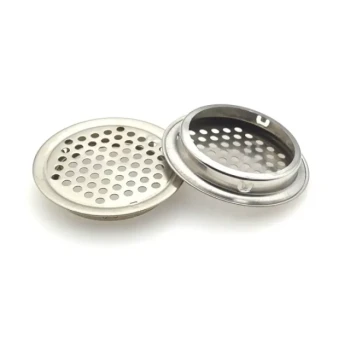
- Stainless Steel Round Beehive Air Vents for Ventilation
- Inner Beehive Cover for Beekeeping Bee Hive Inner Cover
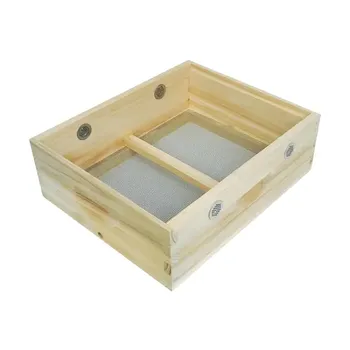
- Professional Beekeeping Quilt Box with Multi Vent Moisture Control
- Steel Round Disc Entrance Reducer for Flexzion Bee Hive Nuc Box Gate
- Professional Reversible Beehive Hive Entrance
People Also Ask
- How does ventilation affect colony health, and how should it be managed seasonally? A Guide to Preventing Moisture & Overheating
- Why is proper ventilation important in a beehive? Prevent Mold, Regulate Temperature, and Boost Colony Health
- How can a beekeeper provide proper ventilation for a beehive throughout the year? Seasonal Strategies for Bee Health
- Why is good ventilation crucial when transporting beehives? Protect Your Colony from Lethal Overheating
- How can ventilation be added to a beehive without using an inner cover? Simple, Effective Solutions for Healthy Hives