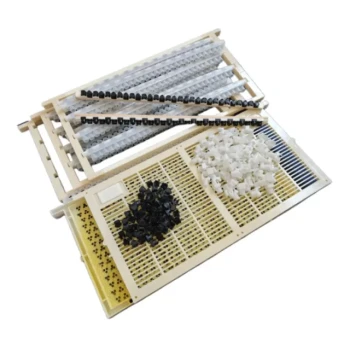
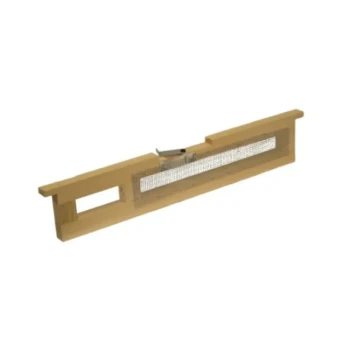
Professional queen rearing equipment functions as the primary catalyst for establishing commercial self-sufficiency. By leveraging precision tools such as artificial insemination instruments and specialized rearing hardware, apiaries can breed locally adapted queens, eliminating the financial and biosecurity risks associated with importing livestock.
Core Takeaway: True self-sufficiency in commercial beekeeping is not just about equipment ownership; it is about achieving genetic independence. Professional rearing tools empower apiaries to control their biological supply chain, tailoring bee genetics to specific climates and maximizing survival rates without relying on external suppliers.
Achieving Genetic Independence
Tailoring Traits to Local Conditions
The most significant advantage of professional rearing equipment is the ability to practice selective breeding.
Instead of relying on generic stock, beekeepers can use artificial insemination to isolate and propagate specific traits. This allows for the creation of queens with high cold resistance and superior productivity, specifically optimized for the local microclimate.
Eliminating Import Dependencies
Reliance on imported queens introduces volatility into a commercial operation.
By producing queens in-house, you remove the high recurring costs of purchasing livestock. More importantly, you sever the primary vector for introducing foreign pathogens, drastically lowering biosecurity risks.
Transitioning to Proactive Management
Moving Beyond Passive Methods
Standard beekeeping often relies on passive techniques, such as catching natural swarms, which leads to unpredictable growth.
Professional queen rearing and colony splitting tools facilitate a shift toward proactive bee breeding. This allows the apiary to dictate the pace of expansion rather than waiting on natural biological cycles.
Ensuring Controllable Scale
Scientific colony splitting is essential for maintaining high hive occupancy rates.
By utilizing specialized tools to manage splitting and rearing, you ensure that production scales remain controllable. This technical step is the foundation for increasing the yield per unit area, a metric critical for commercial profitability.
Reinforcing Biological Integrity
Simulating Natural Hygiene
High-end equipment is designed to respect the superorganism's natural defenses.
Advanced tools help simulate and reinforce the colony's immune homeostasis. This ensures that even within an artificial breeding environment, the biological integrity of the hive is maintained.
Reducing Cross-Infection Risks
Manual intervention is a common source of disease spread in large apiaries.
utilizing mechanized equipment for inspection and waste management minimizes direct human contact with the brood. This significant reduction in handling lowers the risk of cross-infection between colonies.
Understanding the Trade-offs
The Technical Expertise Barrier
Adopting professional rearing equipment, particularly artificial insemination tools, requires a significant investment in human capital.
Unlike simply purchasing mated queens, this approach demands advanced biological knowledge and technical dexterity. Without trained staff, precision equipment cannot deliver genetic improvements.
Standardization vs. Customization
While rearing tools allow for genetic customization, the physical infrastructure (hives) must remain standardized.
There is a tension between breeding unique genetics and maintaining industrial interchangeability. Successful operations must breed unique bees but house them in standardized, machine-processed hive components to maintain operational efficiency and economies of scale.
Making the Right Choice for Your Goal
To achieve self-sufficiency, align your equipment strategy with your immediate operational bottlenecks.
- If your primary focus is Biosecurity: Invest in artificial insemination equipment to close your apiary’s borders and breed exclusively from your healthiest local stock.
- If your primary focus is Rapid Expansion: Prioritize colony splitting tools and mechanized hive-making to increase hive occupancy and physical capacity simultaneously.
- If your primary focus is Yield Efficiency: Concentrate on breeding for productivity traits to maximize the honey output per colony rather than just increasing colony count.
Mastering queen rearing technology is the defining step that transforms an apiary from a livestock buyer into a sustainable genetic producer.
Summary Table:
| Strategic Goal | Key Equipment Used | Primary Benefit for Apiaries |
|---|---|---|
| Genetic Independence | Artificial Insemination Instruments | Tailored local traits and climate adaptation |
| Biosecurity Control | Specialized Rearing Hardware | Elimination of imported pathogens and livestock costs |
| Rapid Expansion | Colony Splitting & Hive-making Tools | Proactive growth and increased hive occupancy |
| Yield Optimization | Selective Breeding Tools | Maximum honey production and survival rates |
Secure Your Apiary’s Future with HONESTBEE
Transition from a livestock buyer to a sustainable genetic producer. HONESTBEE specializes in empowering commercial apiaries and distributors with the high-precision tools necessary for true self-sufficiency. From artificial insemination instruments and specialized queen rearing hardware to industrial hive-making and honey-filling machinery, we provide the complete spectrum of beekeeping technology.
Our wholesale solutions are designed to help you reduce biosecurity risks, optimize local genetics, and scale your operations with professional-grade consumables and equipment.
Ready to achieve genetic independence and maximize your yield?
Contact HONESTBEE Today to Discuss Your Wholesale Needs
References
- Matthew Polinsky. Beekeeping in Canada: Trends of Self-Sufficiency and Participation in the Global Honey Bee Trade. DOI: 10.21083/crrf.v31i1.7332
This article is also based on technical information from HonestBee Knowledge Base .
Related Products
- JZBZ Style Push-In Cell Protector for Professional Queen Rearing Kits
- Retractable Chinese Queen Rearing Grafting Tools Equipment
- No Grafting Queen Rearing Kit: System for Royal Jelly Production and Queen Rearing
- Stainless Steel Queen Grafting Tool for Beekeeping and Bee Queen Grafting
- Nicot Queen Rearing Kit for Beekeeping and Grafting in Nicot System
People Also Ask
- What is the necessity of using queen cell protectors or emergence cages during the late stages of honeybee queen rearing?
- What are some methods and types of queen cell protectors? Safeguard Your Queen Introduction Process
- What is the role of queen cell protectors and emergence cages? Secure Your Genetic Stock and Hive Stability
- What is the primary reason for using queen cell protectors? Secure Your Yield with Proven Protection
- What is the purpose of queen cell protectors in a hive? Secure Your Hive's Future with Professional Protection