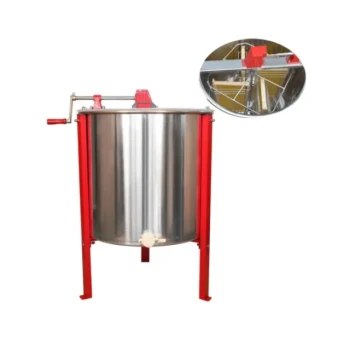
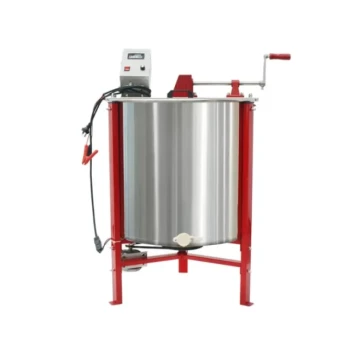
High-precision timers and weighing balances provide the foundational data required to objectively quantify the performance of a honey extractor. The timer captures the exact duration of the extraction cycle, while the balance determines the precise mass of the yield, converting raw mechanical action into measurable engineering metrics.
Accurate measurement is the prerequisite for process optimization. By rigorously tracking time against mass, operators move beyond guesswork to calculate exact production capacities and identify the specific cycle duration that maximizes product recovery.
Deriving Key Performance Metrics
Quantifying the Output
The weighing balance acts as the primary validation tool for the extractor’s work. It measures the exact mass of the honey removed during a cycle. This raw data point serves as the numerator for all subsequent efficiency calculations.
Defining the Cycle Duration
A high-precision timer establishes the exact time investment required to achieve a specific yield. It records the duration of the extraction cycle down to the second. Without precise start and stop data, efficiency rates are reduced to rough estimates rather than actionable facts.
Calculating Production Capacity
By combining the mass reading with the time reading, operators can calculate production capacity in kilograms per hour. This metric allows for an objective comparison between different machines or different operational settings on the same machine.
Optimizing Operational Parameters
Analyzing the Time-Yield Relationship
These tools allow operators to analyze the correlation between how long the machine runs and how much honey is extracted. This analysis reveals the efficiency curve of the equipment.
Identifying the Optimal Window
Data collected often highlights specific operating parameters that yield the best results. For example, rigorous testing may reveal that a 5-minute extraction time provides the highest product recovery rate.
Calculating Extraction Efficiency
Beyond raw speed, the data is used to determine the extraction efficiency percentage. This metric indicates how much available honey was successfully removed from the comb compared to the total possible yield.
Understanding the Trade-offs
Diminishing Returns
Data accuracy prevents the common mistake of over-extraction. There is a point where running the machine longer yields negligible additional honey. Precision tools help identify exactly when the return on time invested becomes negative.
The Cost of Low Precision
Calculated metrics are only as reliable as the tools used to measure them. Using standard clocks or approximate weights can skew the production capacity data. This leads to selecting "optimal" parameters that are actually inefficient, wasting time and energy in the long run.
How to Apply This to Your Process
To transform raw data into process improvements, evaluate your metrics based on your specific operational targets:
- If your primary focus is Throughput: Prioritize the kilograms per hour calculation to determine which settings process the most volume in the shortest time.
- If your primary focus is Resource Maximization: Focus on the extraction efficiency percentage to ensure you are recovering the maximum amount of product from every frame, even if it requires a slightly longer cycle.
Measurement is the bridge between a functioning machine and an optimized production line.
Summary Table:
| Metric | Tool Used | Purpose in Evaluation |
|---|---|---|
| Cycle Duration | High-Precision Timer | Measures exact extraction time to the second. |
| Yield Mass | Weighing Balance | Quantifies the precise amount of honey recovered. |
| Production Capacity | Both | Calculates throughput (kg/hr) for machine comparison. |
| Efficiency Curve | Both | Identifies the point of diminishing returns for cycle time. |
| Extraction Efficiency | Weighing Balance | Determines the % of honey removed vs. total available. |
Maximize Your Honey Yield with HONESTBEE Professional Solutions
Efficiency in commercial beekeeping is driven by precision. At HONESTBEE, we empower commercial apiaries and distributors with the high-performance honey extractors, honey-filling machines, and specialized beekeeping tools needed to transform raw data into maximum profitability. Whether you are scaling up production or optimizing your current line, our comprehensive wholesale portfolio offers the machinery and industry consumables required to achieve peak extraction efficiency.
Ready to upgrade your production capacity? Contact HONESTBEE today for expert consultation and wholesale pricing.
References
- Husen Bona. Improvement and Evaluation of Honey Extractor. DOI: 10.54536/ajise.v1i1.875
This article is also based on technical information from HonestBee Knowledge Base .
Related Products
- HONESTBEE 72 Frame Industrial Electric Honey Extractor for Beekeeping
- Commercial Electric 12 Frame Honey Extractor Spinner Motorized Honey Extractor
- HONESTBEE 3-Frame Manual Acrylic Honey Extractor
- electric honey extractor honey centrifuge 3 frame honey extractor stainless steel honey frame extractor
- HONESTBEE 6 Frame Self Reversing Electric Honey Extractor for Beekeeping
People Also Ask
- What is the importance of balancing honeycomb frames within a honey extractor? Ensure Stability and Protect Machinery
- How is honey separated from the frames after they are uncapped? Efficient Extraction Methods for High Yields
- What are the main benefits of using a honey extractor? Maximize Yields and Protect Your Honeycomb
- What are the recommended methods for removing honey from the honeycomb? Top Extraction Techniques for Maximum Efficiency
- How do manual honey extractors compare to electric honey extractors? Choosing the Right Tool for Your Apiary Growth