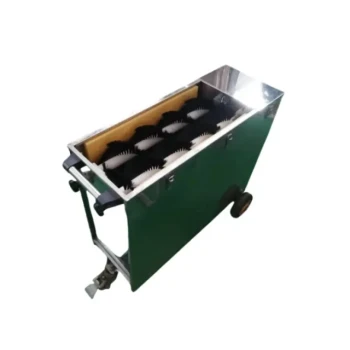
Commercial apiculture is managed as a continuous seasonal production cycle. Spring focuses on colony expansion and propagation, while peak bloom periods support honey harvesting. Late summer and autumn shift toward queen rearing, royal jelly production, disease control, and winter preparation; during nectar shortages, pollen collection and supplemental feeding sustain colony strength.
The essential requirement is seasonal coordination: commercial apiaries need the right management practice, equipment, and consumables available before each operational window. A reliable supply program should cover hive hardware, queen-rearing tools, feeding systems, disease-control supplies, harvesting machinery, transport equipment, and replacement components.
The Commercial Apiary’s Seasonal Operating Cycle
Early spring: Build colony strength
Early spring management centers on colony propagation and population growth. Beekeepers inspect colonies, expand brood space, and prepare nucleus colonies for replacement, increase, or queen production.
Commercial operations should have brood boxes, frames, foundation sheets, nucleus hives, and feeding equipment ready before rapid colony expansion begins.
Critical equipment and supplies include:
- Modular brood boxes and hive bodies
- Standardized frames and foundation sheets
- Queen-rearing nucleus hives
- Queen-rearing and grafting tools
- Syrup feeders and pollen-supplement feeders
- Protective clothing and inspection tools
- Replacement hive parts and fasteners
Spring bloom: Manage honey production
During strong spring nectar flows, colonies must have sufficient space for incoming nectar and ripening honey. Honey supers should be added in time to prevent congestion and to preserve production capacity.
After harvesting, centrifugal extractors remove honey while preserving comb for reuse. Radial and tangential extractors are both used commercially, with selection depending on operation size, frame design, throughput, and handling preferences.
Required harvesting infrastructure includes:
- Honey supers
- Food-grade honey collection containers
- Radial or tangential honey extractors
- Uncapping equipment
- Strainers and settling or storage vessels
- Honey pumps and transfer equipment where scale justifies them
- Wax collection and rendering systems
Reusing extracted comb reduces the energy colonies must spend rebuilding wax and helps maintain production efficiency.
Late summer: Transition from harvest to maintenance
Immediately after the main honey harvest, colonies should be inspected for brood health and disease. Varroa mite treatments are applied according to applicable product instructions and legal requirements.
As nectar flow declines, entrance reducers help protect colonies against wasps and robbing. This period is also an important production window for queen breeding and, where applicable, royal jelly harvesting.
Commercial operators may require:
- Varroa monitoring and treatment products
- Entrance reducers
- Queen-rearing cages and mating equipment
- Grafting tools
- Royal jelly harvesting devices
- Small hive tools and inspection equipment
- Feeding systems for syrup and pollen supplements
Early to mid-autumn: Secure nutrition and hardware
In early autumn, operators assess honey stores in the brood boxes and provide supplemental feed when natural forage is insufficient. Thick sugar syrup or bee fondant may be used according to colony condition and local management practice.
Spent mite treatments must be removed at the appropriate time, with treatment records maintained where required. By mid-autumn, hive entrances should be fitted with mouseguards, and hive bodies should be secured against wind using heavy-duty straps.
Key autumn supplies include:
- Sugar syrup or fondant
- Pollen supplements
- Feeders suited to the apiary’s hive design
- Mouseguards
- Heavy-duty hive straps
- Hive stands and anchoring hardware
- Replacement covers, roofs, and entrance components
Winter: Protect colonies and prepare the next season
During broodless winter periods, beekeepers may perform an oxalic acid varroa treatment where legally permitted and appropriate to the approved treatment protocol. Winter inspections should focus on colony condition, protection from rodents and weather, and adequate stores.
Winter is also the most efficient period for infrastructure work. Operators can repair hive boxes and frames, render beeswax, inspect stored comb for wax moth damage, and audit inventory before spring demand begins.
Winter preparation should cover:
- Hive-body and frame repairs
- Beeswax rendering equipment
- Wax storage and processing supplies
- Stored-comb inspection and protection
- Replacement frames and foundation sheets
- Nucleus hives
- Queen-rearing equipment
- Honey supers
- Protective hive hardware
- Spring feeding and disease-control inventories
Equipment That Supports Commercial Scale
Standardized hive hardware
Commercial apiaries depend on interchangeable woodenware or plastic hive components. Standardization makes it easier to rotate frames, replace damaged parts, expand colonies, and organize transport across many sites.
The core inventory generally includes brood boxes, honey supers, frames, foundation sheets, bottom boards, covers, stands, entrance reducers, and hive straps.
Maintaining a replacement stock is particularly important for distributors and large apiaries because a shortage of basic frames or supers can interrupt an entire seasonal workflow.
Queen-rearing and nucleus equipment
Queen production requires specialized tools and smaller colony units. Grafting tools support the transfer of larvae, while nucleus hives provide controlled environments for raising or maintaining queens.
Operations selling live bees also need queen transport cages, package-bee boxes, and screened shipping containers. Package boxes typically include ventilation, a syrup feeder, and a secure cage for the mated queen.
Nucleus colonies require compact hive bodies capable of holding several frames of brood, food reserves, and adult bees without compromising security during handling or transport.
Feeding systems
Supplemental feeding is essential when nectar or pollen availability falls below colony requirements. Equipment should be matched to the feeding material, hive design, colony size, and operating scale.
Commercial inventories may include internal feeders, entrance feeders, syrup-handling equipment, fondant trays, and systems for distributing pollen supplements.
A dependable supply of feed containers and replacement feeders is as important as the feed itself because damaged or unsuitable feeding hardware can create leakage, robbing, and operational delays.
Honey extraction and wax processing
Honey extraction machinery determines how efficiently harvested supers can be processed. Centrifugal extractors preserve comb, allowing it to return to the hive for reuse.
Wax rendering equipment supports the recovery and reuse of cappings and damaged comb. Off-season wax processing can produce usable beeswax for candles, wraps, lip balms, or other products, depending on the business model.
Protective and inspection equipment
Hive inspections require protective clothing, gloves, veils, and suitable hand tools. These items support safe, repeatable work across multiple colonies and reduce avoidable interruptions during inspections.
Commercial operators should maintain replacement protective gear and commonly lost or damaged tools, particularly when several teams work across different apiary locations.
Supporting Migratory Commercial Beekeeping
Preparing colonies for movement
When summer temperatures reduce honey production in one region, commercial beekeepers may move colonies to cooler northern or mountainous areas with stronger nectar flows. This requires hardware designed for ventilation, stacking, restraint, and repeated loading.
Transport-critical equipment includes:
- Ventilated hive covers
- Screened bottom boards
- Heavy-duty hive straps
- Durable hive bodies
- Secure hive stands
- Ventilation screens and protective components
- Loading and transport equipment
Ventilation helps reduce heat stress, while straps and durable hive bodies limit physical damage during transit.
Planning for operating costs
Migratory apiaries must plan for transport, land leasing, localized pest control, supplemental feeding, and equipment replacement. These costs become significant at medium and large scales, including operations managing hundreds or more than one thousand hives.
For this reason, equipment sourcing should prioritize durability, interchangeability, rapid replenishment, and predictable fulfillment, not only initial purchase price.
Managing Inventory as a Seasonal System
Stock before demand peaks
The highest-risk procurement mistake is waiting until the active season has already started. Frames, foundation, supers, feeders, queen-rearing equipment, and disease-control supplies should be ordered during winter planning.
A seasonal inventory review should identify usable stock, damaged components, expected colony expansion, planned queen production, and projected harvesting volume.
Build a full-spectrum supply program
A commercial apiary benefits from one coordinated source for routine hive hardware, specialized tools, consumables, and processing machinery. This reduces supplier fragmentation and makes it easier to match compatible components across the operation.
For wholesalers and resellers, a full-spectrum portfolio can cover both recurring consumables and higher-value capital equipment, while rapid response and reliable delivery reduce the risk of missed seasonal windows.
Understanding the Trade-offs
Standardization versus local requirements
Standardized components improve interchangeability and simplify inventory management. However, hive dimensions, frame formats, feeding systems, and treatment requirements may vary by market and local practice.
Products should therefore be verified for compatibility before bulk purchasing, particularly when supplying multiple beekeeper regions.
Capital equipment versus throughput needs
Large extractors, wax-processing systems, and specialized feeding machinery can improve labor efficiency, but they require capital, storage, maintenance, and sufficient production volume to justify the investment.
Smaller operations may prefer modular equipment that can expand over time, while large migratory operations generally need durable machinery designed for continuous use.
Supplemental feeding versus natural forage
Feeding supports colonies during nectar and pollen shortages, but it does not replace sound forage management or disease control. Feed must be selected, stored, and administered properly to avoid leakage, robbing, contamination, or unnecessary operating costs.
Transport efficiency versus colony protection
Migratory production can access additional nectar flows, but moving colonies increases handling, equipment, labor, and heat-management demands. Ventilated covers, screened components, secure straps, and robust hive bodies are necessary safeguards rather than optional upgrades.
Treatment convenience versus compliance
Disease-control treatments must follow approved labels, withdrawal requirements, timing rules, and recordkeeping obligations. Commercial operators should treat compliance documentation and treatment removal as part of the equipment and management workflow.
How to Apply This to Your Apiary or Supply Business
The most effective approach is to align purchasing with the annual production calendar rather than ordering equipment reactively.
- If your primary focus is colony expansion: Prioritize brood boxes, standardized frames, foundation sheets, feeders, nucleus hives, and queen-rearing tools before spring propagation begins.
- If your primary focus is honey production: Invest in sufficient supers, centrifugal extractors, uncapping and collection equipment, and reusable comb-handling systems.
- If your primary focus is queen or live-bee sales: Stock grafting tools, queen cages, nucleus hives, screened package boxes, syrup feeders, and secure transport materials.
- If your primary focus is colony health: Maintain varroa-control supplies, inspection tools, entrance reducers, mouseguards, supplemental feed, and winter protection hardware.
- If your primary focus is migratory beekeeping: Select ventilated covers, screened bottom boards, heavy-duty straps, durable hive bodies, and transport-ready feeding and handling equipment.
- If your primary focus is distribution or wholesale supply: Build a full-spectrum portfolio with compatible hive components, recurring consumables, specialized machinery, rapid response, and reliable seasonal fulfillment.
A well-planned commercial apiary treats equipment, consumables, and service reliability as one integrated system supporting every stage of the production year.
Summary Table:
| Season | Management Focus | Critical Equipment & Supplies |
|---|---|---|
| Early Spring | Colony build-up & propagation | Brood boxes, frames, foundation, nucleus hives, feeders, grafting tools |
| Spring Bloom | Honey production & harvesting | Honey supers, extractors, uncapping tools, storage tanks |
| Late Summer | Harvest transition & disease control | Varroa treatments, entrance reducers, queen rearing cages |
| Early Autumn | Nutrition & hive protection | Sugar syrup, pollen supplements, mouseguards, hive straps |
| Winter | Protection & preparation | Oxalic acid (if legal), repair materials, wax rendering equipment, inventory |
Ready to streamline your apiary operations year-round? At HONESTBEE, we provide a one-stop sourcing solution for commercial beekeepers, distributors, and wholesalers. Our full-spectrum portfolio includes hive hardware, queen-rearing tools, feeding systems, extraction machinery, and consumables—all backed by rapid response, dedicated service, and ultra-fast delivery. Whether you need to scale your apiary, support migratory operations, or build your inventory, we ensure you have the right equipment at the right time. Contact us today to discuss your seasonal supply needs and discover how we can boost your efficiency and profitability. Get in touch with our experts!
Related Products
- Stainless Steel J Hook Hive Tool for Beekeeping
- Ergonomic Plastic Frame Spacer Tool for Rapid Hive Management Beekeeping
- HONESTBEE Professional Mini J-Hook Hive Tool for Beekeeping
- Professional Bee Smoker with Elongated Spout and Durable Bellows for Beekeeping
- Stainless Steel Queen Grafting Tool for Beekeeping and Bee Queen Grafting
People Also Ask
- What specific challenges do beekeeping hive tools address during hive maintenance? Essential Solutions for Apiaries
- What are the features of a J-hook hive tool? Effortlessly Lift Frames with Superior Leverage
- What is a J-hook hive tool and why is it favored by some beekeepers? Master Gentle Frame Handling
- What is the purpose of the J-hook hive tool? Effortlessly Lift Frames with Superior Leverage
- How is a J-hook hive tool designed and what is its primary use? Master Effortless Hive Inspections