Large-scale queen rearing requires more than grafting tools. Commercial operations need an integrated system consisting of breeder colonies, grafting or non-grafting propagation equipment, cell-building colonies, mating nuclei, and queen-handling supplies. The Doolittle grafting method is generally the most scalable and controllable approach, while the Miller method and queenless nucleus systems can complement it for specific breeding or production goals.
Commercial queen production is a workflow: select larvae, build queen cells, protect developing queens, mate them in controlled nuclei, and transport or introduce them safely. Equipment must support every stage rather than only the grafting step.
The Core Production Methods
Doolittle grafting
The Doolittle method transfers very young worker larvae from selected breeder comb into artificial queen cell cups. Worker bees in a prepared cell-builder colony then feed the larvae and extend the cups into full queen cells.
This method is favored for commercial production because it supports batch processing, controlled breeder selection, and predictable scheduling.
Miller method
The Miller method encourages bees to construct queen cells from suitably arranged breeder comb, reducing or eliminating manual larval grafting. It can be useful where labor reduction or simpler handling is more important than maximum production uniformity.
Compared with Doolittle grafting, it generally provides less direct control over the exact larvae selected and may be less convenient for highly standardized, high-volume output.
Queenless nucleus and mating-nucleus systems
Queenless colonies or cell-building units are used to stimulate workers to rear queen cells. Mating nuclei, by contrast, are small colonies used to house virgin queens during mating flights and to confirm early performance before larger colony integration.
These systems should not be treated as interchangeable: a cell builder produces or finishes queen cells, while a mating nuc supports the next stage of queen development.
Equipment Required for Commercial Queen Rearing
Breeder colonies
A breeder hive supplies larvae from queens selected for commercially valuable traits, such as productivity, disease resistance, or local adaptation. Breeder colonies should be managed separately from production colonies so that genetic selection remains deliberate and traceable.
Commercial operations also need standardized hive components, brood frames, and inspection equipment to maintain consistent colony records and breeder performance.
Precision grafting tools
Grafting tools are fine probes, needles, or specialized larval-transfer instruments used to move young larvae into artificial cell cups. The tool must allow accurate handling without crushing, drying, or otherwise damaging the larva.
For larger operations, consistent tool quality matters because grafting accuracy directly affects acceptance rates, labor efficiency, and batch uniformity.
Queen cell cups
Artificial cell cups are made from molded plastic or beeswax. They provide the foundation into which larvae are transferred and around which worker bees construct complete queen cells.
Plastic cups offer standardization and easy attachment, while wax cups can be useful where compatibility with established apiary practices or customer preferences is important.
Cell bars and cell-bar frames
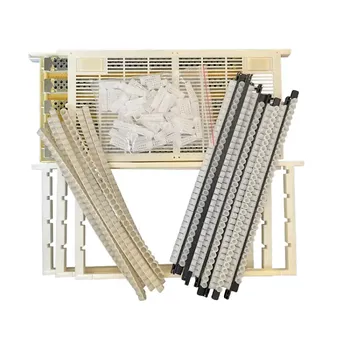
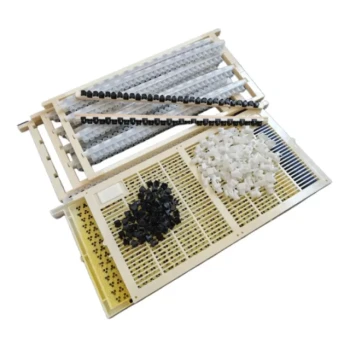
Cell bars hold rows of queen cell cups and fit into standard or modified hive frames. They allow many grafts to be handled, inspected, moved, and harvested as a single batch.
A commercial supply system should include compatible cell bars, frames, cups, and mounting hardware. Incompatibility between these components creates unnecessary labor and increases handling risk.
Cell-building colonies
Cell builders are strong colonies prepared to accept and nourish grafted larvae. They require dense populations of nurse bees and adequate pollen and food resources to provide the royal jelly needed for queen-cell development.
This is one of the most important operational requirements. Small mating nuclei are not substitutes for strong cell-building colonies when the objective is high-volume queen-cell production.
Queen cell protectors and push-in cages
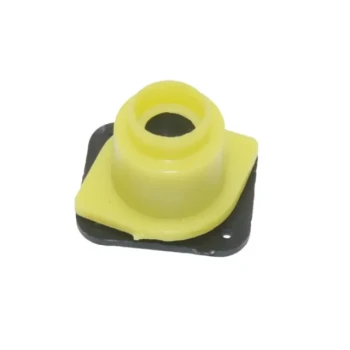
Protectors, shields, and push-in cages are placed over mature queen cells to prevent damage or premature destruction. They are especially useful when several queen cells are present in the same colony or when cells must be held before introduction.
These components should be selected to provide protection without obstructing normal emergence or creating excessive heat and handling stress.
Mating nucleus hives
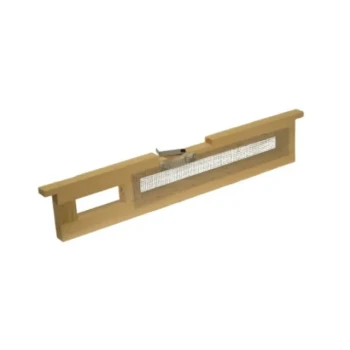
Mating nucs are compact hive units containing enough bees, food, and space to support a virgin queen through mating and the beginning of egg laying. Their small size reduces resource requirements and allows many queens to be managed in a limited area.
Commercial operators may need multiple nuc formats depending on climate, mating schedule, available bee populations, and the intended duration of queen evaluation.
Queen cages and transport equipment
Queen introduction and transport cages protect queens during shipment, colony introduction, and temporary holding. Cages must provide ventilation and prevent crushing while allowing controlled release into the receiving colony.
For commercial distribution, cage design should also support secure packaging, clear identification, and efficient order fulfillment.
Queen marking supplies
Marking pens, tags, or other identification tools help operators track queen age, breeder line, mating batch, and customer orders. Accurate identification is essential when multiple genetic lines are produced simultaneously.
Marking should be treated as part of the production-control system, not merely as a cosmetic step.
Standard hive and management equipment
Queen-rearing operations also require standard hive bodies, frames, feeders, covers, stands, and inspection tools. These components support breeder colonies, cell builders, holding colonies, and mating nuclei.
A complete equipment portfolio is usually more valuable than isolated specialty items because queen production depends on compatibility across the entire hive system.
How the Commercial Workflow Operates
Select and prepare breeder colonies
The operation begins by identifying breeder queens with the desired genetic characteristics. Brood from these colonies is then used for grafting or for a controlled non-grafting propagation method.
Selection records should remain linked to every cell bar, queen cell, mating nuc, and finished queen.
Transfer larvae or initiate queen-cell production
In Doolittle production, technicians transfer young larvae into prepared cell cups using precision grafting tools. In Miller or non-grafting systems, the colony is managed so that bees place or raise larvae in removable queen-cell locations.
The method chosen determines the labor profile, equipment mix, and degree of genetic and production control.
Finish queen cells in strong colonies
Grafted cups are placed into prepared cell-building colonies, where nurse bees feed the larvae and build the queen cells. Cell bars and frames make it possible to manage large batches without individually disturbing every developing cell.
The strongest results depend on colony condition, adequate nutrition, and careful timing of transfers.
Protect and distribute mature cells
As queen cells mature, protectors or cages can prevent destruction and make handling safer. Cells may then be transferred to mating nuclei or prepared for controlled introduction, depending on the production schedule.
This stage requires careful coordination because rough handling can damage the developing queen even when the cell appears intact.
Mate and evaluate virgin queens
Mating nuclei house virgin queens during their mating flights and early egg-laying period. Operators can then assess acceptance, laying pattern, vigor, and suitability for sale or integration into larger colonies.
The mating phase is where the production system connects queen-cell output with usable commercial queens.
Mark, cage, and ship queens
Once queens meet the operation’s release criteria, they are marked or tagged, placed in transport cages, and prepared for introduction or shipment. Consistent labeling reduces order errors and helps customers maintain traceability.
For distributors and resellers, packaging compatibility, reliable cage supply, and rapid replenishment are operational requirements rather than optional extras.
Organizing Equipment Around Production Stations
Breeder-hive station
This station requires breeder colonies, standard frames, inspection tools, and record-keeping materials. Its purpose is to maintain and document the genetic source of the production program.
Grafting and cell-building station
This area needs grafting tools, cell cups, cell bars, cell-bar frames, and access to strong cell-building colonies. Work should be organized to minimize the time larvae spend exposed during transfer.
Mating station
The mating station is built around mating nucs, feed and maintenance supplies, queen-cell protectors, and inspection equipment. A standardized nuc format simplifies stocking, monitoring, and replacement.
Handling and fulfillment station
This station uses queen cages, marking supplies, labels, protective packaging, and inventory controls. For commercial sellers, dependable availability of these consumables can be as important as the hive hardware itself.
Understanding the Trade-offs
Grafting offers control but requires skilled labor
Doolittle grafting provides precise control over larval source and batch production, but it demands trained technicians and careful handling. Poor technique can reduce acceptance and increase larval losses.
Non-grafting systems reduce handling but limit standardization
Miller-style or direct-laying systems can reduce manual grafting work. However, they may offer less precise control over which larvae are selected and may be harder to standardize across very large production volumes.
Small nucs save resources but have limited capacity
Mating nuclei are efficient for queen mating and early evaluation, but they cannot replace strong cell-building colonies. Treating a small nuc as a universal production unit can lead to inadequate feeding capacity and inconsistent queen-cell development.
Plastic components improve consistency but are not universally preferred
Plastic cups and standardized frames support repeatable production and easier inventory management. Wax components may be preferred by some breeders, but they can require more preparation and dimensional consistency.
More equipment does not eliminate biological variability
Queen acceptance, mating success, colony strength, weather, nutrition, and genetic compatibility still affect results. Equipment improves control and repeatability, but it cannot remove the biological variables inherent in bee breeding.
How to Apply This to Your Operation
A scalable sourcing program should cover the full chain from breeder colony to finished, transport-ready queen.
- If your primary focus is high-volume production: Prioritize Doolittle grafting equipment, compatible cell bars and cups, strong cell-building colonies, and a sufficient number of mating nuclei.
- If your primary focus is reducing manual labor: Evaluate Miller-style or non-grafting systems, while accepting lower control over individual larval selection and batch uniformity.
- If your primary focus is genetic improvement: Invest in breeder-hive management, traceable records, precision grafting tools, and standardized queen identification supplies.
- If your primary focus is distribution and resale: Maintain dependable inventory of queen cages, marking supplies, cell cups, protectors, mating nuc components, and compatible hive hardware.
- If your primary focus is reliable fulfillment: Use standardized components from a supplier capable of rapid response, consistent quality, technical support, and coordinated delivery across the complete product range.
The most reliable commercial queen-rearing operation is built as an integrated system, not as a collection of individual tools.
Summary Table:
| Method/Equipment | Purpose | Key Considerations |
|---|---|---|
| Doolittle grafting | High-volume, controlled queen cell production | Requires skilled labor; precise larval transfer |
| Miller method | Reduced manual grafting | Less control over larval selection |
| Queenless nucleus systems | Stimulate queen rearing or support mating | Not a substitute for strong cell builders |
| Breeder colonies | Genetic source for desirable traits | Maintained separately for traceability |
| Precision grafting tools | Accurate larval transfer | Quality affects acceptance rates |
| Queen cell cups | Foundation for queen cells | Plastic or wax; standardized or traditional |
| Cell bars and frames | Batch handling of multiple cells | Must be compatible with cups and frames |
| Cell-building colonies | Nourish grafted larvae into queen cells | Requires strong population and nutrition |
| Queen cell protectors | Prevent damage to mature cells | Must not obstruct emergence |
| Mating nucleus hives | House virgin queens for mating | Small size allows many queens |
| Queen cages and transport equipment | Safe transport and introduction | Ventilation and secure packaging |
| Queen marking supplies | Identification and tracking | Essential for multiple genetic lines |
| Standard hive equipment | Support all colonies | Compatibility across the system |
Ready to scale your queen rearing? At HONESTBEE, we supply the full spectrum of beekeeping equipment, from precision grafting tools and cell-building frames to mating nuclei and transport cages. Our one-stop sourcing simplifies procurement for commercial apiaries and distributors, ensuring rapid delivery and dedicated support. Whether you need standardized plastic cups, reliable queen cages, or complete hive systems, we help you optimize production and meet demand. Contact us today to discuss your requirements and benefit from our expertise and fast fulfillment!
Related Products
- Retractable Chinese Queen Rearing Grafting Tools Equipment
- HONESTBEE Improved No Grafting Queen Rearing Kit For Queen Rearing and Royal Jelly Production
- No Grafting Queen Rearing Kit: System for Royal Jelly Production and Queen Rearing
- Premium Nicot Style Queen Rearing Kit with Hair Roller Bee Cages
- Nicot Queen Rearing Kit for Beekeeping and Grafting in Nicot System
People Also Ask
- Which specialized tools are necessary for implementing standardized queen rearing? Scale Your High-Yield Apiary
- Why are specialized queen rearing tools necessary to mitigate winter hive losses? Boost Apiary Survival and Recovery
- What operational workflows and queen rearing tools are required for implementing instrumental insemination and isolated mating in commercial queen breeding programs?
- How do queen-rearing tools facilitate the sustainability and expansion of a commercial apiary? Drive Scalable Growth
- In what ways do modern queen rearing equipment and grafting tools improve competitiveness? Boost Breeding Success Rate