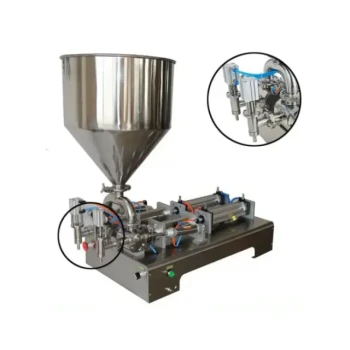
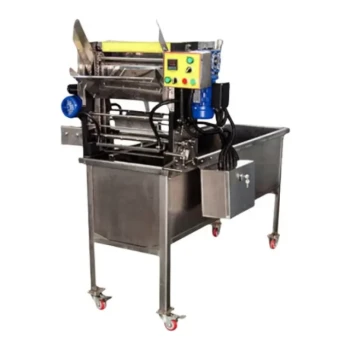
Automated honey filling machines specifically address the critical bottlenecks of manual packaging: inconsistency, product waste, and contamination risks. By employing precise volumetric control and a hygienic, closed-loop filling process, these systems eliminate common issues such as dripping and inaccurate dosing that otherwise prevent distributors from meeting commercial standards.
The core value of this automation is not just speed, but standardization. These machines serve as the vital link between bulk production and the retail market, ensuring every unit meets strict regulatory requirements for weight and safety.
Resolving Operational Inefficiencies
Eliminating Inaccuracy and Waste
Manual filling inevitably leads to human error, resulting in overfilled or underfilled containers. Automated machines utilize precise volumetric control to ensure uniform net weight across every batch.
This precision is bolstered by anti-drip designs, which prevent the mess and product loss associated with manual pouring. This directly protects profit margins by reducing raw material waste.
Managing Viscosity Variations
Honey is a complex fluid; its flow rate changes based on temperature and floral source (e.g., acacia vs. multi-flower).
Automated systems use sensors and pneumatic controls to adapt to these varying viscosities. This capability ensures consistent fill levels regardless of the honey's thickness, a challenge that is difficult to manage consistently by hand.
Addressing Food Safety and Hygiene
Mitigating Contamination Risks
The most significant barrier to commercial distribution is food safety. Manual operations introduce high risks of microbial contamination and cross-contamination from human contact.
Automated fillers solve this through fully enclosed, hygienic designs. By utilizing a closed-loop process, the honey is sealed from the environment during bottling, ensuring the final product is safe and sanitary.
Ensuring Regulatory Compliance
Commercial circulation requires adherence to stringent international food safety standards.
Automation guarantees that the filling process is standardized and reproducible. This consistency is essential for passing inspections and maintaining the brand trust required for large-scale distribution networks.
Understanding the Trade-offs
The Complexity of Standardization
While automation solves the physical act of filling, it introduces a requirement for rigid process control.
Transitioning to automation means the producer must move away from flexible, artisanal methods to a standardized commercial supply model. The equipment requires precise calibration to handle different honey types effectively, meaning operators must be trained to manage the machinery rather than just the product.
Making the Right Choice for Your Goal
To maximize the value of an automated filling system, align the machine's capabilities with your specific distribution targets:
- If your primary focus is Regulatory Compliance: Prioritize machines with a fully enclosed, closed-loop design to eliminate human contact and meet international hygiene standards.
- If your primary focus is Economic Scalability: Focus on systems with high-speed pneumatic controls and anti-drip features to maximize throughput and minimize product loss per unit.
Automated filling is the definitive step required to transform a beekeeping operation into a competitive, commercial enterprise.
Summary Table:
| Challenge addressed | Automated Solution | Business Impact |
|---|---|---|
| Inconsistent Dosing | Precise Volumetric Control | Reduces product waste & ensures weight compliance |
| Product Spillage | Anti-drip Nozzle Design | Protects profit margins & maintains clean workspaces |
| Contamination Risk | Closed-loop Hygienic System | Meets international food safety & regulatory standards |
| Viscosity Variations | Sensors & Pneumatic Controls | Ensures uniform fill levels across different honey types |
| Manual Inefficiency | High-speed Standardization | Enables rapid scaling for large-scale retail distribution |
Scale Your Honey Distribution with HONESTBEE
Transitioning from artisanal methods to a competitive commercial enterprise requires precision and reliability. HONESTBEE empowers commercial apiaries and distributors with high-performance beekeeping machinery and essential tools. From advanced honey-filling machines that ensure regulatory compliance to specialized hive-making equipment and industry consumables, we provide the full spectrum of hardware needed to dominate the market.
Ready to maximize your production efficiency and brand trust?
Contact HONESTBEE Today to explore our wholesale solutions and find the perfect equipment tailored to your distribution goals.
References
- Yaneth Patricia Romero Álvarez, William A. Niebles. Technological Surveillance Study on the Development of Beekeeping Technologies. DOI: 10.70082/esiculture.vi.1616
This article is also based on technical information from HonestBee Knowledge Base .
Related Products
- Fully Automatic Honey Filling Packaging Machine for Processing Line
- Automatic Honey Filling and Filtering Machine for Beekeeping Bottle Filling
- Precision Durable Efficient HONESTBEE Rotary Honey Filling Machine
- Precision Automated Packaging Turntable Honey Spoon Filling Sealing Packing Machine
- Semi Automatic Small Honey Bottle Filling Machine Honey Filler
People Also Ask
- Why are fully automatic honey filling and packaging lines essential? Boost Your Honey's Market Value and Quality
- What is a fully-automatic honey filler? Streamline Your Production with High-Precision Automation
- How do automated honey filling and packaging machines affect profitability? Boost Margins with HONESTBEE Technology
- How do automated honey filling and packaging machines contribute to the market value of honey products? Maximize Your ROI
- How do industrial-grade automated honey filling and packaging machines mitigate the risk of physical contamination?