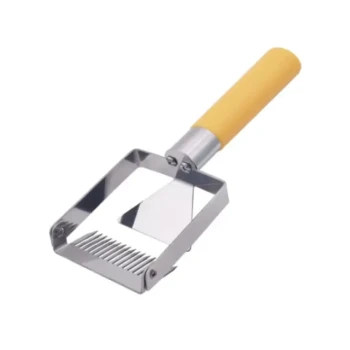
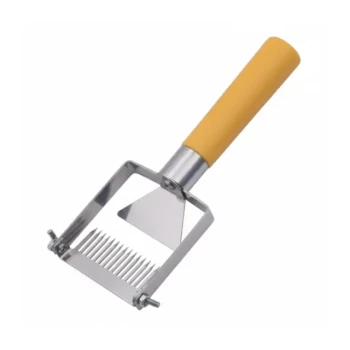
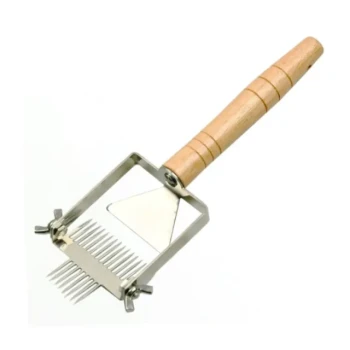
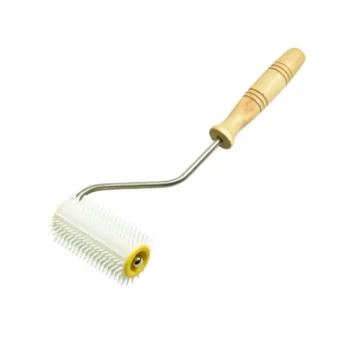
Specialized instruments are critical for maintaining the sanitary integrity of royal jelly. During the harvesting process, cutting knives serve to trim queen cells and remove propolis caps, while tweezers are employed to delicately remove larvae without contaminating the product. Finally, specialized brushes are utilized to physically extract the jelly from the cells and assist in filtration.
The specific application of these tools is not merely for convenience; it is a contamination control measure designed to separate biological matter (larvae) and structural debris (wax and propolis) from the final biochemical product.
Preparing the Cell Structure
The Function of Cutting Knives
The primary role of the cutting knife is structural modification. Before extraction can begin, the wax queen cells must be trimmed to an accessible height.
Removing Contaminants
Beyond trimming, these knives are essential for removing propolis from the cell openings. Propolis is a resinous mixture that, if left on the rim, could fall into the jelly during extraction, compromising the purity of the yield.
Biological Separation
Precise Larva Removal
Tweezers act as the primary mechanism for biological separation. They are used to pick up and remove the bee larvae residing inside the queen cells.
Preventing Mechanical Contamination
The use of tweezers—specifically stainless steel variants—is vital to avoid "mechanical contamination." This refers to the risk of crushing the larva, which would release body fluids into the royal jelly, rendering the batch impure and commercially non-viable.
Extraction and Filtration
Recovering the Product
Once the cell is trimmed and the larva removed, specialized brushes are used to extract the royal jelly. Because queen cells are narrow, fine-bristled brushes are necessary to reach the bottom and sides to ensure maximum recovery of the valuable secretion.
Simultaneous Filtration
The primary reference indicates that these brushes also play a role in filtering out impurities. By controlling how the jelly is lifted from the cell, the brush helps separate the pure jelly from any remaining particulate matter before it is collected.
Understanding the Risks and Trade-offs
The Risk of Tool Material
While brushes maximize yield, they introduce a hygiene variable. Unlike stainless steel tools, fine bristles can trap bacteria or residue if not sterilized rigorously between batches, potentially introducing pathogens to the sterile jelly.
Precision vs. Speed
Using tweezers for individual larva removal is labor-intensive and slower than bulk mechanical methods. However, prioritizing speed over the precision of manual tweezer extraction significantly increases the risk of damaging larvae and contaminating the royal jelly with foreign biological fluids.
Optimizing Your Harvesting Workflow
To ensure high-quality production, match your tool usage to your specific harvesting metrics:
- If your primary focus is Purity: Prioritize the use of high-quality stainless steel tweezers to ensure zero larval damage and fluid leakage during removal.
- If your primary focus is Yield: Focus on the technique used with fine-bristled brushes to ensure you are scavenging every milligram of jelly from the narrow cell walls.
Mastering the distinct function of each tool is the only way to achieve a harvest that balances volume with pharmaceutical-grade purity.
Summary Table:
| Tool Type | Primary Role | Critical Function for Quality |
|---|---|---|
| Cutting Knife | Structural Modification | Trims wax cells and removes propolis to prevent debris contamination. |
| Tweezers | Biological Separation | Removes larvae precisely without crushing, preventing fluid leakage. |
| Specialized Brush | Extraction & Filtration | Scavenges jelly from narrow cell walls while filtering out particulates. |
| Material Choice | Hygiene Management | Stainless steel ensures sterilization; fine bristles maximize recovery. |
Elevate Your Royal Jelly Production with HONESTBEE
Maintaining the pharmaceutical-grade purity of royal jelly requires more than just technique—it requires precision-engineered tools. HONESTBEE specializes in supporting commercial apiaries and distributors with a comprehensive range of high-quality beekeeping equipment. From specialized stainless steel harvesting tools to advanced honey-filling machinery and hive-making equipment, we provide the hardware necessary to scale your operations.
Ready to optimize your harvest? Contact us today to explore our wholesale offerings and discover how our industry-leading consumables and machinery can enhance your efficiency and product value.
References
- Joice J.I. Rompas, Ventje V. Memah. Development of Apis cerana District Extractor with innovation ofMachinery and Pest control in Kumelembuai Village. DOI: 10.20902/ijctr.2019.120619
This article is also based on technical information from HonestBee Knowledge Base .
Related Products
- Plastic Chinese Queen Grafting Tool for Bee Queen Rearing
- Stainless Steel Pivoting Honey Uncapping Fork with Plastic Handle
- Adjustable Stainless Steel Honey Uncapping Fork with Plastic Handle for Beekeeping
- Professional Honey Uncapping Roller for Efficient Harvesting
- All-Stainless Steel Pivoting Honey Uncapping Fork for Beekeeping
People Also Ask
- Why is it necessary for migratory beekeeping enterprises to utilize professional queen bee rearing tools? Boost Resilience
- What specialized tools and frame configurations are needed for larval grafting during queen rearing, and how are queen cells properly spaced? Master the essentials for efficient queen production
- What are the benefits of using a queen grafting tool for queen rearing? Master Precision for Superior Bee Genetics
- What is grafting in queen rearing? Take Control of Your Apiary's Genetics
- What are the steps involved in using a queen grafting tool? A Guide to Successful Queen Rearing