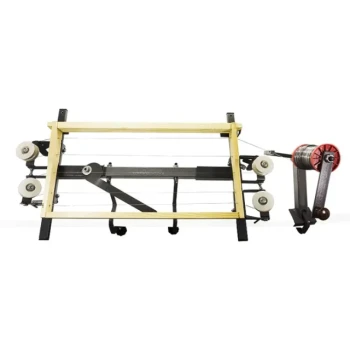
The primary technical advantage of modern frame hives is the introduction of the "moveable frame" architecture, which decouples the honeycomb from the hive walls. This fundamental design shift allows you to perform precise, non-destructive inspections and standardized operations, transforming beekeeping from a passive activity into a managed industrial process.
Core Takeaway Modern frame hives replace fixed-comb structures with interchangeable components, serving as the physical foundation for standardized beekeeping. By enabling non-invasive health monitoring and the reuse of honeycombs, this technology significantly reduces colony stress, increases honey yields through energy conservation, and facilitates large-scale logistics.
Revolutionizing Colony Health Management
The most immediate impact of the frame hive is the ability to monitor biological processes without destroying the colony's infrastructure.
Non-Destructive Inspection
Unlike traditional fixed-comb hives (such as skeps), moveable frames allow you to lift out individual combs to inspect the interior. This enables you to assess colony strength and food stores without damaging the honeycomb structure or killing bees during the process.
Integrated Pest Management (IPM)
The removable frame is the hardware basis for modern disease control. It allows for the timely detection of larval diseases, parasitic infestations, and queen health issues. This level of access improves the accuracy of pathogen monitoring, which is virtually impossible in fixed-comb equipment where early epidemic signs are hidden.
Scientific Winter Monitoring
While opening hives in winter causes dangerous heat loss, modern standardization supports non-invasive monitoring tools. Techniques such as using industrial crane scales allow you to measure hive mass changes externally to calculate food consumption, ensuring survival without breaking the thermal seal.
Enabling Industrial-Scale Efficiency
Beyond biological health, frame hives introduce mechanical advantages that are critical for high-yield, commercial operations.
Energy Conservation and Wax Reuse
Honeybees consume significant amounts of honey to secrete wax for comb building. Because frame hives allow for honey extraction without destroying the comb, the empty combs can be returned to the hive. This allows bees to focus energy on honey production rather than wax secretion, directly increasing overall yield.
Component Interchangeability
Industrial hive-making machines produce components with precise specifications. This standardization ensures that frames, supers, and covers are interchangeable across thousands of hives. This simplifies large-scale management, as any part can replace another without customization or fitting issues.
Advanced Manipulation Techniques
The modular nature of the hive allows for complex management strategies unavailable to traditional beekeepers. You can easily perform artificial swarming to expand apiaries, add "supers" (additional boxes) during heavy nectar flows, and separate brood rearing from honey storage.
Optimizing Logistics and Transport
For industrial operations, the physical dimensions of the hive are as important as its internal biology.
Streamlined Migration
Standardized external dimensions allow for precise logistical planning during seasonal migration to crop blooms. Knowing the exact footprint of a hive enables you to maximize vehicle capacity; for example, a standard dual-axle flatbed can transport roughly 160 double-story or 240 single-story hives.
Resilience in Transport
Precision-manufactured hives offer superior sealing and structural integrity. This enhances the colony's resilience against the physical stress of transport and extreme climate variations, ensuring the colony arrives at the pollination site in viable condition.
Understanding the Operational Trade-offs
While frame hives offer superior control, they introduce specific management requirements that must be respected.
The Risk of Thermal Disruption
The accessibility of frame hives can lead to over-management. Opening a hive for inspection, particularly in cool weather, breaks the propolis seal and releases heat. This necessitates a disciplined approach—using weight data (via scales) rather than visual inspection during winter to prevent "isolation starvation" or chilling.
Dependency on Manufacturing Precision
The system relies entirely on standardization. If frames or boxes deviate even slightly from standard dimensions, the "bee space" is violated, leading bees to glue parts together with propolis or build burr comb. This negates the efficiency gains of the moveable frame system.
Making the Right Choice for Your Goal
Modern frame hives are versatile, but your specific management focus will dictate how you leverage their features.
- If your primary focus is Disease Control: Prioritize the moveable frame's inspection capability to implement aggressive Integrated Pest Management and detect pathogens before they spread.
- If your primary focus is Commercial Yield: Leverage the interchangeability of supers and reuse of drawn comb to minimize the bees' energy waste on wax production.
- If your primary focus is Migratory Beekeeping: Utilize standardized single-story configurations to maximize truck density and speed up deployment during narrow blooming windows.
Ultimately, the modern frame hive is not just a box, but a precision instrument that converts biological activity into a manageable, scalable industrial workflow.
Summary Table:
| Feature | Technical Advantage | Industrial Impact |
|---|---|---|
| Moveable Frames | Non-destructive inspection | Enhanced disease control & IPM accuracy |
| Interchangeability | Standardized components | Simplified large-scale hive management |
| Comb Reuse | Centrifugal extraction | Increased honey yield (saves bee energy) |
| Modular Design | Vertical scaling (supers) | Optimized honey storage & swarm control |
| Uniform Dimensions | Logistical standardization | Maximized transport density for migration |
Elevate Your Commercial Apiary with HONESTBEE
Transitioning to high-yield industrial beekeeping requires more than just knowledge—it requires precision-engineered equipment. HONESTBEE empowers commercial apiaries and distributors with a comprehensive wholesale portfolio designed for scale.
From industrial hive-making machines and automated honey-filling lines to a full spectrum of standardized beekeeping tools and consumables, we provide the hardware foundation for your success. Partner with us to streamline your operations, reduce colony stress, and maximize your output.
Ready to scale your honey production?
Contact HONESTBEE Today for Wholesale Solutions
References
- Teweldemedhn Gebretinsae Hailu, Alison Gray. High Rates of Honey Bee Colony Losses and Regional Variability in Ethiopia Based on the Standardised COLOSS 2023 Survey. DOI: 10.3390/insects15060376
This article is also based on technical information from HonestBee Knowledge Base .
Related Products
- Wooden Bee Hive Frames for Beekeeping and Wholesale
- Plastic Bee Frame Beekeeping Hive Frames for Wholesale
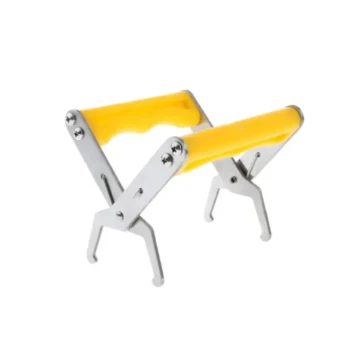
- Ergonomic High Visibility Plastic Frame Grip Handles
- Professional Galvanized Steel Frame Rest for Beehives
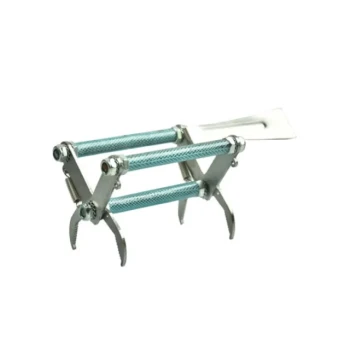
- Professional 3-Bar Frame Grip with Integrated Hive Tool
People Also Ask
- How do wooden and plastic hive frames compare in terms of durability? Wood vs. Plastic Longevity & Repairability
- How does balancing the number of frames impact hive productivity? Optimize Your Apiary's Biological Output
- What are the main considerations when choosing between wooden and plastic bee hive frames? Optimize Your Apiary's Efficiency
- How should beehive frames be maintained to prolong their lifespan? 5 Pro Tips for Durable Beekeeping Equipment
- Can I reuse old beehive frames? Save Money and Boost Hive Productivity