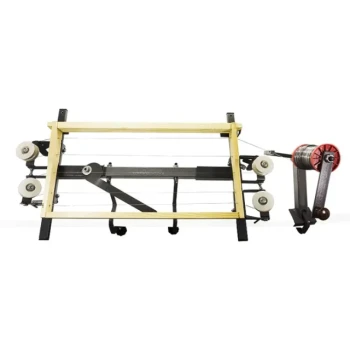
A wooden-metal wire mesh frame with a 3mm mesh size functions as a selective physical barrier. Placed on the hive floor, its primary technical role is to allow Chalkbrood debris—specifically diseased larval "mummies"—to pass through onto a collection sheet while simultaneously blocking worker bees from accessing that debris.
Core Takeaway By physically separating fallen debris from the colony, this apparatus neutralizes the bees' natural hygienic behavior. This ensures that all disease markers remain available for counting, providing technicians with accurate infection statistics that would otherwise be lost if bees carried the remains out of the hive.
The Mechanics of Selective Separation
The Function of the 3mm Aperture
The specific dimension of the 3mm mesh is critical to the device's success. It acts as a precise filter calibrated to the size of the debris.
The gaps are large enough to allow diseased larval remains, known as mummies, to fall through the screen via gravity. However, the gaps are small enough to act as a solid floor for the worker bees, preventing them from passing through to the collection area below.
Bypassing Hygienic Behavior
Under normal circumstances, a colony exhibits hygienic behavior. Worker bees actively detect and remove dead or diseased brood to keep the hive clean.
While beneficial for the bees, this behavior is detrimental to data collection. If bees remove the mummies, the evidence of infection is carried away from the hive. The wire mesh frame physically interrupts this process, preserving the biological evidence on the bottom board.
Strategic Importance for Data Accuracy
Preserving Infection Statistics
The ultimate technical goal of this setup is statistical accuracy. To assess the severity of a Chalkbrood infection, technicians need a total count of the debris produced.
Without the mesh, the count would be artificially low because an unknown percentage of mummies would have been ejected by the bees. By securing the debris on a collection sheet inaccessible to the colony, the device provides a reliable baseline for calculating infection rates.
Understanding the Trade-offs
The Requirement for Precision
The effectiveness of this system relies entirely on the integrity of the physical barrier. If the mesh is damaged or the frame is ill-fitted, bees may bypass the screen, rendering the data unreliable.
Passive Collection vs. Active Management
It is important to note that this is a diagnostic tool, not a treatment method. While it separates debris, its primary function is measurement. It does not cure the infection but rather provides the data necessary to make informed management decisions.
Making the Right Choice for Your Goal
To maximize the utility of a 3mm wire mesh frame, consider your specific objective:
- If your primary focus is Diagnostic Accuracy: Ensure the frame is fitted tightly to the hive floor so that zero debris can be accessed by worker bees.
- If your primary focus is Monitoring Infection Trends: Use the collection sheet data to track the rate of mummy accumulation over time, rather than just a single snapshot.
This simple mechanical separation is the key to converting biological debris into actionable data.
Summary Table:
| Component | Technical Specification | Primary Function |
|---|---|---|
| Mesh Size | 3mm Aperture | Permits mummies to pass while blocking worker bees |
| Material | Wood & Metal Wire | Provides structural integrity and a stable floor surface |
| Placement | Hive Floor | Collects falling debris onto a secure bottom sheet |
| Outcome | Data Preservation | Prevents hygienic removal of infection markers |
| Utility | Diagnostic Tool | Enables precise calculation of infection rates |
Scale Your Apiary Success with HONESTBEE
Accurate disease monitoring is only the first step toward a thriving commercial operation. At HONESTBEE, we specialize in supporting commercial apiaries and distributors with high-performance hardware designed for scale and efficiency.
From heavy-duty hive-making and honey-filling machinery to a full spectrum of wholesale beekeeping tools and essential consumables, we provide everything you need to manage your colony health and product output professionally.
Partner with HONESTBEE to streamline your production and secure your supply chain.
Contact Us Today to Explore Wholesale Solutions
References
- Mohamed Abdel-Rahman. CHALKBROOD TOLERANCE IN THE EGYPTIAN BEES, Apis mellifera lamarckii AND THE CARNIOLAN BEES, A. m. carnica IN EGYPT. DOI: 10.21608/ajas.2009.268649
This article is also based on technical information from HonestBee Knowledge Base .
Related Products
- Precision Stainless Steel Frame Cleaner for Hive Grooves and Corners
- 8 Frame and 10 Frame Propolis Trap Collector Screen for Propolis Collection
- Heavy Duty Stainless Steel Frame Cleaner with Plastic Handle
- Professional Dual Action Queen Excluder Scraper for Beekeeping
- Professional Stainless Steel Frame Cleaner with Ergonomic Wood Handle
People Also Ask
- What tools are recommended for cleaning hive frames? Top 4 Essential Maintenance Tools for Beekeepers
- What are the primary functions of a stainless steel hive tool? Essential Equipment for Professional Beekeeping
- What is the function of a professional stainless steel hive tool in IFB? Optimize Your Colony Strength Assessment
- What are the primary functions of a stainless steel hive tool? Essential Tips for Efficient Apiary Maintenance
- Which technical challenges in hive maintenance are addressed by using a professional stainless steel hive tool?