To harvest pure honey without weakening the colony, you need two coordinated equipment groups: safe hive-handling tools and hygienic extraction machinery. The core setup includes protective clothing, a smoker, hive tool, bee brush or approved bee-clearing method, an uncapping knife, a centrifugal honey extractor, stainless-steel filters, settling tanks, and clean filling equipment.
The key principle is non-destructive extraction. Centrifugal extractors remove honey while preserving the wax comb, allowing the frames to return to the hive so bees do not have to rebuild them. Colony health depends equally on harvesting only surplus honey, minimizing disturbance, and returning usable frames promptly.
What the Harvesting System Must Achieve
Protect the beekeeper and colony
Hive-opening equipment should allow controlled inspection rather than forceful manipulation. Protective clothing and a properly managed smoker reduce defensive behavior and make frame removal safer for both the beekeeper and the bees.
Preserve the wax structure
The wax comb represents a major investment of bee labor. Equipment should remove honey from the cells without shredding, melting, or cutting the comb unnecessarily.
Maintain honey purity
Purity depends on more than extraction technology. Clean food-contact surfaces, careful frame handling, effective filtration, and hygienic filling prevent wax fragments, wood particles, dirt, and other debris from entering the finished product.
Essential Apiary Tools for Safe Harvesting
Protective clothing, helmet, and veil
A bee suit or protective clothing, gloves, helmet, and veil provide the basic barrier against stings. The equipment should fit securely and remain practical enough for careful frame handling.
For commercial operations, durable protective equipment is especially important because repeated harvesting increases exposure time and operator fatigue.
Bee smoker
A smoker produces cool smoke that helps calm bees during hive inspection and frame removal. It should be used sparingly and correctly; excessive smoke can disturb the colony and affect work quality.
A reliable smoker should be durable, easy to light, and capable of producing consistent smoke throughout the inspection.
Hive tool
A standard hive tool separates propolized hive components, loosens frames, and assists with lifting them from the box. It is essential for avoiding excessive force that could crush bees or damage frame edges.
Different hive designs may require variations in hive tools, so distributors should stock models compatible with the principal frame and box systems used in their market.
Bee brush or bee-clearing equipment
A soft bee brush can remove remaining bees from harvested frames when used gently. Approved bee-clearing methods may also be used, provided they are suitable for the local regulations and do not contaminate the honey.
The objective is to clear bees with minimal agitation, not to strip the colony aggressively.
Equipment for Removing Honey Without Damaging Comb
Removable frame hive system
Centrifugal extraction works with removable frames. These frames can be lifted from the honey super, processed outside the hive, and returned after extraction.
This system supports efficient harvesting while preserving the comb’s shape and allowing bees to refill existing cells rather than construct replacement wax.
Uncapping knife
Before extraction, the thin wax seal over ripe honey cells must be removed. An uncapping knife, including a heated electric model, slices or loosens the cappings efficiently.
The knife should be operated carefully to remove only the capping layer. Cutting deeply into the comb reduces its reusability and increases wax loss.
Uncapping tray or worktable
An uncapping tray catches wax cappings and honey during preparation. A food-grade tray or dedicated stainless-steel worktable improves cleanliness and simplifies recovery of residual honey and beeswax.
Commercial systems may combine the tray, capping collection area, and frame support into one workstation.
Centrifugal honey extractor
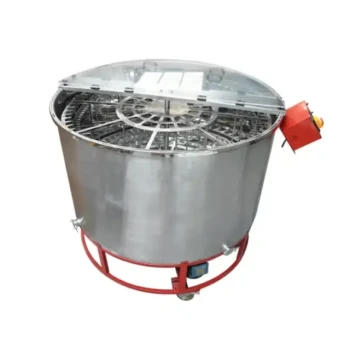
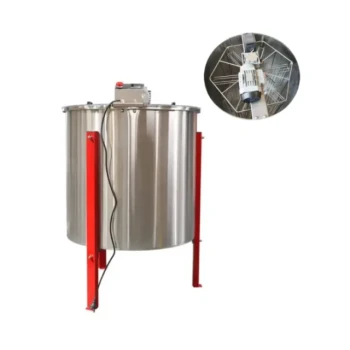
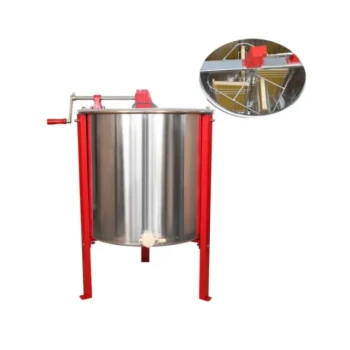
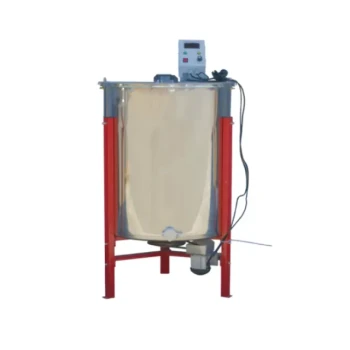
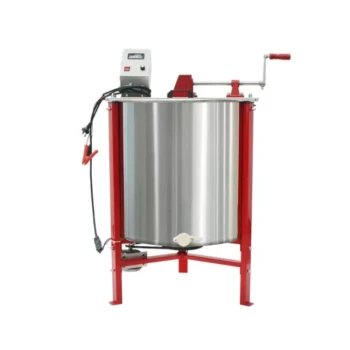
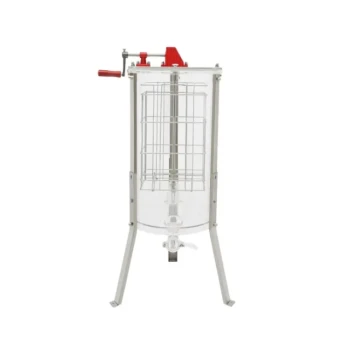
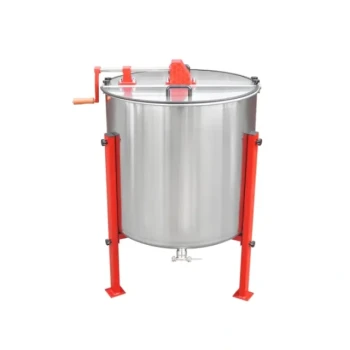
The honey extractor is the central machine for preserving comb integrity. It uses centrifugal force to remove liquid honey from the cells while leaving the wax foundation or drawn comb substantially intact.
Manual extractors can suit small apiaries, while electric extractors improve throughput and reduce operator effort for commercial or wholesale-oriented operations.
Correct extractor configuration
The extractor must match the frame size, frame count, and operating scale of the apiary. Frames should be loaded evenly and balanced before spinning to prevent vibration and equipment damage.
Some extractors process one side of a frame at a time, requiring the frames to be reversed during the cycle. Reversible or radial configurations can reduce handling, depending on the model.
Collection tank or food-grade buckets
Honey should drain into clean, food-grade collection containers positioned beneath the extractor outlet. Stainless steel is generally preferred for durability, cleanability, and resistance to corrosion.
Containers should be covered when practical to limit exposure to dust, insects, and moisture.
Filtration, Settling, and Filling Equipment
Fine mesh sieve or honey strainer
A fine mesh sieve or dedicated stainless-steel strainer removes loose wax particles and other physical debris after extraction. Filtration should clarify the honey without unnecessarily removing its naturally occurring characteristics.
The filter size and capacity should match the extractor’s output. An undersized filter can slow production and create bottlenecks.
Settling tank
A settling tank allows air bubbles and remaining fine particles to rise or settle before filling. This improves visual consistency and makes bottling more controlled.
Settling tanks should have a secure lid and a bottom outlet positioned for efficient transfer into jars or containers.
Honey warming capability
Moderate warming can improve honey flow during extraction and transfer, particularly in cooler conditions. Temperature must be controlled carefully to avoid unnecessary heat exposure that can affect honey quality.
The equipment should prioritize even, gentle warming rather than excessive temperature or direct localized heating.
Filling machine
A manual, semi-automatic, or automatic honey-filling machine transfers filtered honey into retail or bulk containers. The appropriate choice depends on batch size, container formats, labor availability, and required production speed.
For distributors and resellers, compatibility with multiple filling volumes and container types can be more valuable than maximum machine speed alone.
Capping, labeling, and packing equipment
A complete processing line may include cap-tightening, labeling, date coding, and case-packing equipment. These systems do not extract honey, but they determine whether the final product can move efficiently into wholesale or retail distribution.
All product-contact components should be easy to dismantle, clean, and inspect.
A Comb-Preserving Harvest Workflow
Select suitable surplus frames
Harvest should focus on surplus honey rather than stores required by the colony. Frames with substantial capped honey are generally preferred because capping indicates that bees have sealed the cells after reducing moisture.
A fixed percentage of capped cells should not be treated as a universal guarantee of readiness; local climate, forage conditions, and moisture testing practices also matter.
Remove frames carefully
Use the smoker and hive tool to open the hive and loosen frames. Clear bees gently, then transport the frames in covered, clean containers to protect them from contamination and robbing bees.
Avoid squeezing, dropping, or stacking frames in ways that deform the comb.
Uncap with controlled pressure
Place each frame over the uncapping tray and remove the wax cappings with a sharp knife or uncapping tool. The goal is to expose the honey cells while retaining the underlying comb.
Collected cappings can be separated for beeswax recovery rather than discarded.
Extract with balanced frames
Load the extractor evenly and begin at an appropriate speed. Excessive acceleration can damage comb, especially newer or poorly supported comb.
After one side is emptied, reverse the frames when required and complete extraction. Intact frames should be returned to the hive promptly so bees can clean and reuse them.
Filter and settle the honey
Drain extracted honey through a food-grade mesh filter into a covered settling container. Allow time for bubbles and fine particles to separate before transferring honey to the filling equipment.
This stage supports a cleaner finished product without requiring destructive processing of the comb.
Understanding the Trade-offs
Manual versus electric extractors
Manual extractors have lower acquisition and maintenance costs and may be appropriate for small apiaries. They require more labor and can limit throughput during peak harvest periods.
Electric extractors improve productivity and consistency but add cost, electrical requirements, and additional maintenance. They are usually more suitable when labor efficiency and order fulfillment are priorities.
Heated uncapping knives
Heated knives can accelerate uncapping and reduce physical effort. However, excessive heat or careless cutting can damage the comb and expose honey to unnecessary thermal stress.
Temperature control, operator training, and sharp cutting surfaces are more important than simply selecting the highest-powered model.
Fine filtration versus over-processing
Filtration removes unwanted physical debris, but excessively fine or repeated filtration can slow production and may remove more natural particles than the market requires. The filtration level should reflect the product specification and customer expectations.
“Pure” honey should be protected from contamination and adulteration; it does not mean the product must be processed until every natural trace element is removed.
Automation versus flexibility
Automated uncapping, extraction, filling, and packing lines can deliver high throughput and consistent labor performance. They also require greater capital investment, space, cleaning discipline, and technical support.
Semi-automatic systems often provide a practical balance for growing apiaries and B2B suppliers that need scalable capacity without committing to a fully industrial line.
Cut comb honey requires different equipment
Cut comb honey is not produced through centrifugal extraction. It requires suitable foundationless or edible-comb frames, careful handling, clean cutting equipment, and packaging designed to protect the comb.
Comb intended for retail sale may require controlled freezing before packaging to address potential wax moth eggs or larvae, according to the applicable handling protocol.
Common Pitfalls to Avoid
Harvesting too aggressively
Removing too much honey can leave a colony short of food, particularly before periods of poor forage or winter. A harvesting plan must account for colony strength, local climate, and available supplemental forage.
Returning damaged frames
Frames with crushed, heavily cut, or contaminated comb create additional work for bees and can weaken hive organization. Inspect frames before returning them and repair or replace unsuitable equipment.
Using unsuitable materials
Containers, strainers, trays, and transfer hoses should be made from cleanable, food-compatible materials. Rusting, porous, or difficult-to-clean surfaces create avoidable hygiene risks.
Ignoring balance and maintenance
Unbalanced extractor loads cause vibration and can damage both frames and machinery. Regular inspection of bearings, baskets, seals, valves, filters, and electrical components supports reliable operation and reduces downtime.
Treating delivery speed as the only procurement criterion
Fast fulfillment is valuable, but equipment compatibility, spare-parts availability, cleaning requirements, operator support, and after-sales service directly affect total operating performance.
How to Apply This to Your Project
The best equipment package depends on colony size, harvest volume, labor availability, frame format, and whether the operation sells bulk honey, retail jars, or cut comb.
- If your primary focus is colony health: Prioritize a removable-frame hive system, gentle bee-clearing tools, a carefully operated uncapping knife, and a centrifugal extractor that returns intact frames to the hive.
- If your primary focus is honey purity: Select food-grade stainless-steel contact surfaces, a suitable mesh strainer, covered settling tanks, and hygienic filling equipment.
- If your primary focus is small-scale harvesting: Start with protective gear, smoker, hive tool, manual extractor, uncapping tray, strainer, and clean storage containers.
- If your primary focus is commercial throughput: Evaluate electric or semi-automatic extraction, uncapping and filling machinery, standardized frame compatibility, and dependable spare-parts and service support.
- If your primary focus is wholesale or B2B fulfillment: Build a scalable line with settling, filling, capping, labeling, and packing capacity that can handle multiple container formats and predictable order volumes.
- If your primary focus is cut comb honey: Use foundationless or suitable edible-comb frames and separate cutting, protection, freezing, and packaging processes from liquid-honey extraction.
A well-matched equipment system protects the bees’ investment in comb while delivering cleaner honey, more efficient processing, and a more reliable supply operation.
Summary Table:
| Category | Equipment | Purpose |
|---|---|---|
| Apiary Tools | Protective clothing, veil, gloves | Protect beekeeper from stings |
| Smoker | Calm bees during hive inspection | |
| Hive tool | Separate hive components, loosen frames | |
| Bee brush | Remove bees from frames gently | |
| Extraction Equipment | Removable frame hive system | Allow non-destructive comb removal |
| Uncapping knife (heated optional) | Remove wax cappings from cells | |
| Uncapping tray | Catch cappings and honey drips | |
| Centrifugal extractor (manual/electric) | Remove honey while preserving comb | |
| Collection tank/food-grade buckets | Collect extracted honey | |
| Filtration & Filling | Fine mesh sieve/strainer | Remove wax and debris |
| Settling tank | Clarify honey and remove air bubbles | |
| Filling machine (manual/auto) | Fill jars or bulk containers | |
| Capping, labeling, packing equipment | Complete packaging for distribution |
Ready to optimize your honey harvesting equipment? HONESTBEE provides a full spectrum of beekeeping tools, machinery, and consumables for commercial apiaries and distributors. Benefit from our one-stop sourcing, reliable supply, and fast delivery. Contact us today to discuss your needs and ensure a safe, efficient harvest that protects colony health and comb integrity. Contact us now!
Related Products
- HONESTBEE 72 Frame Industrial Electric Honey Extractor for Beekeeping
- Commercial Electric 12 Frame Honey Extractor Spinner Motorized Honey Extractor
- HONESTBEE 6 Frame Self Reversing Electric Honey Extractor for Beekeeping
- HONESTBEE 3-Frame Manual Acrylic Honey Extractor
- Stainless Steel Manual 8 Frame Radial Honey Extractor Machine for Beehives
People Also Ask
- What is the importance of balancing honeycomb frames within a honey extractor? Ensure Stability and Protect Machinery
- How is honey separated from the frames after they are uncapped? Efficient Extraction Methods for High Yields
- What are the main benefits of using a honey extractor? Maximize Yields and Protect Your Honeycomb
- What are the recommended methods for removing honey from the honeycomb? Top Extraction Techniques for Maximum Efficiency
- How do manual honey extractors compare to electric honey extractors? Choosing the Right Tool for Your Apiary Growth