Use a complete extraction line: Mechanical honey harvesting requires protective equipment, bee-removal and hive tools, an uncapping system, a centrifugal honey extractor, filters, and settling or bottling containers. The standard sequence is to remove bees, uncap sufficiently ripened frames, spin out the honey, strain it, allow it to settle, and then bottle it.
The core principle is coordination: cleanly uncap mature frames, balance them in the extractor, and move the honey through filtering and settling stages without introducing debris, excessive heat, or unnecessary delays.
Assemble the Required Equipment
Protective and hive-handling tools
Use a helmet and veil, gloves, protective clothing, a smoker, and a hive tool. These protect the operator and help loosen, handle, and inspect frames safely.
A soft bee brush, fume board, or triangle escape board can be used to clear bees from the frames before they enter the extraction area.
Uncapping equipment
The primary uncapping tool is a heated electric uncapping knife, which slices through the wax cappings efficiently. A cold knife can also be used where heating is unavailable.
Keep a cappings scratcher or uncapping fork available for areas the knife does not remove cleanly. An uncapping roller is another practical option for smaller operations.
Honey extraction equipment
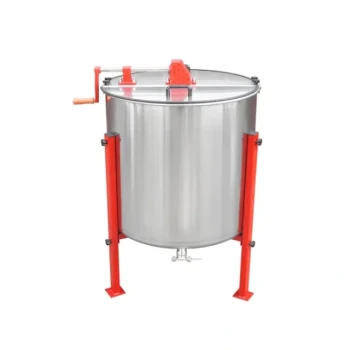
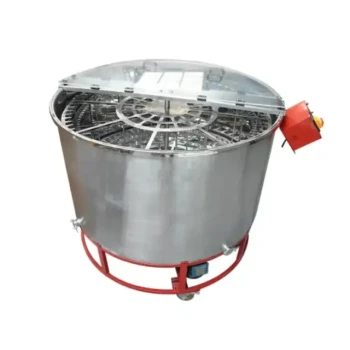
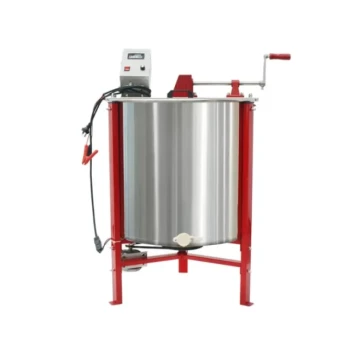
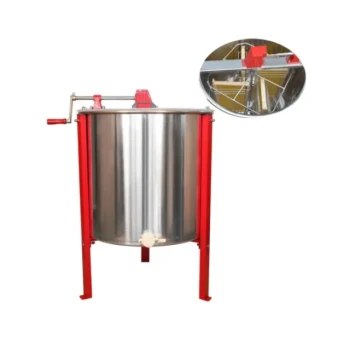
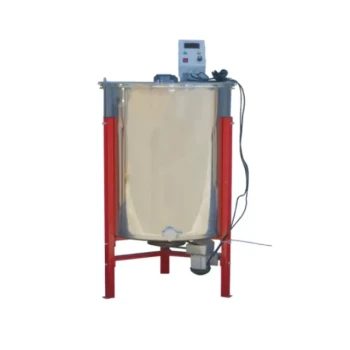
The central machine is a centrifugal honey extractor. It uses a rotating basket to force honey from the comb while leaving the comb largely intact.
Extractors may be manual or electric and may hold multiple frames. A stainless-steel model is generally preferable for durability, cleanability, and food-contact use.
Collection, filtering, and storage equipment
Prepare an uncapping tank or bucket to collect wax cappings and dripping honey. Saving the cappings preserves a useful source of raw beeswax.
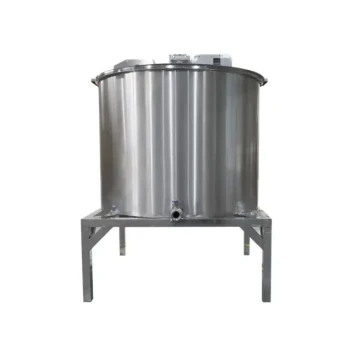
For the extracted honey, use a fine-mesh sieve or dedicated honey strainer, followed by a food-grade collection bucket, bottling pail with a honey gate, or storage tank.
Optional supplies include additional extractor filters, cheesecloth, honey bottles, caps, labels, and a tarp to keep the work area clean.
Follow the Mechanical Harvesting Procedure
1. Confirm the frames are ready
Select frames with at least three-quarters of the cells capped. Wax cappings indicate that the bees have sealed the honey, making the frame more suitable for harvesting.
Work in a clean extraction area with the required containers, filters, and equipment positioned before opening the frames.
2. Remove bees from the frames
Use the smoker appropriately to calm the colony, then remove the frames with a hive tool. Clear remaining bees with a soft brush, fume board, or escape board.
Avoid placing bee-covered frames directly into the extraction area. This reduces contamination, interruptions, and the risk of crushing bees during handling.
3. Uncap the honey frames
Hold each frame securely over the uncapping tank. Use the heated electric knife to slice off the wax caps covering the honey cells.
Uncap both sides as needed, taking care not to cut deeply into the comb. Use a cappings scratcher or fork to open any remaining sealed cells.
Collect the removed cappings rather than discarding them. They can be retained for raw beeswax recovery.
4. Load and balance the extractor
Place the uncapped frames into the extractor basket. Distribute them evenly so the machine remains balanced during rotation.
An unbalanced load can cause vibration, reduce extraction efficiency, and place unnecessary stress on the extractor. Follow the machine manufacturer’s frame-capacity and operating instructions.
5. Spin the honey from the comb
Start the extractor and increase the speed gradually. Many standard extractors process one side of a frame at a time, so stop the machine and flip the frames before running the second side.
Continue until the honey has been removed from both sides. The exact operating time depends on the extractor, honey viscosity, frame condition, and temperature.
6. Support honey flow without overheating
Honey flows more readily when it is warm and the surrounding environment is moderately warm. This can improve drainage through the extractor’s discharge spout.
Use controlled, appropriate warmth rather than excessive heating. The objective is to improve flow while preserving honey quality and avoiding unnecessary thermal exposure.
7. Strain the extracted honey
Open the extractor’s discharge gate and direct the honey into a fine-mesh sieve, honey strainer, or filtered collection container.
Filtering removes residual wax particles and other debris. Do not treat straining as a substitute for clean frame handling; filtration works best when contamination is minimized at every earlier stage.
8. Allow the honey to settle
Transfer the filtered honey to a settling container or storage tank. Let it rest so entrained air bubbles and remaining light particles can rise toward the surface.
After settling, draw the clearer honey through a honey gate or transfer it carefully for bottling. Avoid disturbing the surface layer during this step.
9. Return emptied frames to the hives
Place the extracted frames back into the hives so the bees can clean and reuse the comb.
This preserves the drawn comb and allows the colony to recover residual honey rather than requiring the comb to be rebuilt from scratch.
Design the Process for Reliable Throughput
Match equipment capacity to batch size
Small apiaries may use a manual extractor, while larger operations benefit from an electric, multi-frame unit. The appropriate choice depends on the number of frames harvested and the required processing speed.
For distributors and resellers, a complete equipment range is more useful than a single machine: protective gear, smokers, hive tools, uncapping equipment, extractors, strainers, collection containers, and bottling supplies should work as one system.
Organize the workflow in one direction
Arrange the work area in this order:
- Bee removal
- Frame uncapping
- Centrifugal extraction
- Straining
- Settling
- Bottling
This limits backtracking and helps prevent clean containers from being exposed to wax, tools, or unprocessed frames.
Prepare replacement and consumable items
Extraction downtime often results from missing small items rather than a failed machine. Keep spare filters, collection buckets, honey-gate containers, bottle caps, and cleaning supplies available.
For commercial supply programs, dependable fulfillment and rapid replacement of high-use components can be as important as the extractor itself.
Understanding the Trade-offs
Heated knives versus cold knives
A heated electric knife generally makes uncapping faster and smoother, particularly for larger batches. It requires an electrical supply and careful temperature control.
A cold knife is simpler and less dependent on power, but it may require more effort and can be slower when the cappings are firm.
Manual versus electric extractors
A manual extractor has a lower equipment complexity and does not require electricity, but the operator must maintain rotation manually.
An electric extractor improves consistency and reduces labor for repeated batches. It usually involves higher initial cost and adds electrical components that must be maintained.
Returning intact comb versus processing damaged comb
Centrifugal extraction allows frames to be returned to the hive for reuse. This supports efficient colony management and reduces the need for bees to rebuild comb.
Poor uncapping technique or excessive handling can damage the comb, reducing its usefulness and increasing cleanup or repair requirements.
Warmth versus excessive heat
Moderate warmth improves honey flow, especially when the honey is viscous. Excessive heat, however, is unnecessary and can compromise the quality objectives of a careful extraction process.
Use ambient conditions and equipment designed for the intended honey-handling workflow instead of relying on uncontrolled heating.
Speed versus filtration and settling
Fast extraction increases throughput, but rushing filtration or settling can leave wax particles and air bubbles in the finished product.
A professional workflow treats extraction, straining, settling, and bottling as separate quality-control stages rather than one continuous transfer.
Common Pitfalls to Avoid
Extracting underfilled or insufficiently capped frames
Frames with too few capped cells may contain honey that is not ready for harvest. Confirm frame readiness before removing it from the colony.
Failing to balance the extractor
Unevenly positioned frames can cause vibration and inefficient operation. Always distribute the load symmetrically and stop immediately if abnormal vibration occurs.
Omitting the strainer
Even clean extraction produces small amounts of wax debris. Use a fine-mesh sieve or honey strainer before the honey enters the settling or bottling container.
Mixing clean and unprocessed equipment
Keep empty bottles, filtered honey containers, and bottling tools away from used uncapping tools and wax cappings. A clearly separated workflow supports cleaner final packaging.
Bottling immediately
Honey should rest in settling containers before final bottling so air bubbles and light particles can separate. Bottling too soon can produce a less clear and less consistent appearance.
How to Apply This to Your Operation
Choose equipment as a coordinated package rather than as isolated tools.
- If your primary focus is small-apiary extraction: Use protective gear, a smoker, hive tool, soft bee brush, heated or cold uncapping knife, a manual extractor, a fine-mesh strainer, and a food-grade settling bucket.
- If your primary focus is commercial throughput: Select a multi-frame electric extractor, heated uncapping equipment, dedicated uncapping and settling tanks, stainless-steel strainers, and bottling equipment sized to the expected batch volume.
- If your primary focus is product quality: Prioritize clean food-contact surfaces, careful uncapping, balanced extraction, fine filtration, controlled warmth, and adequate settling time.
- If your primary focus is dependable sourcing: Build a one-stop equipment portfolio with compatible extraction, filtration, storage, packaging, replacement, and consumable items supported by responsive fulfillment.
A properly matched mechanical extraction system turns honey harvesting into a controlled, repeatable, and scalable process.
Summary Table:
| Step | Tool/Equipment | Procedure |
|---|---|---|
| 1 | Hive tool, smoker, protective gear | Remove frames from hive and clear bees using brush or escape board. |
| 2 | Heated electric uncapping knife or cold knife | Slice off wax cappings from both sides of the frame. |
| 3 | Centrifugal extractor (manual or electric) | Load balanced frames, spin to extract honey, flip frames if needed. |
| 4 | Fine-mesh sieve or honey strainer | Filter extracted honey to remove wax debris. |
| 5 | Settling tank or bucket | Allow honey to settle to remove air bubbles and impurities. |
| 6 | Bottling equipment (honey gate, bottles) | Bottle the clarified honey. |
Upgrade your honey extraction with HONESTBEE's complete line of beekeeping equipment. From extractors to uncapping knives, we provide the tools you need for efficient, high-quality honey production. For distributors and commercial beekeepers, we offer wholesale pricing, OEM/ODM support, and rapid delivery. Contact us today to discuss your requirements and get a quote — Contact HONESTBEE.
Related Products
- Commercial Electric 12 Frame Honey Extractor Spinner Motorized Honey Extractor
- 6 Frame Manual Stainless Steel Honey Extractor Beekeeping Equipment
- HONESTBEE 2 Frame Manual Acrylic Honey Extractor Beekeeping Equipment
- Stainless Steel Manual 8 Frame Radial Honey Extractor Machine for Beehives
- Stainless Steel 3 Frame Manual Honey Extractor Spinner for Bee Honey Extraction
People Also Ask
- Who are commercial honey extractors designed for? Scaling Your Industrial Beekeeping Success
- What is a commercial honey extractor? The Essential High-Volume Solution for Large Apiaries
- How is honey extracted commercially? Maximize Your Apiary's Efficiency and Honey Yield
- What are commercial honey extractors used for? Boost Your Apiary's Efficiency & Profitability
- What are the advantages of motorized extractors? Boost Honey Production and Save Time