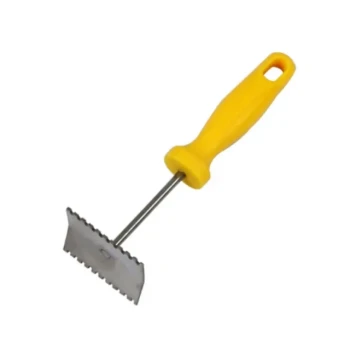
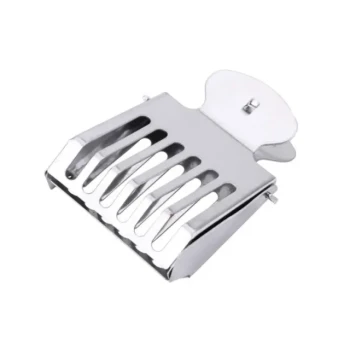
Queen cell quality is determined first by its size and outer wax texture. Larger cells with a strongly sculptured surface resembling a peanut shell generally indicate that nurse bees provided extensive care and nutrition, supporting the development of larger, higher-performing queens. Before emergence, technicians can use a sharp queen-rearing scalpel to open the soft wax near the cell base, inspect the developing queen, and reseal the cell without exposing or damaging the protected lower cocoon.
A large, heavily textured queen cell is a strong visual quality signal, but it should be confirmed through careful internal inspection. Precision scalpels and cell-handling tools allow technicians to evaluate development and age while preserving the queen cell for continued emergence.
What Visual Features Indicate a Strong Queen Cell?
Cell Size Reflects Developmental Potential
A larger queen cell is generally preferred because it suggests that the developing queen received substantial nutrition and care from nurse bees.
Size should be evaluated consistently across cells from the same breeding program, since unusually small cells may indicate weaker development or insufficient provisioning.
Peanut-Shell Texture Signals Intensive Care
The outer wax should show a pronounced, irregular texture similar to a peanut shell. This heavily sculptured surface is associated with active construction and repeated attention from nurse bees.
A smooth or poorly developed exterior does not automatically prove that a queen is unhealthy, but it is a reason to inspect the cell more carefully before making selection decisions.
Cell Structure Provides Supporting Evidence
Technicians should assess the overall form of the cell, including its apparent fullness, integrity, and development stage. A well-formed cell should remain structurally sound during handling and should not show unnecessary cracks or deformation.
Visual evaluation is most reliable when size and texture are considered together rather than treated as isolated grading criteria.
How Precision Tools Support Pre-Emergence Inspection
A Sharp Scalpel Opens the Safe Inspection Area
An open-cell inspection uses a fine, sharp scalpel to cut through the soft wax wall near the cell base. The cut is made above the tougher lower cocoon, which protects the developing queen in that section.
The wax wall can then be carefully folded back so technicians can inspect the queen’s condition and approximate age without removing her from the cell.
Cell-Handling Equipment Reduces Physical Risk
Queen-rearing scalpels and dedicated cell-handling tools provide controlled contact with fragile wax and developing queens. Their precision helps prevent crushing, tearing, or excessive disturbance during inspection.
For distributors and apiaries managing valuable breeding stock, consistent access to high-grade tools is important because a damaged cell can eliminate the value of otherwise superior genetics.
Resealing Preserves Continued Development
After inspection, the wax flap should be returned and closed as seamlessly as possible. The objective is to preserve the cell’s protective environment and allow the queen to continue developing toward emergence.
The procedure requires a steady hand and suitable equipment; rough cutting or incomplete closure can create avoidable risks for the developing queen.
What Other Tools Add to Queen Assessment?
Magnification Improves Fine Visual Checks
Binocular magnifiers or magnifying glasses can improve the accuracy of close inspection, particularly when technicians need to view small details inside deep cells.
These tools are especially useful for examining brood frames, although egg inspection evaluates the performance of an emerged, laying queen rather than the condition of a queen still inside her cell.
Electronic Scales Support Post-Emergence Grading
A high-precision electronic balance can measure the body weight of a newly emerged queen. A sensitivity of 0.1 mg allows technicians to classify queens by weight and identify undersized individuals.
This is a valuable follow-up measurement, but it cannot replace pre-emergence cell inspection because the queen must first emerge to be weighed.
Grafting Tools Protect the Next Generation
Precision grafting needles and artificial queen cell cups help transfer larvae of the required age without causing physical damage. They support repeatable queen production and the systematic replication of selected maternal genetics.
These tools improve production consistency at scale, but they are used during queen rearing rather than as direct indicators of an individual cell’s final quality.
Understanding the Trade-offs
Visual Quality Is Not a Complete Guarantee
Large size and peanut-shell texture are meaningful indicators of nutrition and nurse-bee care, but they do not independently guarantee superior adult performance. Selection decisions should account for internal inspection, emergence results, and later colony performance.
Opening a Cell Carries Inherent Risk
Even when the scalpel is used in the correct wax area, opening a queen cell introduces a handling risk. Poorly positioned cuts, excessive pressure, or an improperly resealed wall can harm the developing queen.
Technicians should limit inspections to cases where the information gained justifies the disturbance.
Weight Must Be Interpreted in Context
A heavier newly emerged queen may indicate stronger development and nutritional status, but weight alone is not a complete measure of future egg-laying capacity. It is most useful as part of a consistent grading and selection program.
Timing Affects What Can Be Measured
Before emergence, technicians can assess cell appearance and inspect the developing queen through the wax opening. Direct body-weight measurement and laying-pattern evaluation become possible only after emergence and colony establishment.
How to Apply This to Your Operation
Use a consistent inspection process that combines external cell grading, careful internal examination, and post-emergence verification.
- If your primary focus is queen-cell selection: Prioritize larger cells with a strongly sculptured peanut-shell surface, then confirm condition through careful open-cell inspection.
- If your primary focus is minimizing handling damage: Source fine, sharp queen-rearing scalpels and compatible cell-handling equipment, and train technicians to cut only through the soft wax above the lower cocoon.
- If your primary focus is large-scale breeding consistency: Combine precision grafting tools and artificial cell cups with standardized visual and weight-based grading procedures.
- If your primary focus is objective post-emergence grading: Use a 0.1 mg electronic balance to record queen weight and identify undersized individuals after emergence.
- If your primary focus is reliable sourcing and fulfillment: Work with a supplier offering a complete queen-rearing product range, rapid technical response, and dependable delivery so inspection and production schedules are not interrupted.
A disciplined combination of visual indicators, precision inspection, and measured follow-up gives beekeepers a more defensible basis for selecting healthy, high-value queens.
Summary Table:
| Indicator | What to Look For | Why It Matters |
|---|---|---|
| Cell Size | Larger size | Indicates better nutrition and care |
| Outer Texture | Peanut-shell sculpturing | Reflects intensive nurse bee attention |
| Structural Integrity | Well-formed, no cracks | Shows robustness during handling |
| Internal Inspection | Queen appearance and age | Confirms development status |
Ensure your queen rearing operation thrives with HONESTBEE's comprehensive range of precision tools and equipment. From scalpels and grafting needles to electronic scales, we provide everything you need for effective queen assessment. Our rapid response and dedicated service support your success. Contact us today for reliable supply and expert advice!
Related Products
- JZBZ Style Push-In Cell Protector for Professional Queen Rearing Kits
- Premium Nicot Style Cell Bar Holder and Queen Cell Cup Holder System
- Stainless Steel Scraper for Metal Queen Bee Excluders
- Portable Queen Bee Incubator with 12V Car Adapter for Safe Transport
- Professional Dual Action Queen Excluder Scraper for Beekeeping
People Also Ask
- What is the necessity of using queen cell protectors or emergence cages during the late stages of honeybee queen rearing?
- What are some methods and types of queen cell protectors? Safeguard Your Queen Introduction Process
- What is the role of queen cell protectors and emergence cages? Secure Your Genetic Stock and Hive Stability
- What is the primary reason for using queen cell protectors? Secure Your Yield with Proven Protection
- What is the purpose of queen cell protectors in a hive? Secure Your Hive's Future with Professional Protection